



There has never been a year like 2025 for farmgate beef prices. The price increases weren’t foreseen at the start of the year, even though the forecast had been for a drop in cattle supply for factories.
As it turned out, the first half of the year actually had saw increase in factory cattle numbers and the forecast seemed wrong. However, in the second half of the year, particularly from late summer on, the weekly kill dropped below 30,000 head for several weeks at a time when it was usually close to 40,000 head per week.
By the year end the kill was down 200,000 head to below 1.6m for the first time in several years.
For farmers who had cattle to sell, they were in an exceptionally strong negotiating position. This was reflected in farmgate prices, which increased by €734 per head for the average R3 steer at the average price paid.
Tighter supply wasn’t unique to Ireland in 2025. North of the border, the Northern Ireland kill was down by 5% to 491,000 head and in Britain numbers were down by 94,000 head in the first 11 months of the year.
Prices there increased at a similar rate to Ireland, but what was noticeable in 2025 was that the price differential narrowed as the year went on.
In 2024 and early 2025 the gap had been around €1/kg, but there were times in the latter part of the year when this disappeared completely and Irish prices even nudged a head on a few occasions.
The Irish beef price also tended to outperform the Bord Bia benchmark price for much of the year as well.
Imports fill the gap
There were downsides to a tighter supply in 2025. With less Irish beef to export and the UK, our main export market, having a tariff free trade deal in place with Australia and New Zealand, they were ideally place to pick up the slack.
Both increased their exports to the UK significantly, particularly in the final quarter of 2025.
Most of this beef was sold in the UK hospitality and food service sector though some supermarkets trialled non Irish and UK beef during the year.
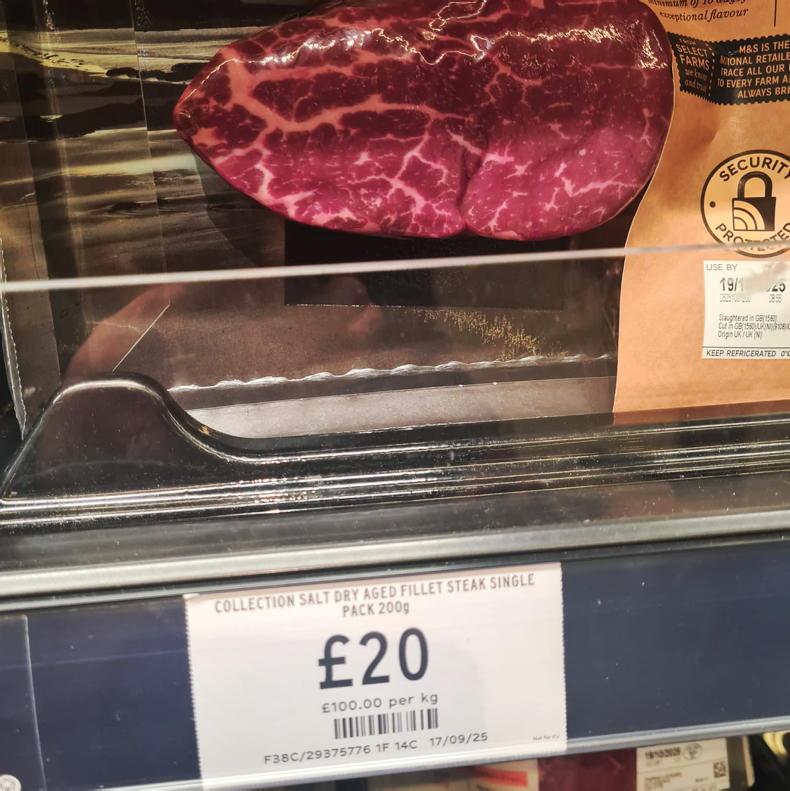
As the higher prices were passed along the chain throughout the year, there was a drop in retail sales. Shoppers were actually spending more money on beef purchases but coming home with less product.
The highest value steak meat cuts were frequently taken off restaurant menus in both the UK and Ireland. However, despite higher prices, beef consumption was remarkably resilient in 2025.
The USA has had a similar experience during the year with tight cattle supply leading to more imports and higher farm gate prices. There has been considerable revision to thinking on what is an ideal diet with a greater emphasis on protein and whole foods, categories that beef fits into perfectly.
Factory closures
Reduced cattle supply also has negative consequences. Kepak have recently announced that they are stopping deboning at their Clonee factory and ABP are in the process of streamling their further processing capacity.
Their retail packing factory in Dungannon is likely to be a casualty of this.
The question for 2026 is will this be all or will further rationalisation take place in the processing industry. The average large Irish factory will handle between 60,000 and 70,000 head of cattle per annum and last year the loss of 200,000 head of cattle from the system means that the industry could operate with three fewer factories. This could be a major issue in 2026 if, as expected, there is no significant increase in cattle numbers.



SHARING OPTIONS