



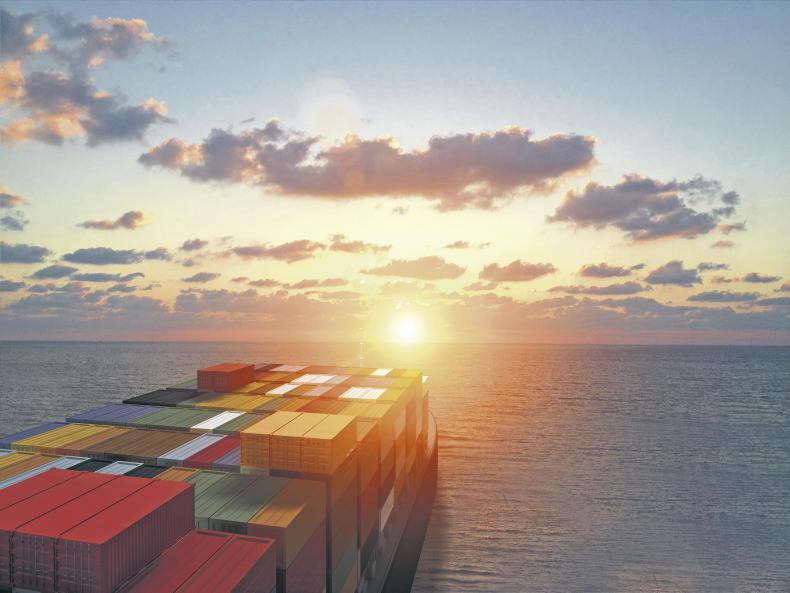
Ireland exported food and drink worth €1.673bn in June of this year, the highest ever monthly total in Bord Bia data going back to 2014. The total for the first half of the year stood at just over €9bn, again a record for the period. The performance for the six months was €1.25bn ahead of the same period last year.
The trade picture this year has been dominated by two factors – the high prices in the market place and the policies of President Donald Trump. It is clear from the data that the effect of those policies is doing little to dampen demand for Irish agrifood exports. The EU and the US reached a framework trade agreement in late July, which should further reduce the regulatory pressure on Irish exporters.
The headline numbers do hide some interesting trends which show how the global trade landscape is changing for Irish agriculture. Looking at the different sectors, we can start to see trends on changing markets and the opening of new destinations for Irish food.
Dairy
The value of dairy exports increased by over €600m in the first six months of 2025, when compared to a year earlier, to hit €3.45bn (see Figure 2). This 21.6% increase in the value of exports was on the back of a 10.4% increase in the volume of exports, reflecting the increase in the value of dairy products in the market when compared to a year ago.
When it comes to destinations for those exports, the EU is by far the biggest customer, taking almost €1.5bn from the Irish dairy industry (see Figure 3). The Netherlands alone imported €640m of Irish dairy products in the first six months of the 2025, more than the UK did in the same period.
Exports to Asia, the Middle East and Africa struggled to gain any ground on last year with the value of category exports little changed. Perhaps surprisingly, dairy exports to Russia increased by €1m to €12m.
Beef
While the effect of increased prices can be seen in the dairy sector, it is even more stark in beef exports for the first six months of the year. The value of Irish beef exports increased by 27% or €352m to €1.66bn (again, see Figure 2). This increase in value was on the back of an increase in the volume of beef exported of only 1.4%, meaning the increase in exports was almost entirely driven by price.
Similar to the dairy sector, we can see that once again the EU is the market with the largest increase. In fact, the EU took more Irish beef, by value, than the UK in the first six months of the 2025 (see Figure 4). Ireland’s exports to Central and South America, Oceania and Mexico amounted to zero, while exports to Asia were down more than 40% to €21m. Exports to Asia were lower than Ireland’s beef exports to Switzerland, at €23.9m, during the first six months of the year.
Sheepmeat
Sheepmeat exports were 14.1% higher at €238m in the first half of 2025 when compared to a year earlier. Once again, price playing a significant part in this increase with the volume of exports only increasing by 4.2%.
While sheepmeat exports have traditionally been similar to beef in that they are concentrated in the EU market, there has been a very significant shift exports to our closest neighbour (see Figure 5).
There was a 37% drop in value of sheepmeat exported to the UK in the first six months of the year, when compared to the first six months of 2024. In fact, the value of sheepmeat exported to the UK was at the lowest level since at least 2014. On a volume basis, the total for the first six months of 2025 is half that seen in the first six months of 2014.
There are several reasons for this including the high hogget numbers in the UK, the increase in live exports from Northern Ireland to Great Britain, and the shortage of animals for slaughter in the Republic of Ireland. This shortage meant that Irish exporters preferred to concentrate on markets in mainland Europe where prices were higher during at the start of this year.
Irish exporters are also facing increasing competition in the UK from imports from Australia and New Zealand.
Comment
Looking at the data on Irish food exports for the first half of the year, it would be hard to imagine that a lot of that time was spent worrying about trade disruptions. It is clear that, so far, Irish food exports remain on a very strong footing.
Across all sectors, the price increases seen in markets are leading to increased export values, but there are also plenty of places where export volumes are also increasing.
It is clear that for Ireland, our nearest neighbours are by far the most valuable customers taking the majority of what is produced on Irish farms. The increase alone in the value of exports to the EU in the first six months of the year was greater than the total value of exports to Asia or to the Middle East and Africa during the period.
There is some concern about the increase in competition in some key markets, especially as shown by the plunge in sheepmeat exports to the UK. This will be a trend which will have to be closely watched over the coming months to ascertain whether it is just something cyclical or something which is more structural.
One thing is clear is that the higher prices across all categories have done little so far to dampen consumer demand.



SHARING OPTIONS