In all the fuss about new companies coming into the food market with their technology-driven solutions – lab-grown meats and milk-free milk – it might be easy to think of the traditional meat and dairy suppliers as being ‘out of the game’ when it comes to innovation.
Nothing could be further from the truth.
Titans of the meat industry, such as ABP and JBS, are becoming increasingly established in the fake meat sector. Their progress has not been without its setbacks, but for such large companies some experimentation is possible without a reversal proving fatal to future prospects.
Meat-free launches
ABP Food Group, for example, launched a meat-free brand in the UK (with much fanfare in 2019) called Equals. If you’ve never heard of it, that’s because it didn’t survive the year. For a start-up, such a failure would have meant the end; but for ABP, it was just a learning experience and the group came back in mid-2021 with the Dopsu range of no-meat products. Those are available both online and across UK supermarkets.
Speaking at the launch of the range, Bob Carnell, ABP’s UK CEO, said this was in response to “customer demand in the sector”.
While the ABP product is a plant-based “meat” replacement, global red-meat industry leader JBS has taken things a step further with its plans for the world’s largest lab-grown meat plant in Spain. The processor is a majority shareholder of BioTech Foods, which is building a facility in San Sebastián that will have an initial annual capacity of 1,000 tonnes, rising to 4,000 tonnes in the medium term.
Worrying for farmers
Lab-grown meat is a hot topic at the moment, after the USDA gave the green light to some lab-grown chicken to be sold in the US. Lab-grown meat comes from animal cells that have been grown in a lab, allowing them to be marketed as “meat without slaughter”.
For farmers, lab-grown meat is possibly the most worrying option, as unlike fake meats and milks based on plant proteins, lab-grown meat needs no farm input at all. However, they are energy intensive, so that will probably be a large hurdle to the products making progess towards replacing traditional meat offerings.
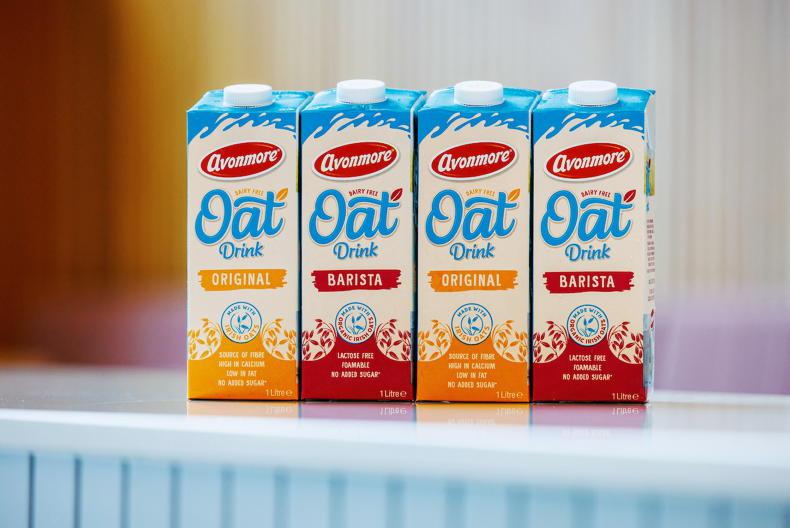
Elsewhere in the plant-based food sector, fake “milk” seems to be here to stay. Only this week, Tirlán announced the launch of its oat drink under the Avonmore brand. While the co-op was very careful not to call the drink “milk” anywhere, it is clearly being marketed as a milk-replacement product, with an “original” and “barista” product initially available.
For Tirlán, the move makes a lot of sense, as they have the infrastructure already in place both to collect the oats from their farmers and to distribute the finished product to market.
Rather than being a threat to traditional milk supplies, the oat drink should be complementary, serving a niche customer that otherwise would be lost to Tirlán.
The fake meat, vertical farming and plant-based milk industries have generally been only really good at one thing to date – burning through investors’ cash. However, it does seem we might be close to a turning point.
The investment in production from more traditional industry players means that fake meat and milk are certainly here to stay. The only real uncertainty for now is what the scale of the industries will be.
It seems energy usage will be a major constraining factor, while consumer need for cheap protein may mean the products may struggle to find a sustainable level of demand.
It is clear that there is a long road ahead before these products become a real threat to traditional farm output.