



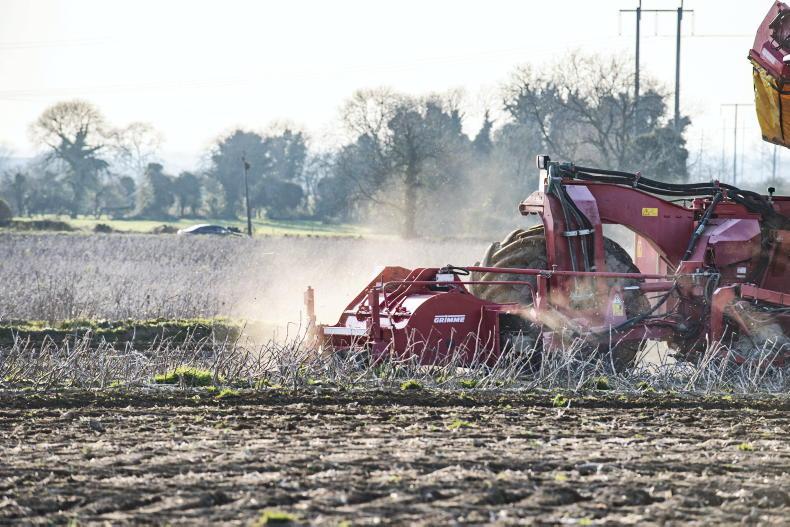
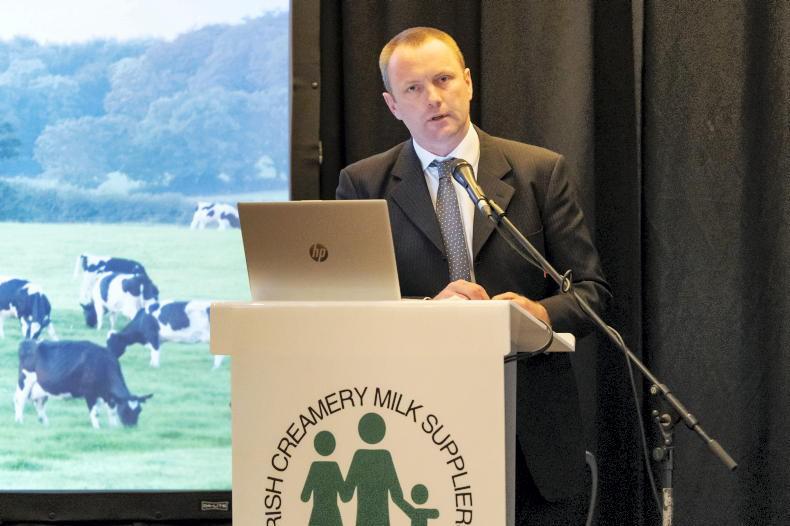
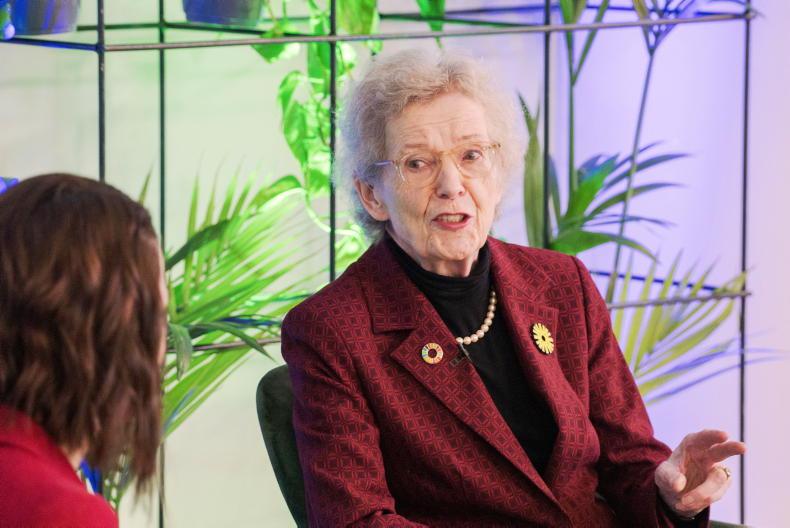
I attended the Futura Innovation conference in Limerick this week and moderated some panel discussions on the role of farmers in the future, and how production systems will change as we meet new challenges including climate change.
The conference drew together industry experts, academia and company CEOs to join the dots in trying to solve some of the problems that lie ahead.
Food, ag tech and sustainability were central themes throughout the conference, with numerous questions posed as to what the future looks like for food production across the world and the challenges and opportunities that exist for farmers and others involved in the food producing sector.
One of the most interesting sessions I was involved in was “What do 10 billion people actually eat?” This session was presented by the Boyne Valley Food Innovation District.
This involved a discussion around how the world will feed 10 billion people, a number that the world’s population is projected to reach by 2050. With that many more people, the world in theory would have to produce more food to feed them, but it’s not just a question of producing more food.
There are many constraints on food production including water availability, fertiliser availability, people availability and supply chain disruption, something that has become an increasing constraint in the last five years.
The role of farming
Farmers are front and centre in meeting the 10 billion people challenge across the globe. The latest figures from the United Nations suggest that 10% of the world’s population are hungry and 25% obese.
There is currently enough food in the world to feed it, but it’s the location of the food that can be the problem. The role that food has in the displacement of people was also discussed, with food abundant countries bearing the brunt of that movement of people – so it’s a global problem.
There are also huge issues in relation to food wastage across the world, with 33% of food lost between producing the food and that food reaching a table to be consumed.
Science and technology will have a huge role to play in reducing this wastage.
Regenerative farming was also discussed as a possible solution, but the question remains whether this can be commercially viable at scale.
Whether we like it or not, climate change will reshape the geography of agriculture in the next 30 years, and extreme weather events as a result of climate change will become harder and harder to deal with.
Those extreme weather events and dealing with them is now becoming part and parcel of farming, and has eliminated food production as an enterprise in some parts of the world.
We likely won’t be growing grapes on the hills of west Mayo any time soon, but a changing climate will affect our ability to grow crops in certain regions.
Record temperatures across Europe in 2026 led to stunted maize crops and reduced yields in 2026.
Water availability for food production will be one of the defining limitations in feeding 10 billion people in 2050.
With our mild, wet climate, Ireland is well positioned to capitalise on any increased requirement for food if EU policy allows it.
Global bioeconomy summit
Another important conference which took place this week was the Global Bioeconomy summit.
The conference set out a clear pathway for the development of Ireland’s bio-based economy over the coming years, with the aim to turn research and renewable biological resources into sustainable businesses and new markets.
The publication of Bioscale 2030 is long overdue, but is an important strategy document which charts the opportunities for Ireland in relation to the bioeconomy.
Progress has been painfully slow in terms of practical actions being taken, and some would argue that farmers are once again being forgotten about when it comes to being part of the solution to future issues.


SHARING OPTIONS