


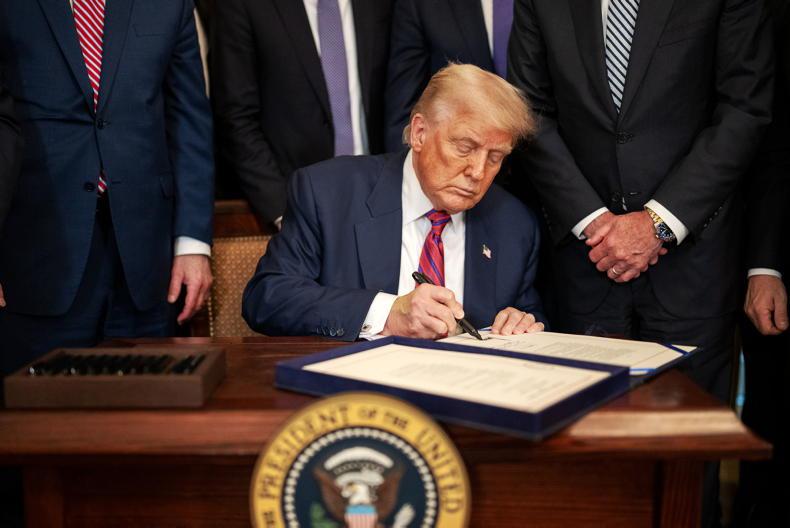
While Irish dairy and drinks exporters continue to hope for an EU-US trade deal to prevent or at least minimise tariffs, Brazil’s beef exporters face a 50% tariff penalty from 1 August. Since the announcement was made, Brazil’s beef industry has been assessing what it will mean for its businesses. Irish farmer interests will be affected by the knock on effect of any trade disruption between the world’s largest beef exporter and second largest beef importer.
One of Brazil’s major beef processors, Minerva, has already put a value on what the tariff will cost its business in a notice to investors. It says that “based on the results of the last 12 months, the company’s consolidated exposure to the US market accounted for approximately 16% of revenue, with Brazil representing around 30% of that exposure. Therefore, Brazilian exports subject to the new tariff policy may have a maximum potential impact of around 5% of net revenue”.
While the additional 50% tariff isn’t due to take effect until August 1, the impact is already being felt in cattle prices, which started this week at the equivalent of €3.05/kg, down from €3.14/kg immediately before the 50% tariff announcement.
There are direct and indirect consequences of what is effectively a prohibitive tariff on US beef imports from Brazil. As Figure 1 shows, Brazilian beef exports have more than doubled in the past decade, and Figure 2 shows that exports to the US have increased seven-fold between 2016 and 2024. USDA beef import data shows that for the year to date to 12 July, imports from Brazil were at 172,635t, double what they were for the same period last year. This means that the US is Brazil’s second largest market for beef exports after China and Hong Kong.
Indirect consequences
The impact of a 50% increase in US tariffs on Brazilian beef reverberated around Brazil’s customers in China, the main export market which bought 1m tonnes of Brazilian beef in 2024. According to the World Beef Report, buyers reduced their price offers between $100 and $200 (€85.50 and €171) per tonne.
With the US market effectively closed and China spotting the opportunity to squeeze prices, Brazilian exporters need to find alternative high value markets. When tariffs essentially closed the market in China to US exporters in May, they switched to South Korea and Japan as alternatives. This wasn’t sufficient to replace the business lost in China and exports overall declined, but they did mitigate the loss.
EU option
The obvious alternative market for Brazilian beef exports is the European Union. Twenty years ago, the EU was Brazil’s main beef export market, with the volume exported to the EU peaking at 420,563t in 2006. Thereafter it declined, as Russia, Iran and Hong Kong became the main export markets prior to rapid expansion in demand from China which began in 2013.
However, with beef production in decline across the EU and prices at record highs, EU beef imports in 2025 to the end of May were at 110,551t, the highest level for the period since 2019. Even before the US tariff announcement, Brazilian beef exports to the EU were already on an upward trajectory. As Figure 3 shows, over 25,000t were imported in the first five months of this year, for only the second time since 2019.
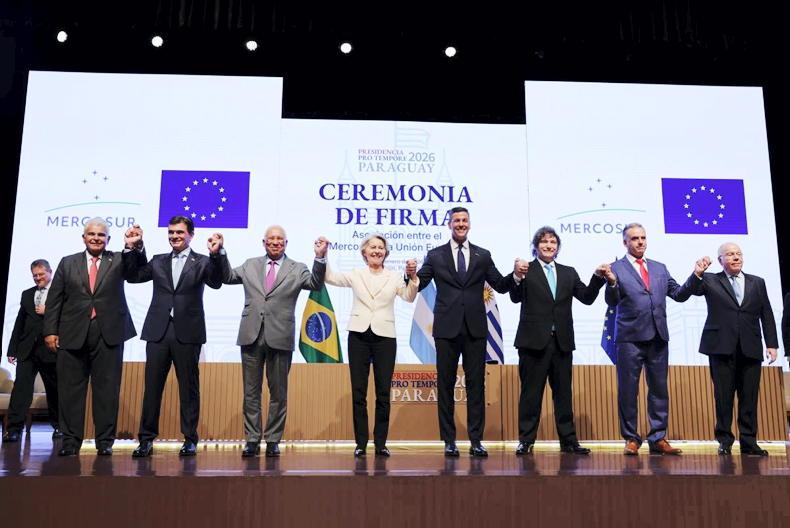
Data from ABIEC, the trade association for Brazil’s meat exporters, shows that Brazil exported just under 100,000t to the EU last year. This is a fraction of the 420,000t exported in 2006, but it shows that there is a long-established trading relationship that can be developed if US tariffs reduce the attraction of that market. The EU will become an even more attractive market for Brazil if the agreed Mercosur trade deal is ratified and comes into effect. This process will take at least a year, but ratification is a real possibility creating an additional beef quota to be shared between Brazil, Argentina, Uruguay and Paraguay for 99,000t of beef at a preferential 7.5% tariff.
Comment
A feature of the Trump presidency is that tariff announcements to commence at a furute date is almost exclusively a negotiation tactic. However, if talks go nowhere, Brazil will need to develop alternative markets. It is working on access to Japan, the next largest beef importer in the world after the US. The EU, for long a less favoured export market, again becomes a real option – especially if the Mercosur trade deal is ratified.
With a beef price the equivalent of €3/kg, Brazilian beef presents real competition for Irish and EU beef producers in the European market. South American beef in general has enjoyed a growing reputation in European markets. British supermarkets which had previously committed to British and Irish beef only, recently introduced a South American range for what they described as a limited period. This effectively means that it was a pilot project to test consumer and industry reaction in the UK, which could be quietly dropped if objection was widespread. While there were some critical statements, there wasn’t really an outcry and we can expect that South American beef will remain at least an option in the UK retail sector.
The bottom line is that Irish agrifood produce now competes in a global market and events that have nothing to do with Irish farmers directly can ultimately influence the price they get in the market.





SHARING OPTIONS