



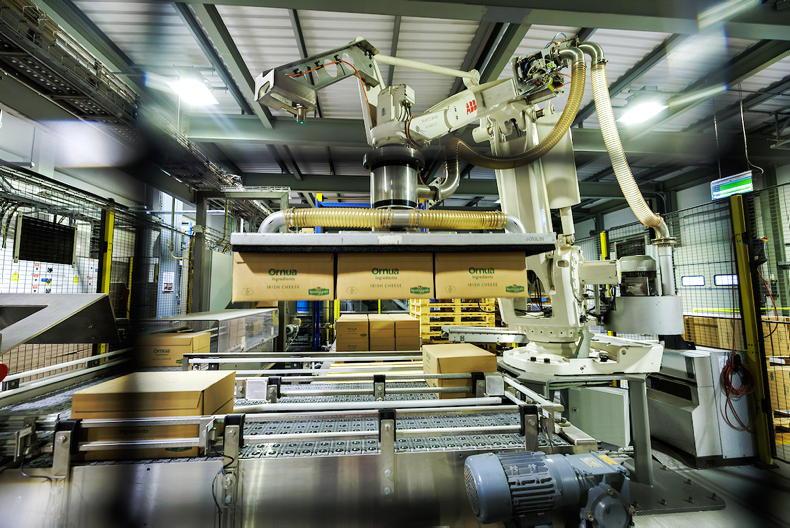
Irish dairy processors are facing a perfect storm in butter and cheese markets at the moment. Higher milk production in Ireland and the UK, coupled with a rapid expansion in other key regions such as the US and New Zealand, has been met with sluggish consumer demand for dairy products.
The relative strength of the euro currency in 2025 means that European exporters are facing into a global market where the supply and demand dynamics have rapidly shifted with products which are expensive on a local-currency basis.
Production
Milk production in Ireland is running more than 6% ahead of the last year, with the UK showing a similar rise for the year. In the rest of Europe production has been mixed with declines in Italy and Belgium balanced by increases in Poland, meaning that overall production in the EU, excluding Ireland, is almost unchanged from a year ago.
Looking further afield, the rapid increase in milk output in the US, where production increased by more than 4% to reach 280m litres per day, has moved the dial on global milk supplies.
Most recent data shows that global milk deliveries in major dairy exporting regions were 500m litres higher in July 2025 than a year previously, with year-to-date deliveries running 2bn litres ahead of the same period last year (see figure 1).
The high milk supply volumes have meant that processors built up significant stocks of butter and cheese in the first nine months of the year. For Irish co-ops, these stocks would normally be run down during the end of the year as the seasonal effect in the country’s milk deliveries takes hold.
Market
However, with high prices paid for the milk used to make that butter and cheese meeting the current depressed market prices for those commodities, the co-ops find themselves in the position of having to move rapidly on milk price to try to balance their books before the end of the year. The Irish co-ops are certainly not alone in this, with processors across Europe cutting milk prices. Arla and FrieslandCampina have cut prices in the last few months. The single biggest price cut seen by the Irish Farmers Journal was in the UK where a Devon-based cheese producer slashed the price for November milk by 8p/l to 35.5p/l.
Outlook
There is no good news in the short-term outlook for most dairy commodity prices, with market futures prices showing continued weakness for butter and cheese into the start of 2026.
One of the big unknowns over the medium term is how much extra cheese production will come online. Investments in the US are already seeing increases in capacity, with more projects set for completion into 2027.
This year has already been a record one for US exports of cheddar cheese, and the country’s department of agriculture’s market outlook suggests that those exports will continue to grow and, importantly, remain competitive in global markets. The weaker US dollar under president Trump gives the country’s dairy exporters a considerable advantage in global markets when competing with European products.
From an Irish perspective, it is worth noting the considerable difference between the retail price of Kerrygold in export markets and the prices of other retail butter products
There is also increasing competition in the UK market for both butter and cheese with New Zealand processors continuing to make inroads in the wake of the free-trade agreement between the nations.
On the butter side, there are signs that the high prices seen up to July this year may be leading to some demand destruction, with lower quantities being purchased by consumers and reports of business users starting to blend some vegetable oil into their baked goods to reduce costs.
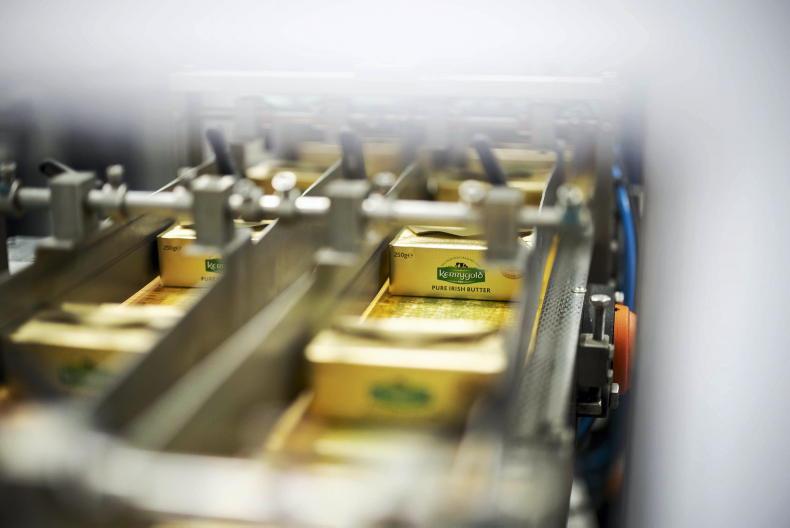
From an Irish perspective, it is worth noting the considerable difference between the retail price of Kerrygold in export markets and the prices of other retail butter products. In Walmart in the US, a pound of Land O Lakes butter retails at $4.26 (€3.67) while a pound of Kerrygold retails at $10.48 (€9.03), more than twice the price. Should this brand-value hold, then Irish co-op’s will have some shelter from the worst of the dairy commodity price falls.
Not all bad news
There is some silver lining in commodity markets at the moment as whey prices continue to hold up well, with futures markets suggesting some price increases in 2026 as consumer demand for whey products is expected to grow further in the coming years (see figure 2).
Farm input prices remain relatively stable, with feed costs in particular staying very competitive. In its most recent dairy market outlook, AHDB in the UK said that the milk to feed price ratio, at a near 20-year high, remains firmly in the expansion zone.
From an overall dairy farm income perspective, the boost from the sale of calves should also not be underestimated.
There is no sign yet of beef prices facing the same kind of decline that has hit dairy commodities, so the sale of calves in the spring of 2026 could go a long way towards giving dairy farmers a cash flow boost when one could be badly needed.
Comment
As every farmer knows, the global markets move in cycles and producers are at the mercy of those cycles. The current downswing in global dairy commodity prices is notable for both the speed and size of the correction. It also comes at a bad time for Irish co-ops who will have a lot of costly stock on hand to move.
The milk that went into making that butter and cheese was paid for using working capital and those loans will need to be repaid for cashflow from the sale of products. If those sales aren’t of sufficient value to cover the borrowings, then a short-term problem could turn into a longer-term headache.
We’ve seen the rapid cuts in milk prices in recent weeks, and comments from the co-ops certainly suggest that the reductions are far from over. What matters for those businesses and the farmers supplying them now is how quickly global markets turn. There are few signs at the moment that a return of dairy commodity price growth is around the corner.



SHARING OPTIONS