



Once defined by traditional farming methods, Irish agriculture is now leveraging cutting-edge technologies. As a result, the sector is at the forefront in harnessing AI and by that we don’t mean artificial insemination; we mean artificial intelligence.
Across the country, AI is being used to optimise crop yields, monitor livestock health, reduce waste, and enhance supply chain transparency. Interestingly, some farmers and companies are using artificial intelligence without realising it.
Artificial Intelligence (AI) refers to machine-based systems, with varying levels of autonomy, that can, make predictions, recommendations or decisions using data, according to the Department of Enterprise, Tourism and Employment. It has the potential to drive efficiencies in companies and across farms.
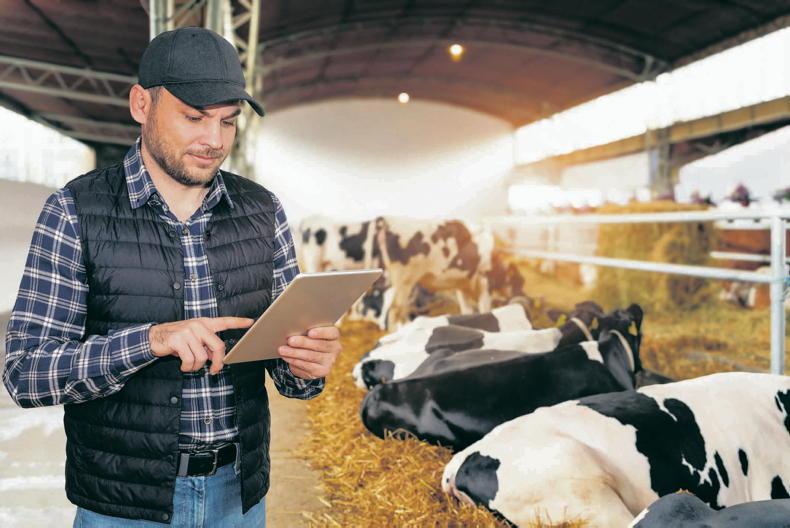
One practical example of AI being used on farms is the use of livestock collars to monitor the health of cows. Sensors and cameras can track the movement of animals and identify any lameness or issues. Another example is in the tillage sector where AI is being used in machinery and technologies that can detect weeds and monitor soil quality.
Dr Patricia Scanlon spoke at the AgTech Ireland/Irish Farmers Journal conference entitled: ‘Transforming agriculture with artificial intelligence’ earlier this year. She described AI as the fourth industrial revolution, noting that we are only seeing the tip of the iceberg in terms of how transformative the technology is going to be for the sector.
Companies like Herdwatch, Hexafly, Micron Agritech, Tirlán and Pearson are leading the charge, using AI to analyse visual data, develop sustainable feed alternatives, and enhance production efficiency.
Meanwhile, global technology leaders such as Microsoft, IBM, and John Deere are partnering with Irish research institutions and agri tech startups to bring advanced AI applications to farms and processing facilities.
Together, these efforts are positioning Ireland as a hub for intelligent, sustainable agribusiness and innovation.
AI in application
One company in the sector that has AI at the heart of recent product developments is Pearson Milking Technology. Ross Pearson is the marketing manager and has worked in various roles across the company.
“My role is very broad, from organising exhibitions and working with our international partners, to helping shape product design and launching new innovations such as the Titan Pulsator. Having worked at both the ground level and now at the strategy side of the business, I’m able to connect our heritage with modern technology,” he says.
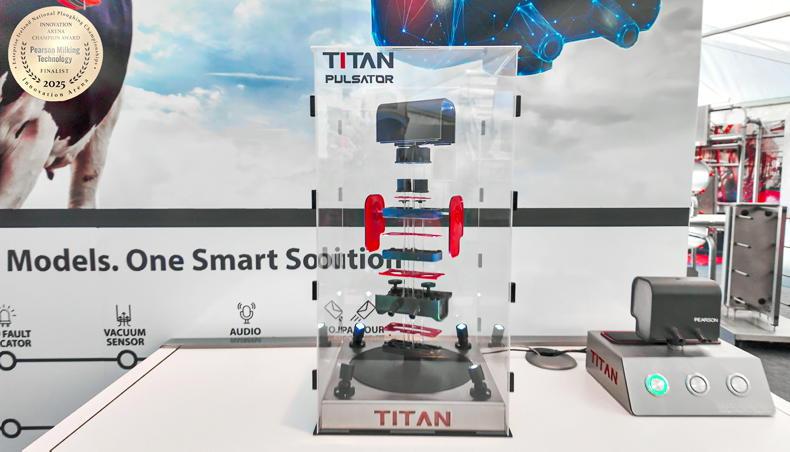
Their newest technology, the Titan Pulsator [smart dairy solution in milking precision and herd welfare], was launched at the National Ploughing Championships in the Enterprise Ireland Innovation Arena.
“It is the world’s first pulsator with intelligent real-time diagnostics. It was recognised as a finalist in the Innovation Arena Champion Award, highlighting its importance to the future of dairy. Titan incorporates AI-driven acoustic monitoring to ‘listen’ to the pulsator in real time, detecting faults before they impact cow welfare or milk yield,” explains Ross.
The company has also developed Bullseye body condition scoring, which uses vision AI to automatically assess cow health without manual checks.
“By embedding AI into milking processes, we’re giving farmers smarter tools that improve animal welfare, reduce downtime, and increase efficiency,” he says. According to Ross, AI offers huge opportunities in agriculture because it can turn constant streams of data into actionable insights.
“For dairy, that means predicting health issues before they occur, optimising feed management, monitoring parlour performance, and ultimately producing more milk with less labour and less stress on the cow.
“On a wider agribusiness scale, AI can also improve sustainability on farm by reducing waste, lowering antibiotic usage, and helping farms meet environmental and production targets,” he observes.
Pearson Milking Technology is also continuing to evolve its vision herd management platform.
“This integrates parlour data, health records, and performance insights in real time.
“We’re also working with international partners on large-scale projects, where automation and AI will be critical for managing herd health across thousands of cows.
“Every new product we develop now considers how AI and smart technologies can make life easier for the farmer, improve cow comfort, and deliver long-term efficiency gains,” he says.
The automation of business processes using AI and related technologies is changing how people work and the types of employment available.
According to the Chartered Institute of Personnel and Development (CIPD), which is the professional body for human resources (HR), AI doesn’t just eliminate tasks for people or create new ones. It can also intensify the pace of work, increase people’s capabilities, enable tasks to be done remotely, or even transfer responsibility of the tasks to someone else.

A key development has been the emergence of ChatGPT and other generative AI chatbots. They’re easy to use, widely accessible and are often free. Generative AI creates new content from existing patterns of data, like text, images, voice and video, and can deliver fast and personalised outputs at scale.
New insights from Microsoft Ireland revealed last month that Ireland’s workforce is navigating a period of transition.
Based on a survey of 1,000 Irish workers, the results show that AI is emerging as a growth area. AI adoption was up 27% year-on-year, as 41% of workers say it helps them work smarter. Half of the responders (50%) believe AI skills are critically important to remain competitive in the job market, while 54% say having these skills will broaden their job opportunities.
Additionally, 40% believe knowing how to use AI at work will help them get promoted faster, and 34% say AI has made them consider other career paths.
This optimism is tempered by uneven access and training gaps, with over half of workers calling for structured or employer-led AI training to help speed adoption.
It is worth noting that since February 2025, Article 4 of the AI Act has been in place which requires businesses to ensure their workforce is equipped with a sufficient level of artificial intelligence (AI) literacy and training.
Ultimately, AI is not just replacing certain functions within the workforce; it is redefining roles, enhancing collaboration, and transforming how people and technology work together.





SHARING OPTIONS