In this week’s instalment of the genetic advantage series, we put the trait of docility under the microscope. While some might not view this index value as being directly linked to an animal’s performance, it is still extremely important among breeders and commercial farmers alike. As we’ve learned throughout the series, there are four factors that will always contribute to a bull’s index figure for a particular trait and affect how it changes over time:
1 Backpedigree
The first set of index figures that a bull receives is a parent average index. This is a simple averaging of all of the index figures of his ancestors. It assumes that the bull’s genetic merit is exactly midway between the sire and dam side of his back pedigree. This is rarely the case, which explains how full brothers can breed so differently.
2 Genotype
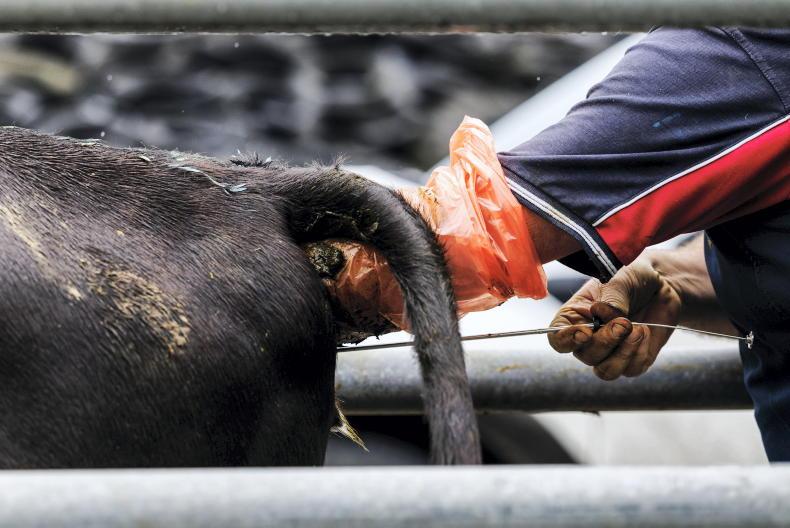
The results from analysing a sample of DNA (e.g. straw of semen) from the bull gives more detail on what mix of genes the bull got. This will alter the bull’s parent average to become more accurate. After a bull is genotyped, his ‘reliability percentage’ figure always goes up.
3 Foreign Data
If a bull already has performance data relating to him or his ancestors and this is sent to ICBF, then this will also alter his index figure. Another ‘change’ to his index figure, but the ‘reliability percentage’ figure will also increase.
4 Irish Data
The final and most telling piece of a bull’s index jigsaw is when his calves start to come through the system. Step four look at how he will breed here in Ireland and how his progeny rates in Irish herds.
Bull example: Milnafua Graduate (MFU)
Milnafua Graduate is a UK Simmental AI sire. By referencing factors one to four already discussed, we can begin to understand how this sire’s docility figure has been calculated.

Milnafua Graduate (MFU)
His back pedigree is in the ICBF database and so is his genotype. In terms of foreign data, the docility trait is not evaluated in the UK, so there is no foreign data to include in his evaluation.
A summary of the docility scores recorded on his progeny can be found in the ICBF Animal Search facility:
Go to www.icbf.com Go to the Animal Search facility down the right hand side of the website and enter in Milnafua Graduate (or his AI code MFU).Click on Docility (1-5 scale) which is shaded in blue.Scroll down to the two tables that say Animal Welfare farmer recorded scores and Linear scorer recorded scores.Animal Welfare farmer recorded scores
The scale goes from one to five, with a low score meaning better docility, or quieter cattle. So, in the case of MFU, his progeny have an average score of 2.1 versus their herd mates’ average of 2.3 (Table 1) – This means they were rated by Irish farmers as being quieter than their herd mates.
Linear scorer recorded scores
The scale here also goes from one to ten, with a high score meaning better docility. MFU’s progeny have received an average score of 8.1 versus their herd mates’ average of 7.6 (Table 2). This means they were rated by ICBF linear scorers as being quieter than their herd mates.
This positive progeny data, combined with his back pedigree and genomic data results, makes Simmental bull Milnafua Graduate (MFU) a five star bull for docility.
The ICBF database is powered by data from Irish farmers and industry partners. This data is converted into genetic indexes by ICBF. Summary tables of this data can be found through the ICBF ‘Animal Search’ as described in the example bull above.
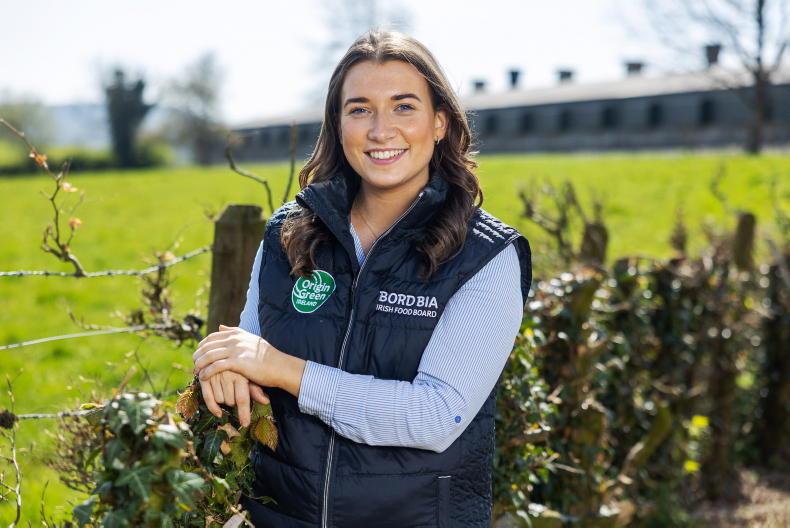
Breeder profile: Sebana Moynagh, Mountnugent, Co Cavan
Why do you participate in the WHPR programme?
I joined WHPR simply to try to improve the breeding within my herd. I wanted to be able to pick out where the weaknesses were in my cows and use this information to try and select bulls that would improve the ability of the herd.
Have you had bull enquiries through the Stockbull Finder?
Yes. This year I had a few enquiries from the Stockbull Finder and I subsequently sold three bulls through it. The bulls had the stars and the figures on paper, and so when the purchaser saw them they were happy with the bull on the ground.
What are your thoughts on the BDGP and BEEP schemes?
I am participating in the BDGP and the BEEP schemes. I would have always weighed my cattle pretty regularly, so now it’s great to be getting something for doing it. At this stage, there is a serious amount of information in the ICBF database on my herd. I record everything I can on it, from birth weights and mature weights right through to AI services and scanning results. I find it useful to have this information at hand at all times. It’s great to see the ADG of calves and to see if they are reaching the targets.
Genotyping can confirm parentage and tell us more about an animal’s genetics. What do you think of it?
It’s good to get the parentage correct on each animal for future breeding and it can eliminate inbreeding. In my opinion, I think you should be able to show results of genotyping in layman terms for the farmer.
What are the three most influential AI sires in the Charolais breed in your opinion?
Artois (CH2215) has been a super bull to use on my heifers. He is very easy calved and is a stylish looking bull too. On mature cows, I’d have to say I like Voimo (VMO) and Trezegoal (TZL); particularly for breeding very consistent, milky, fertile cows. They have a good balance for terminal and replacement traits and that’s what I’m always looking for.
If you had to pick one highlight of your pedigree breeding journey to-date, what would it be?
A highlight for me would certainly be seeing the progeny of my stock selling well as bulls and then breeding well for other suckler farmers. It’s also great seeing my own breeding heifers calving down and producing and feeding good calves.
Advice you would give to a new pedigree breeder starting out?
You want to get an all-round good cow – one that looks well but also functions well. Try to have a heifer or cow that can feed her calf on milk, so it can grow naturally.
In this week’s instalment of the genetic advantage series, we put the trait of docility under the microscope. While some might not view this index value as being directly linked to an animal’s performance, it is still extremely important among breeders and commercial farmers alike. As we’ve learned throughout the series, there are four factors that will always contribute to a bull’s index figure for a particular trait and affect how it changes over time:
1 Backpedigree
The first set of index figures that a bull receives is a parent average index. This is a simple averaging of all of the index figures of his ancestors. It assumes that the bull’s genetic merit is exactly midway between the sire and dam side of his back pedigree. This is rarely the case, which explains how full brothers can breed so differently.
2 Genotype
The results from analysing a sample of DNA (e.g. straw of semen) from the bull gives more detail on what mix of genes the bull got. This will alter the bull’s parent average to become more accurate. After a bull is genotyped, his ‘reliability percentage’ figure always goes up.
3 Foreign Data
If a bull already has performance data relating to him or his ancestors and this is sent to ICBF, then this will also alter his index figure. Another ‘change’ to his index figure, but the ‘reliability percentage’ figure will also increase.
4 Irish Data
The final and most telling piece of a bull’s index jigsaw is when his calves start to come through the system. Step four look at how he will breed here in Ireland and how his progeny rates in Irish herds.
Bull example: Milnafua Graduate (MFU)
Milnafua Graduate is a UK Simmental AI sire. By referencing factors one to four already discussed, we can begin to understand how this sire’s docility figure has been calculated.
Milnafua Graduate (MFU)
His back pedigree is in the ICBF database and so is his genotype. In terms of foreign data, the docility trait is not evaluated in the UK, so there is no foreign data to include in his evaluation.
A summary of the docility scores recorded on his progeny can be found in the ICBF Animal Search facility:
Go to www.icbf.com Go to the Animal Search facility down the right hand side of the website and enter in Milnafua Graduate (or his AI code MFU).Click on Docility (1-5 scale) which is shaded in blue.Scroll down to the two tables that say Animal Welfare farmer recorded scores and Linear scorer recorded scores.Animal Welfare farmer recorded scores
The scale goes from one to five, with a low score meaning better docility, or quieter cattle. So, in the case of MFU, his progeny have an average score of 2.1 versus their herd mates’ average of 2.3 (Table 1) – This means they were rated by Irish farmers as being quieter than their herd mates.
Linear scorer recorded scores
The scale here also goes from one to ten, with a high score meaning better docility. MFU’s progeny have received an average score of 8.1 versus their herd mates’ average of 7.6 (Table 2). This means they were rated by ICBF linear scorers as being quieter than their herd mates.
This positive progeny data, combined with his back pedigree and genomic data results, makes Simmental bull Milnafua Graduate (MFU) a five star bull for docility.
The ICBF database is powered by data from Irish farmers and industry partners. This data is converted into genetic indexes by ICBF. Summary tables of this data can be found through the ICBF ‘Animal Search’ as described in the example bull above.
Breeder profile: Sebana Moynagh, Mountnugent, Co Cavan
Why do you participate in the WHPR programme?
I joined WHPR simply to try to improve the breeding within my herd. I wanted to be able to pick out where the weaknesses were in my cows and use this information to try and select bulls that would improve the ability of the herd.
Have you had bull enquiries through the Stockbull Finder?
Yes. This year I had a few enquiries from the Stockbull Finder and I subsequently sold three bulls through it. The bulls had the stars and the figures on paper, and so when the purchaser saw them they were happy with the bull on the ground.
What are your thoughts on the BDGP and BEEP schemes?
I am participating in the BDGP and the BEEP schemes. I would have always weighed my cattle pretty regularly, so now it’s great to be getting something for doing it. At this stage, there is a serious amount of information in the ICBF database on my herd. I record everything I can on it, from birth weights and mature weights right through to AI services and scanning results. I find it useful to have this information at hand at all times. It’s great to see the ADG of calves and to see if they are reaching the targets.
Genotyping can confirm parentage and tell us more about an animal’s genetics. What do you think of it?
It’s good to get the parentage correct on each animal for future breeding and it can eliminate inbreeding. In my opinion, I think you should be able to show results of genotyping in layman terms for the farmer.
What are the three most influential AI sires in the Charolais breed in your opinion?
Artois (CH2215) has been a super bull to use on my heifers. He is very easy calved and is a stylish looking bull too. On mature cows, I’d have to say I like Voimo (VMO) and Trezegoal (TZL); particularly for breeding very consistent, milky, fertile cows. They have a good balance for terminal and replacement traits and that’s what I’m always looking for.
If you had to pick one highlight of your pedigree breeding journey to-date, what would it be?
A highlight for me would certainly be seeing the progeny of my stock selling well as bulls and then breeding well for other suckler farmers. It’s also great seeing my own breeding heifers calving down and producing and feeding good calves.
Advice you would give to a new pedigree breeder starting out?
You want to get an all-round good cow – one that looks well but also functions well. Try to have a heifer or cow that can feed her calf on milk, so it can grow naturally.






SHARING OPTIONS