


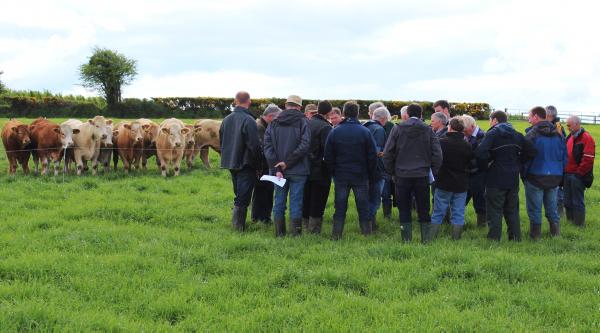
Last week the BETTER Farm participants in the south east and south west regions of the country held a combined discussion group meeting.
Two suckler to beef farms were visited, those of David Kinsella and BETTER Farm participant Patrick Grennan.
Both farmers are outside New Ross, Co Wexford, and are focussed on top-class grassland management.
They have been active members in the Model County Discussion Group and in a smaller grassland group facilitated by local Teagasc adviser, Michael Fitzgerald.
Programme adviser Peter Lawrence kept the focus of the talk to grassland management and producing cattle to market requirements.
Farm details
David Kinsella farms 44ha (108 acres) of grassland and operates a 70-cow spring-calving herd. Calving runs from February to early April with a calving interval of 369 days. Cows are mainly Charolais cross Simmental.
Heifers are retained from within the herd and are served to easy-calving Limousin sires through AI. Heifers calve at 24 months of age with little trouble. Cows are traditionally bred to AI and to a Charolais stock bull.
The farm system was traditionally an 18-month bull finishing system. Typical carcase weight averaged 450kg. However, this year has seen a change in farm direction.
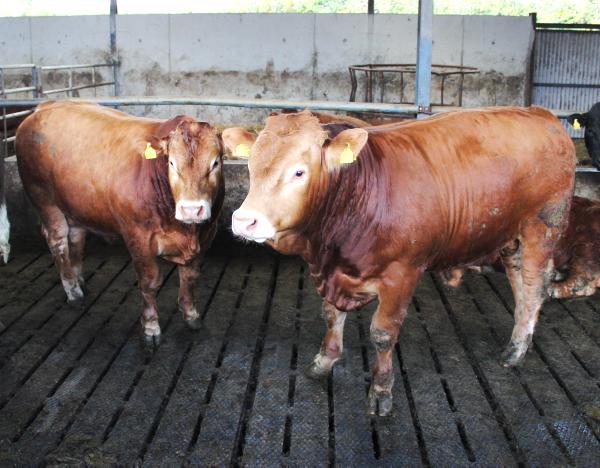
The strongest male calves born in 2013 where castrated last September after weaning. They are now being taken through to finish as steers. The remaining bull calves were left entire and housed to finish under 16 months of age this June.
Patrick Grennan farms 32.8ha (80 acres), of which 30.8ha (75 acres) is grassland with the remainder in spring barley. The farm is extremely fragmented, which makes grazing management complicated as moving stock between land blocks often requires additional help.
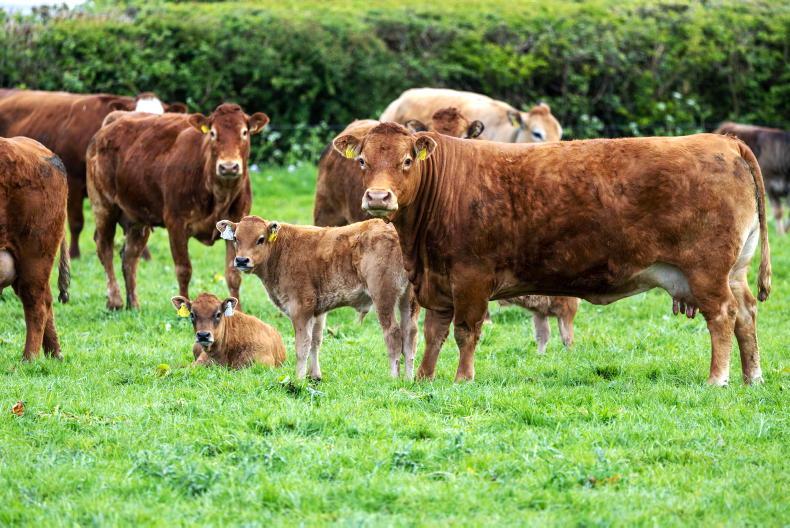
The farm carries 35 spring-calving Limousin cows which are served with a Limousin stock bull. Heifers are normally retained from within the herd, but last year some additional replacements were purchased. Heifers are served with Angus sires through AI and calve at 24 months.
Male calves are taken through to finish under 16 months of age and carcase weights typically average around 420kg. Heifers that are not suitable for breeding are either finished at 22 months or sold as stores, depending on grass and silage availability.
Bull beef
From the profit monitor figures in 2013, the farms in bull beef production generally had higher output and gross margins than weanling, or store producers. The current changes to the market specification generated plenty of debate.
Both farms visited had perfected their system in getting bulls finished. But tighter enforcement of carcase weight limits has created problems in getting young bulls with a high growth potential to the correct fat class.
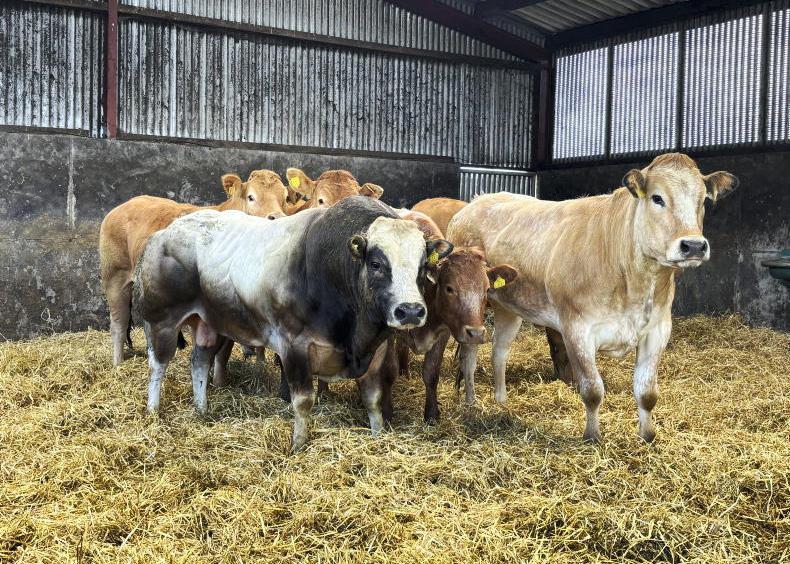
Cattle are being weighed regularly to monitor performance, but more importantly to ensure they do not run into weights in excess of 720kg. Kill-out percentage is difficult to predict in young bulls. A 58% kill-out means the bull is in-spec, whereas some animals can hit 60% kill-out which leaves a bull out of spec and no longer eligible for payment on the QPS grid.
Finishing diets
The group discussed the merits of feeding bulls to reach a minimum of fat class 2+ at a lower carcase weight. The main consensus from the farmers who operate bull beef systems was to start pushing the bulls earlier in the winter and get them onto ad-lib as early as possible.
Intakes ranged from 9kg to 12kg at the ad-lib stage for the group. Maize meal inclusion was beneficial to increase UFV (energy) feed levels, but had led to palatability issues for some of the farmers.
Finishing diets for bulls do not require protein levels to be higher than 12% as the protein is used for growth and laying down lean meat. The group also discussed their experiences with increasing barley levels in the finishing ration. High levels of barley required careful management and a gradual adjustment to prevent acidosis and lameness in bulls.
Rumen buffers had been used to good effect by some of the farmers when feeding diets with 60%+ barley content. Straights such soya hulls and sugar beet pulp that are high in fibre, as well as straw, were also deemed to be crucial in such diets.
Offering 8kg to 10kg of high quality (72+ DMD) silage had merits to reduce the amount of concentrates required during the growing phase in the bull’s diet. A young bull eating 10kg silage (€30/t) and 6kg of ration (€280/t) had a daily feed cost of €1.98/head. The silage was typically saving 2kg to 3kg of concentrates at this stage.
The two host farmers were achieving 2kg/day of daily gain in the bulls during the growing phase, leaving a cost per kg of carcase gain at €1.70 at 58% kill-out. The group discussed the importance of getting sufficient DM energy into the bull in the final stage of the feeding period to get the animal correctly covered.
At this stage, grass silage offered little benefit as intakes were down to 5kg to 6kg fresh weight, costing around 15c/kg, similar to straw costs. When moved to 12kg of finishing meal and 1kg straw, the ration cost €260/t due to the lower protein.
Daily feed costs were typically around €3.20/kg with an average gain of 1.6kg/day. The cost of 1kg of carcase gain, assuming a 58% kill-out, was €3.44.
Grassland
May was seen by the group as being the main month to grow grass. With higher growth rates, being able to utilise swards becomes the issue. The two farms visited had excellent swards and nitrogen was being applied after each grazing. With two grazing rotations now almost complete, 70 to 80 units of nitrogen have already been applied.
With reseeded swards, the group consensus was to keep applying fertilizer until the sward heads out. With silage harvesting coming close, surplus grass can be easily saved in late May to early June.
Similarly, the group’s experience with reseeded swards was heavy covers of over 2500kg DM would not head out and would be invaluable if a cool spell materialised in May. Adjusting the size of grazing area using an electric fence meant that grass can be allocated in daily blocks or two day blocks to increase utilisation.
With most of the farmers calving in February to March, the practice of creep grazing from June onwards was seen as a massive benefit in keeping daily liveweight gain in calves at around 1.4kg to 1.5kg/day without concentrates. This helped to drive weaning weights close to 350kg liveweight for bulls and 300kg in heifers by late September.



SHARING OPTIONS