


An excellent line-up of speakers has been assembled for this year’s IGA beef conference with a mix of technical, practical and policy-orientated papers being presented.
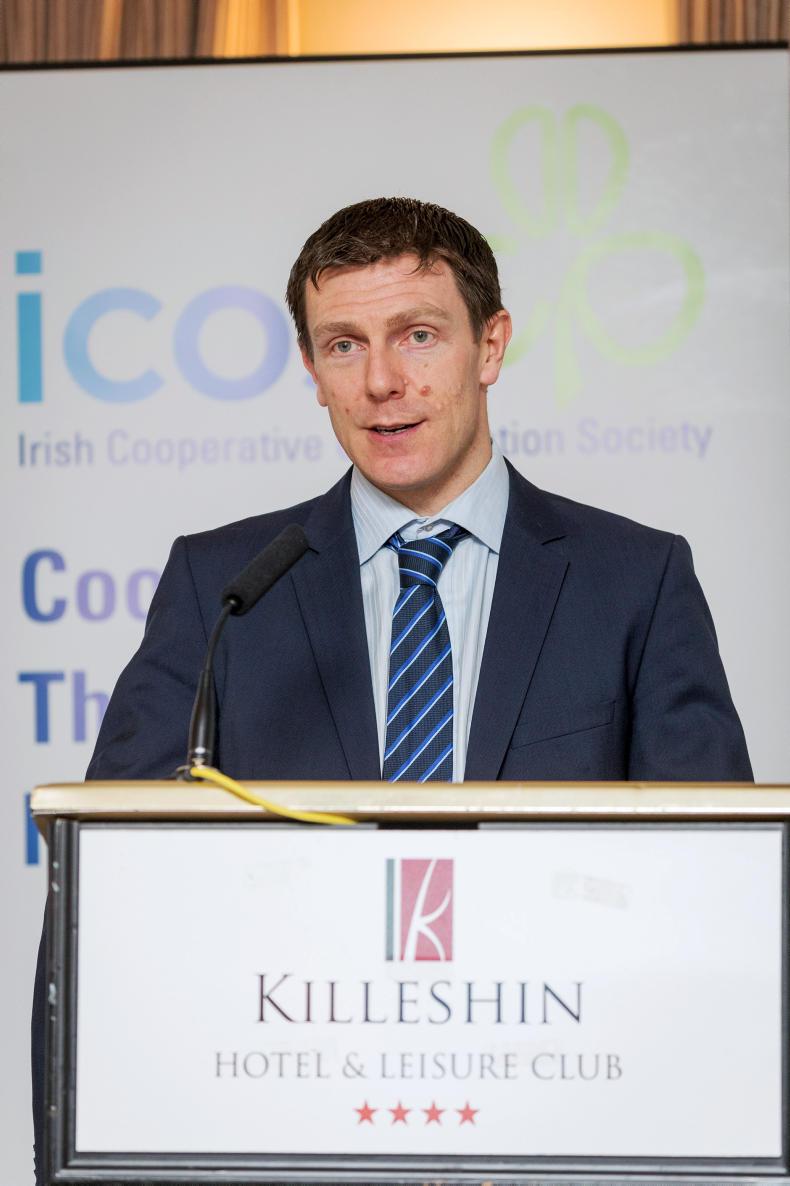
Ciarán Lenehan, beef specialist with the Irish Farmers Journal, will detail how suckler beef farmers can increase efficiency levels inside the farm gate and in turn improve margins even during times of weak beef price. Things like two-year-old calving, increased grass production and hitting breeding targets will all be explained and how they hit the bottom line when implemented on beef farms.
Joe Burke will then present a paper on “Brexit – What we know now – industry impacts?” Joe will outline what is known on Brexit so far, likely outcomes and what Irish beef producers will expect to see over the next two years as Britain prepares to exit the EU.
Teagasc adviser Christy Watson will present some interesting analysis of some feedlot data demonstrating the effect that the terminal index of male animals has on carcase weight, length of finish and how all this effects the profitability of animals. Christy will explain how more and more of his feedlot clients are paying attention to the terminal index of animals at purchase.
The final speaker for the morning session will be Mike Egan from Teagasc, Moorepark. Mike recently took up the position of grassland researcher in Moorepark after completing his PhD in grassland research. He is currently looking at ways of establishing clover on commercial farms and evaluating the benefits of clover swards on Irish farms. Mike will present his paper on how beef farmers can capitalise more from grass on their farms and outline some practical tips on how to improve grassland production and utilisation on beef farms.
To close the morning session, Justin McCarthy, CEO and Editor of the Irish Farmers Journal will chair a panel debate titled: Where to from here for Irish beef farmers? The opportunities and challenges that lie ahead for beef farmers will be discussed and the expert panel, which includes farmers and industry representatives from north and south of the border, will outline their views on where the industry is going and what needs to happen for it to be a viable proposition for younger farmers to pursue a career in.
The Halpin farm
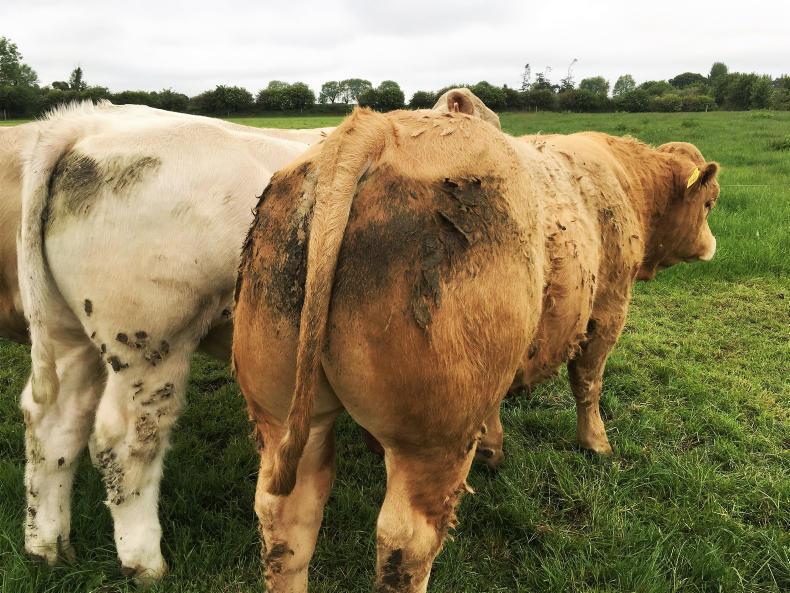
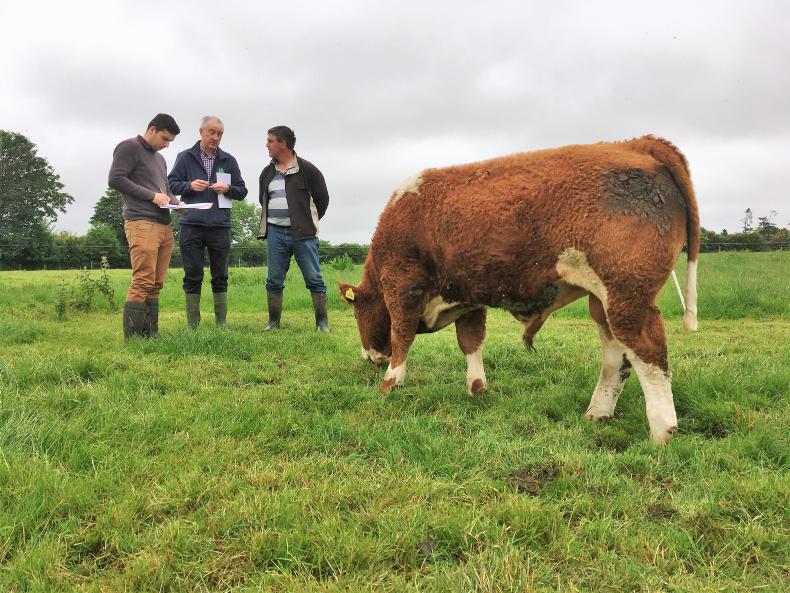
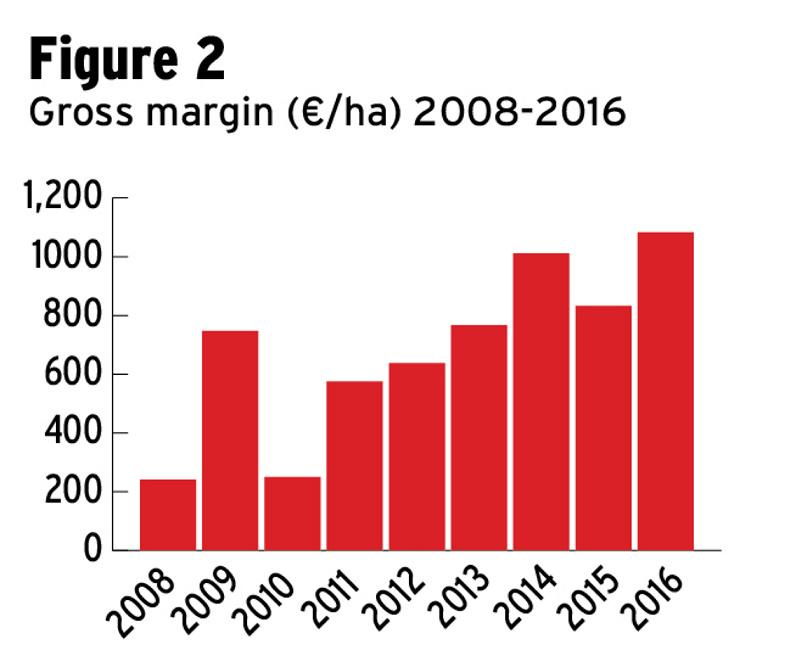
The afternoon session will take in a farm visit to Tom Halpin, who farms just outside Kells in Co Meath. The farm is laid out in one block and is farmed by Tom with the help of his son Matthew who is currently studying agricultural science in UCD, his wife Anne, his mother Brigid and his two daughters Laura and Claire. Tom was a previous participant in the Teagasc/Irish Farmers Journal BETTER farm beef programme from 2012 to 2014 and during this time the farm underwent a number of key changes that have helped Tom improve his gross margin by €508/ha, from €575/ha in 2011 to €1,083 in 2016.
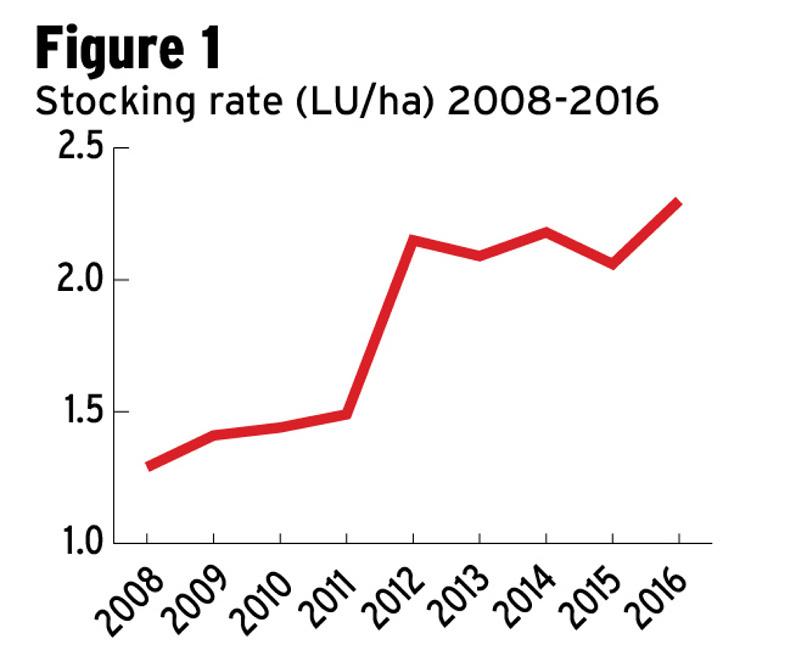
One of the key points in Tom’s farm plan was to increase stocking rate and he had two options to do this: 1 borrow money and purchase extra cows; 2 cease renting conacre, which was taken on a 10-month rent on an annual basis. He chose the latter and his stocking rate automatically went up straight away.
So why did he choose this route?
“We wanted to maximise the output from grass on our own farm. Also, the time involved in managing the rented ground, which was in excess of three miles away, was becoming difficult. We felt that this time and money could then be spent focusing on grassland management and soil fertility on our own farm.”
Increased stock numbers
Tom knew that serious changes had to take place on the farm to deal with the increased stocking rate. One of the first things to happen was that the sheep had to go. “We used the conacre to graze sheep during the winter months and it gave home a rest during this time. I really enjoyed lambing and the ewe flock was performing quite well but with extra cow numbers coming down the line we made the decision to exit. Our thinking was that we were buying in hoggets every year as replacements and we could get back in very quickly if we wanted to. We have invested a lot of time and effort in getting our cow type right on this farm and felt we couldn’t buy as good as what we were breeding for replacements. Tom feels it was the right decision for him at the time but misses the cashflow injection that lamb sales brought to the farm from June through to August.
Grassland management
Another huge area for change was grassland management on the farm. The farm had operated a set stocking system in the past and this has changed gradually since 2012 to a paddock grazing system.
“We divided the farm into sections and placed new drinking points to service these new divisions. We knew we couldn’t carry a high stocking rate with the set stocking system”.
With no sheep, it meant that fields could be split up with a simple single strand of electric fence wire. Stock now graze paddocks for three days and excess grass is regularly taken out as round baled silage during the year. Fertiliser usage has been increased with a focus on increasing soil fertility and a small number of paddocks are being reseeded on an annual basis.
Why split calving?
The farm operates a split calving policy, with calving taking place in February, March and April and also in June and July each year. Tom has often been asked why he opts for the two calving periods. Facilities are probably the biggest factor.
As cow numbers have been increasing, the farm hasn’t got the facilities to calve 100 cows in early spring. Tom was also conscious of labour around calving and felt he wouldn’t be able to properly manage one calving period.
He also maintains summer calving is a very simple system with cows on bare paddocks beside the yard and with many calving unassisted.
“With the ewes sold, it also helps with cashflow. This is the one area I miss with the sheep and lambs – sales were a welcome boost in midsummer. Split calving means we generally have animals to sell at different times of the year.
Replacement policy
One of the great strengths of this farm over the years has been the ability to achieve very high daily liveweight gains on cattle. Cow genetics, sire genetics and grassland management have all combined to enable Tom achieve daily liveweight gains that regularly hit over 1.3kg/day in male calves at grass and 1.2kg/day in heifers.
The farm hasn’t purchased any heifers since Tom started suckling and the only stock purchased are stock bulls. This has meant progress has been a little slower than if he had purchased but it has worked well with the farm now running an excellent herd of continental cows with good milk and fertility.
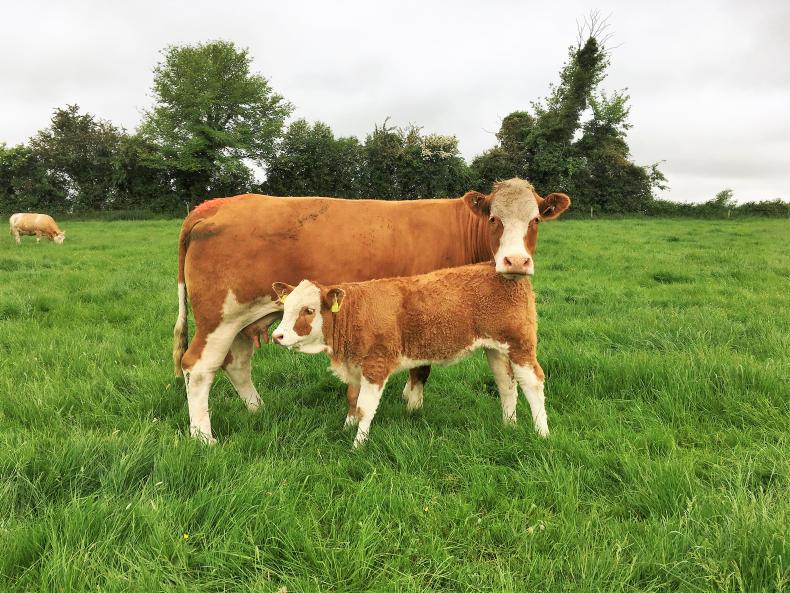
Cow type is typically a Limousin/Simmental/Charolais x with Charolais and Simmental stock bulls presently running with the herd.
“It’s been a while since we had a Simmental bull and I’ve noticed it in the cows. That’s why we went back to Simmental again two years ago and we are really happy with the first calves on the ground.
“We have focused on keeping milk and fertility in the herd, while also ensuring that we don’t stray into any difficult calving genetics.”
Advice
Tom commented: “We have been very lucky down through the years with getting good independent advice. We have had Ned Heffernan, Peter Lawrence and John Kelly our current adviser over the years and everybody brought different views when visits took place but everybody had the progression of the business in their mind when here. The BETTER programme was a huge benefit to this farm and more than anything has given me the confidence to drive the farm further in terms of cow numbers and grass production.
Booking info
The event takes place in the Headfort Arms Hotel, Kells, Co Meath, on Wednesday 21 June. This event is kindly sponsored by MSD Animal Health and Mullinahone Co-op. Booking is essential as places are limited. Discounted tickets from €30 are available for all bookings made online before 14 June. Contact Maura Callery, secretary, IGA at 087-962 6483 or log on to www.irishgrassland.
com for more information.
Land area: 160 acres (64.7ha).
Land type: Free-draining/mixed heavy.
Labour: One unit with family help.
Suckler cow numbers: 100.
System: Under-16-month bull beef and 20-month heifer beef.
2016 gross margin: €1,083/ha.
Stocking rate: 2.3LU/ha.
Calving period: Spring and summer.
Cow type: Simmental/Limousin/Charolais.
Sire Type: Simmental/Limousin/Charolais.
ICBF herd index: €80.




SHARING OPTIONS