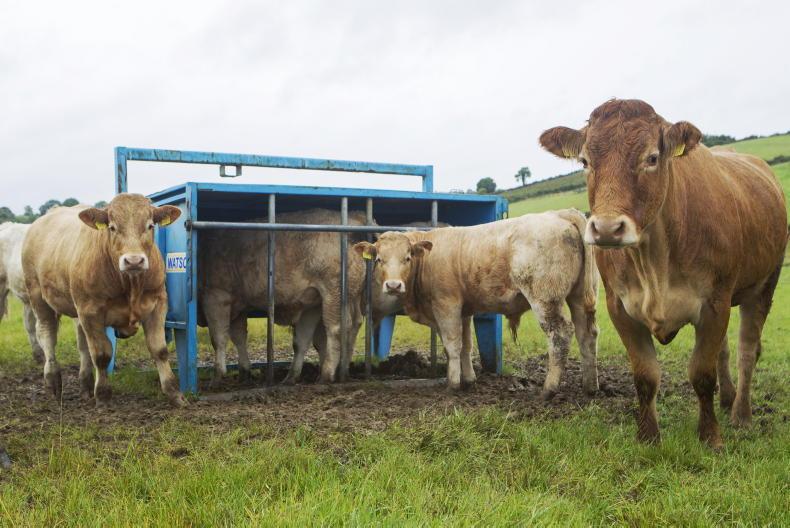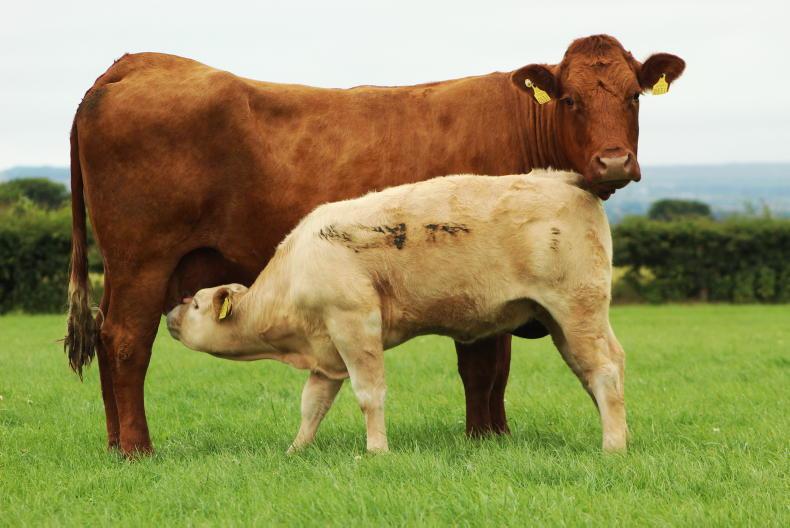
Creep grazing: Paddock grazing suckler cow and calf pairs is the best way to utilise grass and to keep pasture quality high, but grazing paddocks tightly, especially larger paddocks with small groups of stock, can mean that energy intakes can be pinched for calves.
The best way to alleviate this is to creep or forward graze calves ahead of cows. Some farmers will opt for heavy duty creep gates, but a simpler option is to raise a strip wire to allow calves to walk under it.
Temporary posts for horses are excellent for this as they are taller than standard posts. Where access to adjoining paddocks is limited, such as when a paddock is fenced in with sheep wire or surrounded by ditches, a good compromise is to fence off one fifth of the paddock to allow only calves to graze this.
When the main paddock is grazed off, simply lift the wire and cows will clean off this small section in a matter of hours. Creep grazing of calves will also allow for small amounts of concentrates to be introduced in a trough. Doing this as opposed to a creep feeder ensures that all calves receive some concentrates, as opposed to a handful of calves gorging themselves in a creep feeder.
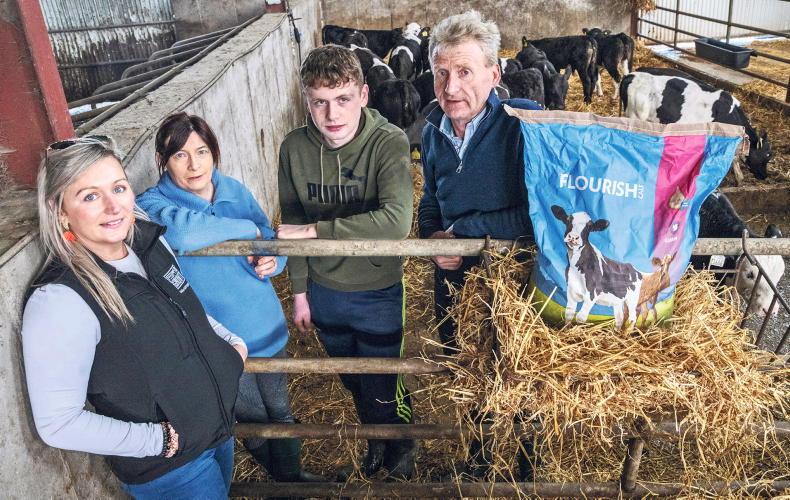
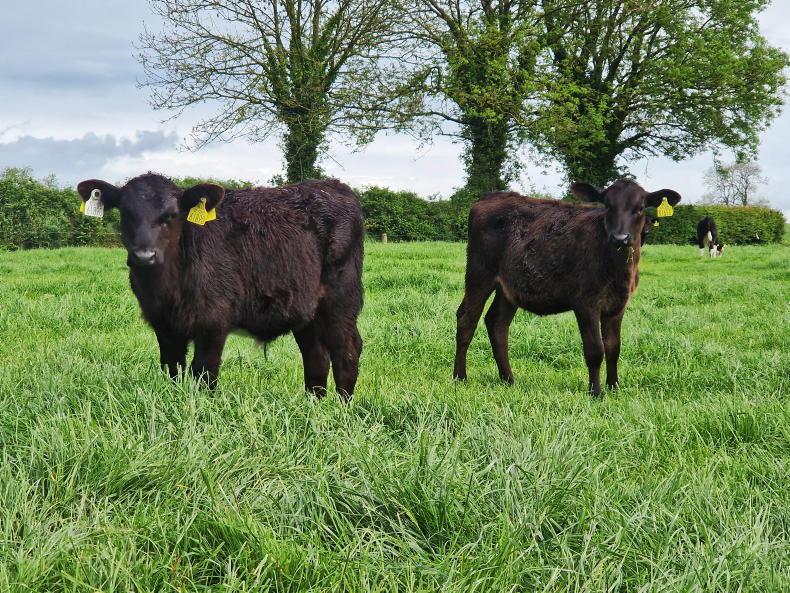
Transitioning dairy beef calves: Getting the nutrition right in dairy beef calves cannot be overstated in the post weaning period. By now, most calves will be out at grass, while a small number of later born calves will be in the final stages of weaning.
Roughage is the most important thing to keep in a calf’s diet. Many farmers have switched from grazing leafy covers to grazing stronger, stemmier covers to ward off summer scour syndrome.
This works best where calves are in out blocks, but will lead to a certain amount of wastage which will have to be corrected later on. Older cattle generally do not like grazing off these paddocks as calves tend to dirty grass a lot, while silage from these is also not the most palatable.
Another option is to try to graze lower covers and graze these tight, but it does take some patience. There will be a certain amount of fibre in the base of the grass, but subsidising with straw in a feeder of some sort is also useful. Concentrate feeding should be maintained, ideally at a rate of 2kg/head/day for the coming weeks until calves develop an appetite for grass, with this reduced to 1kg/head/day thereafter.
Scanning: With many farmers now in to their third round of AI, activity levels should be reducing. If they aren’t then scanning should be completed promptly to identify if there is an issue. Where a stock bull is concerned, attention must turn to him.
Bulls create the semen roughly six weeks before it is used, meaning stress or illness in the weeks before can have a negative effect on semen quality.
With regards to AI, if there are high levels of repeats, semen handling and timing of AI should be examined, while blood testing cows to check for mineral deficiencies may also be worthwhile.