



Grass: for the majority of beef and suckler farmers, they are in an excellent place regarding grazing conditions and grass supply. For many farms in the west and northwest there has never been more surplus bales taken off paddocks.
While grazing will typically recycle approximately 90% of the P and K back in to the soil through cattle dunging, baling out surplus returns nothing. Putting a light application of slurry back on these fields is the ideal scenarios, but use of a compound that is high in K such as 29-0-14 will work well where slurry is unavailable. Apply any remaining chemical fertilisers now for optimum utilisation as opposed to waiting until just before the deadline.
While the majority of farms are in a good position with grass, if you are in one of the drier areas and are unable to hold grass cover, never mind thinking of building it, then housing some forward store cattle and finishing indoors, or off loading these stores live in the ring may be an option.
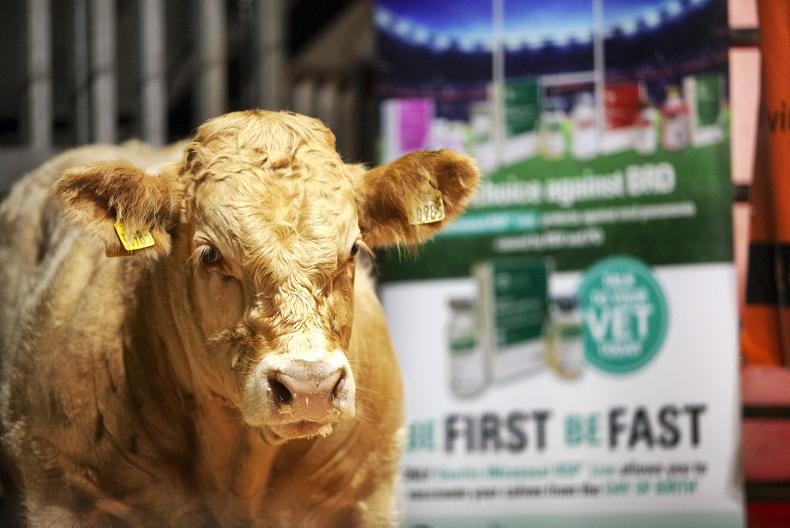
Vaccination: the first of the two live mart demos was held on Tuesday past in Ballinasloe Mart, Co Galway. Local vet Conor Geraghty and MSD’s Cara Sheridan discussed vaccination and dosing protocols for weanlings ahead of the winter housing period, with Geraghty highlighting how stress can be a compounding factor in weanling sickness, particularly pneumonia. Creep feeding calves ahead of housing and weaning was the optimum, as when weanlings were then housed shortly afterwards on silage or sold on to other farmers, the constant in their diet was meal.
Regarding pneumonia, Geraghty introduced farmers to a scoring system to assess weanling health with calves scored from one to three. A score one calf comes to meal and feeds without issue, with this calf being perfectly healthy. A score two calf comes to the barrier and may pick at meal or not eat at all. In Geraghty’s opinion, this calf should ideally be seen by a vet, or at a minimum, treated by the farmer immediately. A score three calf is one that does not come to the barrier to feed off meal. This calf needed immediate veterinary assistance. As Geraghty pointed out, the system works well not only for farmers but for people who may be feeding cattle for you and haven’t keen stock person skills.
Scanning sucklers: the majority of suckler herds will have finished breeding at the end of July or possibly earlier. From 30 days after the last cow was bred, scanning can be completed. Early scanning is particularly useful where a stock bull is used and bulling dates may not have been recorded, as a well-trained scanner will give an accurate account of the stage of gestation.
Where there is a high empty rate of cows, questions have to be asked. If a stock bull is used, is there a chance of sub fertility, and why would this have possibly happened? A high temperature in the weeks leading up to breeding can have a negative impact on sperm production. Where AI is used, was heat detection and time of insemination correct? Were cows in a good body condition score and a high plain of nutrition in front of them?


SHARING OPTIONS