



Artificial insemination (AI) work has been completed on the farm and the bulls are now running with the cows for the remainder of the breeding season.
We typically carry out around four to five weeks of AI to produce our replacement calves, after which cross-bred bulls are introduced to the herd.
The most challenging aspect of mating occurs during those initial weeks spent on the vet stand at the rotary parlour checking tail paint on 1,200 cows.
The novelty of this begins to wear off after the first three weeks as the number of cows needing attention starts to decline – by this stage we might only have 15 to 20 cows picked out over a three-hour period.
Scanned
Overall, mating has gone well, especially considering this is an entirely new herd. We scanned a couple of weeks ago to get the six-week in-calf rate and it is 74% which was better than expected.
The plan will be to improve this figure over the years as the herd gets established.
Development and growth
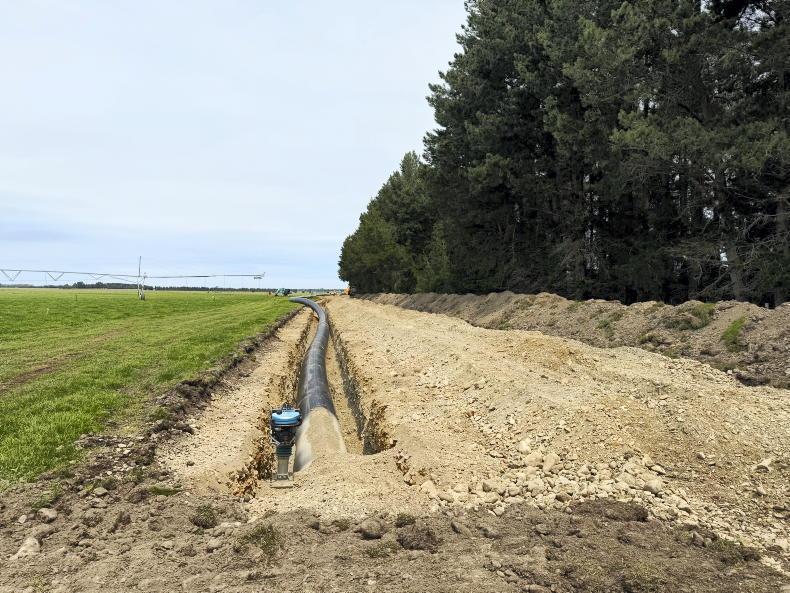
Outside the milking parlour, we are continuing significant development work around the farm, ranging from painting fences at the entrance to installing a 900mm irrigation line throughout the property.
The irrigation line tends to cause the most disruption as we have to set up a reel in paddocks where fences have been cut and stop pivots from running in certain areas.
However, this new water scheme should improve water availability for irrigation in the coming years, which is vital in this part of Canterbury.
We’ve experienced a very wet few weeks over the holidays in Canterbury and this has continued into January.
Urea was applied just before, so we’re really starting to see a surge in grass growth, which should put us in a good position as we lengthen the round over the next few weeks.
Another recent project on the farm has been our inclusion in the local nitrate monitoring group.
This group consists of farmers in the area who are willing to test water bodies and wells around their farms specifically for nitrates.
Such groups have been running in mid-Canterbury, as the impact of nitrates on water quality is a primary concern for farmers and the general public – it is a very topical issue seemingly faced worldwide.
Unlike at home in NI, we have extremely free-draining soils due to the formation of the Canterbury plains. Having groups like this provides a great opportunity to identify trends and engage in discussions with farmers about what we can do to address these issues.
Together we can gather a wealth of data in-house and this could then be used to inform local authority decision making.
Workload
As we move into February the workload should decrease considerably, with calving and AI work now complete. Most decision-making will revolve around how we can prepare for the next season.
We will lengthen the round, aiming to close up the farm with a strong cover of grass going into the next season.
Since this is a new farm for us and a new location, we plan to finish with an additional 100 kg of grass DM/ha beyond our target (or at least that’s the plan!).
Given that the farm is situated around 300m above sea level, we need to account for the shorter growing season. Every kg of grass we can bring into next spring holds significantly more value than if it were grazed late in the season.



SHARING OPTIONS