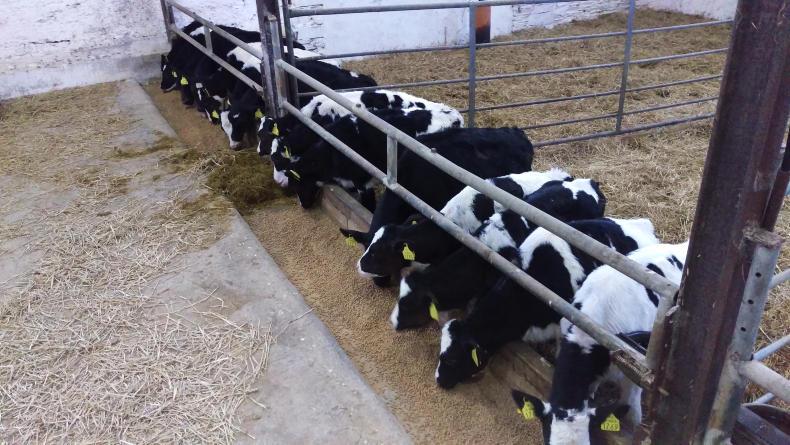
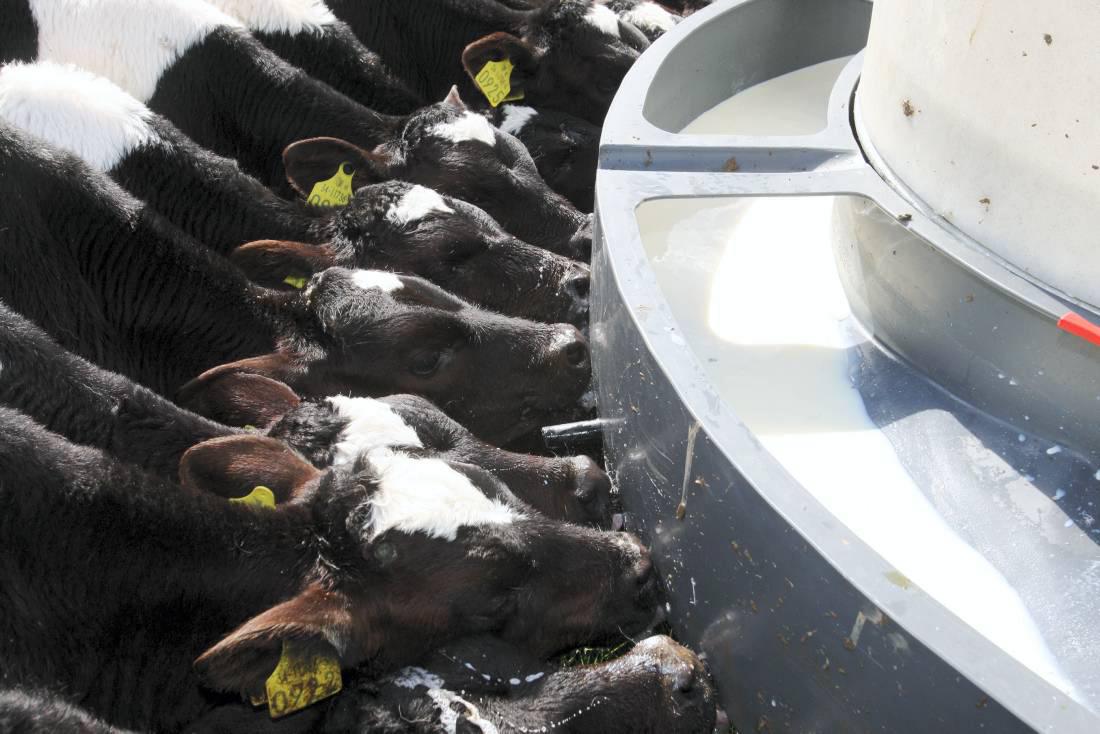
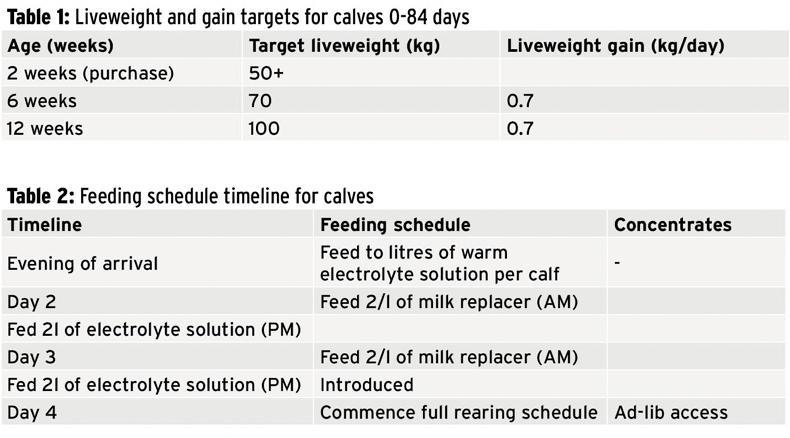
The focus during the rearing stage is to ensure calves have reached 90-100kg when weaned at 10-12 weeks of age. A breakdown of the performance targets during the rearing phase are outlined below.
In order to hit these targets it is important the newly purchased calf is transferred on to the rearing system gradually in order to avoid any digestive upsets. A typical feeding schedule for newly purchase calves is detailed in the table below.
ADVERTISEMENT
Put a feeding checklist in place
The implementation of a calf feeding checklist is vital as early identification of a health problem and intervention is key to maintaining performance, reducing costs and reducing mortality. It is important that you contact your vet if you are in any doubt about treatment.
Calf feeding checklist
All calves should be checked before feeding to ensure that they are healthy, alert and looking for a feed.
Any calf showing signs of illness should be removed from the group and treated accordingly.
All milk or milk replacer should be measured out accurately and should not be heated to over 38°C as this damages milk quality and puts calves off feeding.
Watch the calves while feeding to ensure that they are all drinking. Refusal of milk is often the first sign of health issues.
All feeding and mixing equipment should be thoroughly cleaned after each use for hygiene reasons.
Ensure that the calves have access to fresh, clean water at all times.
Make sure all calves have clean, dry straw beds and top up as necessary. Wet bedding should be removed as it increases the humidity in the calf shed and increases likelihood of pneumonia problems.
Make changes to the milk feeding regime such as weaning gradually to prevent digestive upsets.
A small amount of concentrate should be offered to calves and replaced regularly to prevent it going stale, and encourage consumption.
Introduce new rations/meals gradually to prevent upsets and ensure the calves have access to a source of roughage (straw).
This content is available to digital subscribers and loyalty code users only. Sign in to your account, use the code or subscribe to get unlimited access.
The reader loyalty code gives you full access to the site from when you enter it until the following Wednesday at 9pm. Find your unique code on the back page of Irish Country Living every week.
CODE ACCEPTED
You have full access to the site until next Wednesday at 9pm.
CODE NOT VALID
Please try again or contact support.
The focus during the rearing stage is to ensure calves have reached 90-100kg when weaned at 10-12 weeks of age. A breakdown of the performance targets during the rearing phase are outlined below.
In order to hit these targets it is important the newly purchased calf is transferred on to the rearing system gradually in order to avoid any digestive upsets. A typical feeding schedule for newly purchase calves is detailed in the table below.
Put a feeding checklist in place
The implementation of a calf feeding checklist is vital as early identification of a health problem and intervention is key to maintaining performance, reducing costs and reducing mortality. It is important that you contact your vet if you are in any doubt about treatment.
Calf feeding checklist
All calves should be checked before feeding to ensure that they are healthy, alert and looking for a feed.
Any calf showing signs of illness should be removed from the group and treated accordingly.
All milk or milk replacer should be measured out accurately and should not be heated to over 38°C as this damages milk quality and puts calves off feeding.
Watch the calves while feeding to ensure that they are all drinking. Refusal of milk is often the first sign of health issues.
All feeding and mixing equipment should be thoroughly cleaned after each use for hygiene reasons.
Ensure that the calves have access to fresh, clean water at all times.
Make sure all calves have clean, dry straw beds and top up as necessary. Wet bedding should be removed as it increases the humidity in the calf shed and increases likelihood of pneumonia problems.
Make changes to the milk feeding regime such as weaning gradually to prevent digestive upsets.
A small amount of concentrate should be offered to calves and replaced regularly to prevent it going stale, and encourage consumption.
Introduce new rations/meals gradually to prevent upsets and ensure the calves have access to a source of roughage (straw).
If you would like to speak to a member of our team, please call us on 01-4199525.
Link sent to your email address
We have sent an email to your address. Please click on the link in this email to reset your password. If you can't find it in your inbox, please check your spam folder. If you can't find the email, please call us on 01-4199525.
ENTER YOUR LOYALTY CODE:
The reader loyalty code gives you full access to the site from when you enter it until the following Wednesday at 9pm. Find your unique code on the back page of Irish Country Living every week.
SHARING OPTIONS