



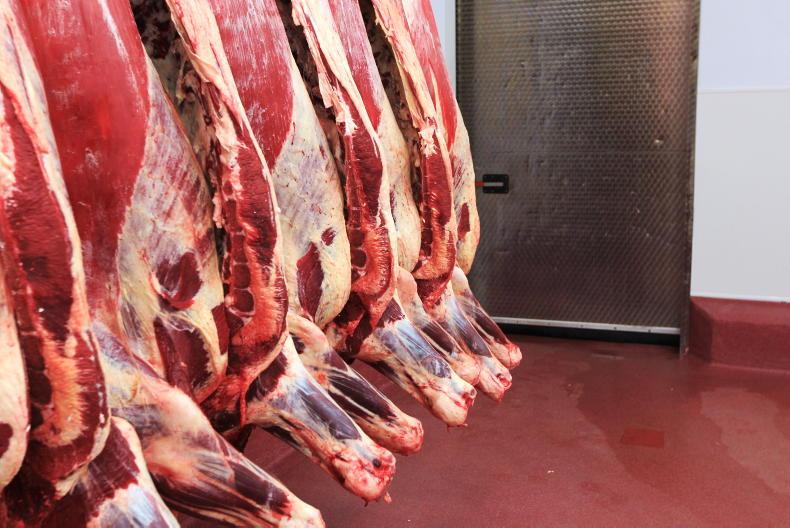
Some of the larger factories continue to actively try and apply pressure to the beef trade this week, with some trying to drop quotes by 10 cent/kg. Base quotes for bullocks are working off quotes of €6.30-€6.40/kg while base quotes for heifers are working off €6.40-€6.50/kg.
Factories are getting very little cattle at the lower quotes, and have had to stand on at last week’s quotes to get sufficient supplies. Base prices of as high as €6.60/kg for heifers remain in some of the smaller establishments.
There is also a lot of leeway with out of spec cattle being included in bonus schemes, which would point to factories needing the cattle. Breed bonuses continue to be paid out between 10-20 cent/kg for in spec Aberdeen Angus and Hereford bullocks and heifers.
Changes are being implemented to the Certified Irish Angus scheme from 7 September 2026. From this date farmers will receive a 10 cent/kg bonus on qualifying in spec Angus animals. Members will then be paid an additional 5 cent/kg for participation in AgNav, the sustainability platform/tool developed by Bord Bia, Teagasc and ICBF.
A further 5 cent/kg genetics is available for animals that are genotyped with a recorded sire.
The cow trade has come under a little pressure but demand for manufacturing beef is still strong, with cows required to fill contracts. While the cow kill has been strong, the majority of the cows being killed have been light dairy cows. P+3 cows are working off base quotes of €5.80-€5.90/kg.
O grading cows are working off €5.90-€6/kg, while R grading cows are being quoted anywhere from €6.10-€6.20/kg.
There continues to be higher numbers than normal of dairy cows coming to the market, especially in the south of the country where grass supplies continue to be under pressure and dairy farmers offload any cull cows earlier than usual
The bull trade is generally trending 10 cent/kg behind where they were two weeks ago.
U grading bulls are working off a price of €6.50kg while R grading bulls are being bought at €6.40/kg this week. Under 16 months bulls are working off base prices of between €6.20-€6.30/kg but numbers of these younger bulls are in short supply at the moment.
Kill Numbers
Bank holiday weeks don’t make a huge difference anymore, as most factories are only killing for three to four days anyway. Last week’s kill remained steady with just under 31,000 head being processed, a drop of about 600 head on the previous week.
The cow kill saw the biggest drop coming in at 6,607, a drop of just over 800 head on the previous week.
The cow kill had been trending very strong over the last number of weeks, and despite the drop last week the cow kill is expected to remain higher over the next few weeks as dairy farmers in the south continue to offload cull cows earlier than usual
The bullock kill saw an increase of 400 head last week, with 13,205 bullocks killed – the highest weekly kill of bullocks so far in 2026.
The heifer kill remained steady at 8,757 head, a similar position to where we were last week. This year’s kill is currently running 63,781 head behind the same period in 2025. Last week’s kill was just over 6,000 head behind the same week in 2025.
The year-on-year deficit in numbers is expected to practically correct itself over the next few weeks, with stronger than forecast cow numbers coming to the market. Grass supplies in the south could also see cattle drafted earlier for slaughter.
While this may increase numbers, they will be coming in at lighter weights so factories will still need numbers for throughput and to get the required volume of beef to sell.
IFA livestock chairman Delan Hanrahan said “The removal of Brazilian beef from the EU market in September will increase demand for Irish beef.
The UK market is currently returning up to 50c/kg more than our price and the Bord Bia Prime Export Benchmark Tracker price despite the weakness of the EU market is still 8c/kg above ours”



SHARING OPTIONS