


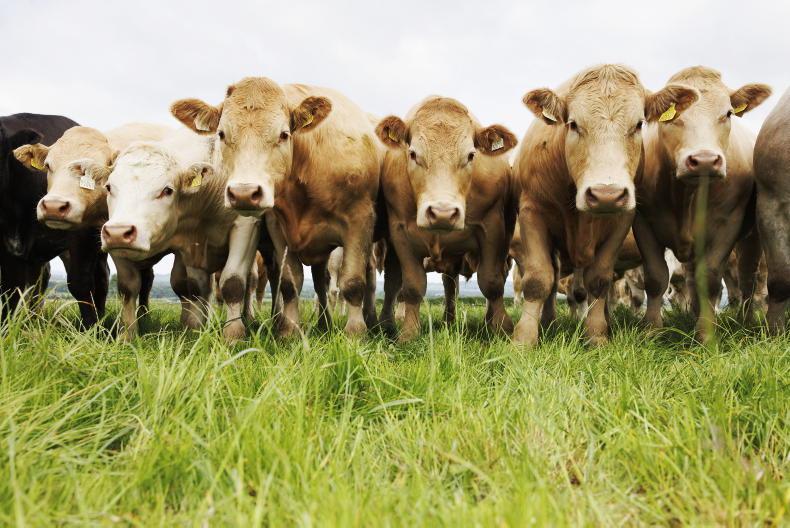
Analysis of the latest Animal Identification and Movement (AIM) data for 1 June 2025 shows the number of beef cattle on farms aged up to 36 months of age running 130,000 head lower compared to 1 June 2024.
As detailed in Table 1, there were reductions recorded across all age categories with the exception of calves aged zero to three months of age.
The greatest fall occurred in animals aged 24 to 30 months of age with 53,356 fewer animals. This was followed by 31,305 less animals aged 18 to 24 months of age with the reduction in both of these categories reflective of the recent sharp drop in the weekly beef kill.
Numbers will continue to tighten in the longer term with over 20,000 fewer animals in the 12 to 18 month age bracket and almost 18,000 fewer animals in both the six to 12 and three to six month age brackets. The only category to record an increase is the zero to three month age category with 11,401 more calves present on farms on 1 June. This is underpinned by beef males and females and influenced by greater use of sexed semen and beef genetics in the dairy herd.
276,301 head decline
The fall in beef animals is matched by a similar reduction in suckler cows, dairy cows and dairy replacement heifers bringing the size of the national herd to 6.9m head. The 276,301 head decline in numbers compared to 12 months earlier equates to a drop of 3.8% in the national cattle herd and continues the recent trend of shrinkage in the national herd.
Suckler cow numbers stood at 765,877 head on 1 June representing a year-on-year fall of 44,840 head. Dairy cows reduced by a lower number of 37,432 head with the number of cows on farms recorded at 1.6m head. It is clear that numbers will struggle to remain at this level with the number of replacement dairy heifers on farms recorded at 772,483 head, some 65,488 head lower than 1 June 2024.




SHARING OPTIONS