



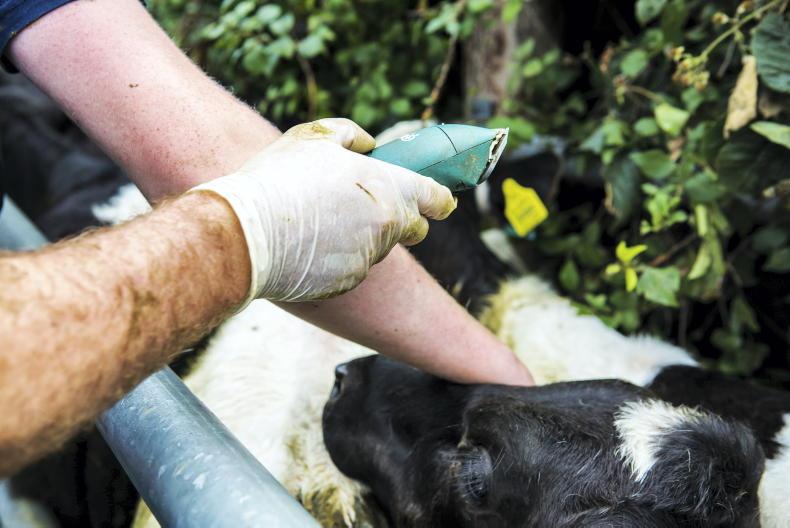
The Irish Farmers' Association (IFA) has called on Minister for Agriculture Martin Heydon to increase the payment rates and expand the eligibility criteria of the TB hardship grants in place to support farmers forced to carry extra cattle as a result of TB restrictions.
IFA animal health chair David Wall has said a relook is urgently needed, as restricted farmers are currently dealing with extra stock numbers at a time of severe fodder pressure.
The Department of Agriculture’s hardship grant currently pays out over a maximum of four months between 1 November to 30 April and is calculated based on the number of additional animals retained on the holding compared with the previous year.
Payment rates are €30 per dairy cow, €50 per suckler cow and €30 for other bovines per month, subject to a maximum payment of €300/month.
'Not adequate'
“The current hardship grant is simply not adequate to meet the costs these farmers are facing,” Wall commented.
“The dates are outdated and do not come close to covering the cost of feeding and maintaining these additional animals.”
The IFA has said that the eligibility date should begin from 1 September and cover all months up to April to reflect the levels of complementary feeding that is taking place on farms.
It has also called for the grant to be extended to the end of April for all farmers, regardless of when restrictions are lifted, to ensure farmers are not forced to sell surplus animals at a time of poor market prices.
A relook of the €300/month payment cap is needed and new per-animal costings should be drawn up by Teagasc, the IFA added in its calls to Minister Heydon.
“Silage alone can equate to around €90 to €100 per cow per month,” Wall continued.
“We have seen a reduction in TB numbers this year, which is welcome. This also means there is ample fiscal space within the TB programme budget.
“The Minister now has an opportunity to use some of that space to make a real difference to farmers who are experiencing the financial and practical consequences of a TB restriction, which is compounded by the drought conditions.”




SHARING OPTIONS