


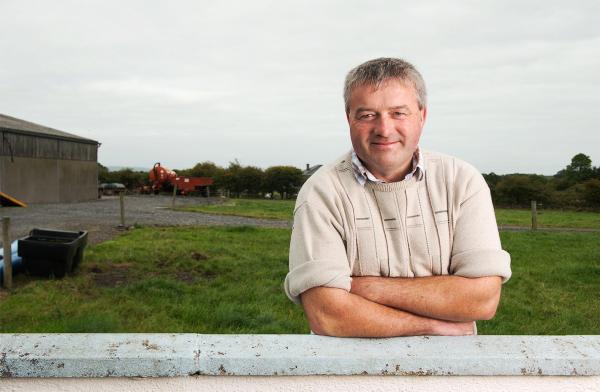
When you arrive outside Paddy McGing’s farm at Parks, Ballyglass, Co Mayo, you can’t but be struck by a sense of history. Across the road is the imposing entrance to the once-great Blake estate with its cut-stone archway and original gates to remind you of a bygone era. A plaque on the wall proclaims that here was the first place where the green and red of Mayo was worn.
From Paddy’s farmyard you can see for miles across a vein of good land that runs from Balla through Ballinrobe and on into Headford, Tuam and Athenry. To the west Croagh Partick and the Partry hills lie in the distant haze.
Indeed it was from the west that Paddy’s family originated and moved here to farm in 1929. His mother, Margaret, a sprightly 83 years old, lives with Paddy on the farm.
In 1982 Paddy took over the 25 acre farm from his father, who passed away a year later. He inherited a nearby farm of 35 acres from his uncle. Dairying was the enterprise he chose and built up to 25 cows over the following years. An adjoining 25 acres was leased in 1994.
His existing buildings were fairly basic and with the encouragement of his adviser, the late John Lynn, and generous grant aid, he erected a slatted unit and milking parlour.
Paddy bought a JCB in 2002 and supplemented his income by digging for and repairing leaks in the local water scheme. This led to him taking on maintenance of the scheme from 2005 onward. The need to be able to respond quickly to problems meant that dairying was not the most suitable farm enterprise and Paddy decided to change to drystock. He opted to go for a heifer finishing system.
Initially he bought heifer weanlings and brought them to finish.
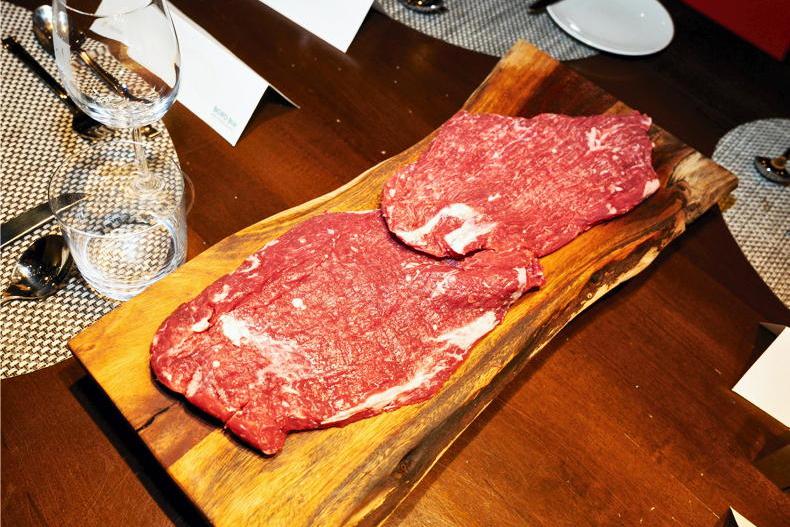
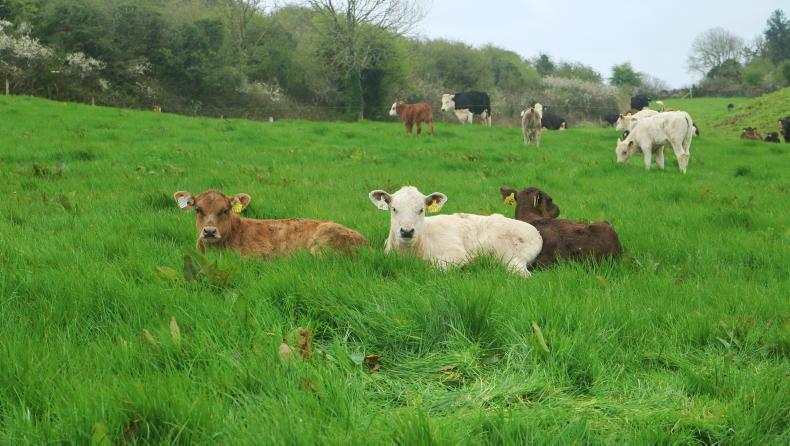
His current system involves buying Charolais heifers weighing fron 400kg to 425kg from June to August and killing them the following May onwards. At a comfortable stocking rate of 1.42 LU/ha Paddy carries 57 heifers. Most are slaughtered in Dawn Meats Ballyhaunis but some may be sold live. Heifers get two kilos of meal/day over the winter period and an average of 3kg/day on grass for six weeks prior to slaughter.
Price
Paddy makes the point that there was 90c/kg difference between this year’s and last year’s price. At that price level there simply is no room for a margin. On the other hand he is finding it hard to source this year’s stock. Paddy outsources the job of buying the stock. His buyer knows exactly what he wants and will deliver the animals to the farm.
This year he has decided to discontinue the leased land. He will still carry the same numbers but it will involve paddocks and reseeding over the next few years.
Getting cattle off the land by the end of October and out as early as possible will be part of the programme agreed with Teagasc adviser Alan Nolan. His involvement in a BTAP finishing group gives him the confidence to achieve this.
Paddy’s reputation as an innovator is well known locally because, in truth, he is one of the most gifted people to find solutions to the problems that can make life difficult around the farm or household.
A walk round Paddy’s neat and tidy farmyard leaves you absolutely fascinated by the array of innovations and clever solutions to day-to-day problems on the farm.
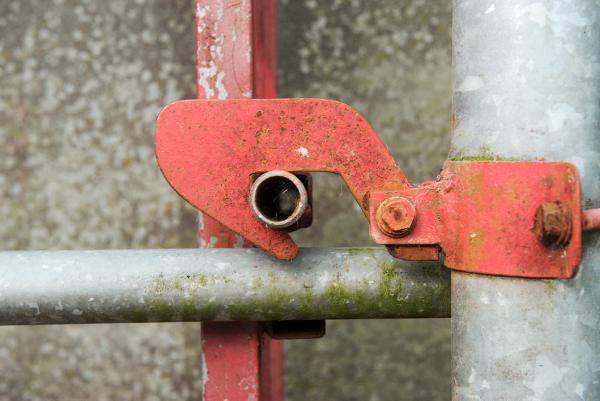
His cattle handling unit is simple but the gates are positioned to give maximum flexibility and circulation. The backing gate on the cattle race has a clever goose-neck lock that closes easily and remains closed.
Outside the shed door I see a rectangular hoop that looks like a large basketball ring. This allows Paddy to attach a large bag to store his waste plastic during the winter.
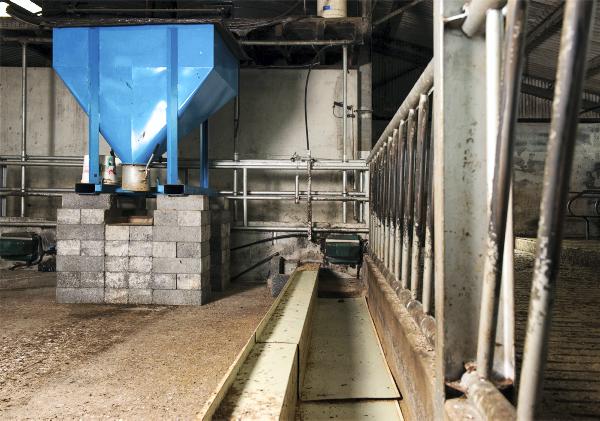
His main meal storage bin is outside but he has made a smaller bin that is easily transported into the shed on a forklift where it sits elevated at the end of the passageway. He brings his heifers into the slatted shed in summer to feed meals. The problem of them scattering the nuts across the passageway was overcome with a homemade lightweight trough, easily removed in winter. He had just “crow proofed” the shed after several frustrating efforts.
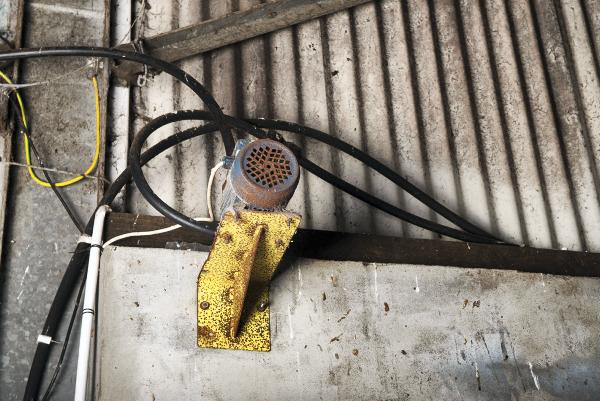
During the severe frosty period some years ago many slatted houses were left without water, with thirsty cattle and expensive repairs. Paddy’s solution was to install a system using a circulation pump and an extra pipeline. This allowed the water to continuously move preventing icing. The cost for his shed was about €150.
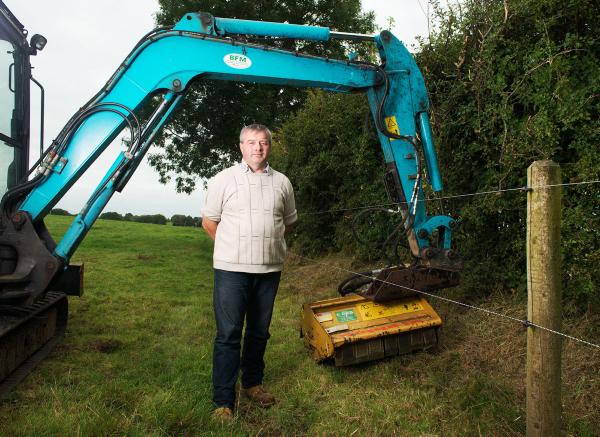
Paddy showed me a series of adaptations to machinery in the farmyard ranging from changes to the slurry tanker to help with emptying the slurry tanks, altering the attachment angles of machines such as the hedge cutter to enable him to trim inside and under the electric fencing along his hedgerows. He also made a handy mole plough for laying water pipes on the farm. His plastic water troughs are surrounded by a strong homemade steel frame to prevent pushing by cattle.
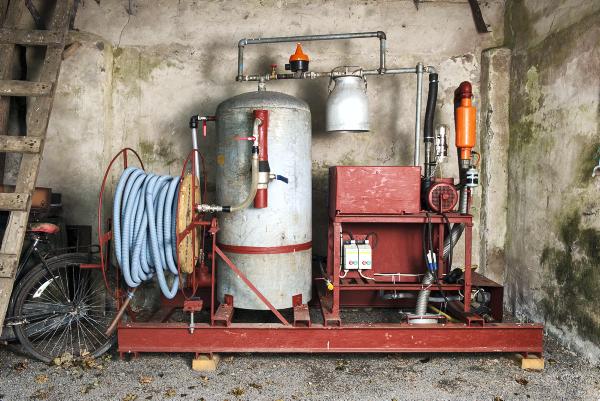
On the water maintenance side he has invented a machine, using milking machine parts that can suck out a build-up of stones or silt from water meters. In the light of the current installation of meters throughout Ireland, this is a really timely innovation.
A day with Paddy McGing makes you think that there is no such thing as a problem that can’t be solved. He is a man at ease with himself and with his community. His pride in his farming and his work makes him content with his lot. The day I visited him he was hosting a rural development group from The Armagh/Down Development Association (TADA). They were hugely impressed with his farm and innovations.
For Paddy, farming is not only a way of life, it provides endless opportunities for an inventive mind to provide solutions to the problems that frustrate and annoy the rest of us. Wonder is there any easier way to bring SAM to Mayo?



SHARING OPTIONS