Further Education and Training (FET) in Ireland offers a wide range of options for those finishing secondary school or seeking to upskill or reskill at any age. FET can be a great first choice for individuals unsure about their next steps, those who want to explore different career paths, or those who want to build practical skills before pursuing higher education.
There are over 1,500 Further Education and Training (FET) courses available in Ireland. These courses, offered by various institutions like Education and Training Boards (ETBs), cover a wide range of subjects and levels.
One of the key benefits of these Post-Leaving Cert (PLC) courses is the growing number of opportunities to progress onto higher education through the Higher Education Links Scheme (HELS), with almost 20% of all CAO applicants now presenting a Level 5 or Level 6 PLC award to access these opportunities.
The HELS is the process by which students can progress from further education PLC courses into Higher Education programmes using their Level 5 or Level 6 Major award. There are over 1,800 of these linked PLC courses throughout the country that students can study across a diverse range of areas.
Local learning
With 740 full-time students and 500 part-time students attending the Mayo College of Further Education and Training, principal Michael Murphy has seen a lot of progress in education in the regions.
“ETBI is the national representative association for Ireland’s 16 Education and Training Boards (ETBs). From September, all further education courses in Mayo from Level 1 to Level 6 will be operated under the Mayo College of Further Education and Training banner.
“We’re working towards a unified approach to our learner system and a standard service provider of guidance, literacy, language supports if required, counselling supports if required; they’ll all be there in place, and we are working on that project now,” Michael explains.
A significant development has taken place recently with the multi-million-euro plans to build a College of Further Education and Training on the site of the former military barracks in Castlebar.
Mayo Sligo Leitrim Education and Training Board (MSLETB) has been approved to enter into a formal negotiation process with Mayo County Council in regard to acquiring the site.
MSLETB’s proposal involves providing a state-of-the-art, purpose-built college building on the barracks site, which will allow for training in such diverse fields as agricultural technology, life sciences, digital technology and applied research and skills, providing high-quality facilities for learners and staff.
“The appetite is there. We work hard to get students in. But FET’s value is rising all the time. People are seeing FET as the first choice.
“If you’re in a small school in Crossmolina, Co Mayo, with 200 students in total, and you go to UCD with a population of 25,000 people, you’re parachuted into that, and suddenly you’re trying to get supports; it’s a huge culture shock.
There is no town in Mayo with 250,000 people. Some students are able for it, but not all school leavers are.
FET is a pathway to that,” he says.

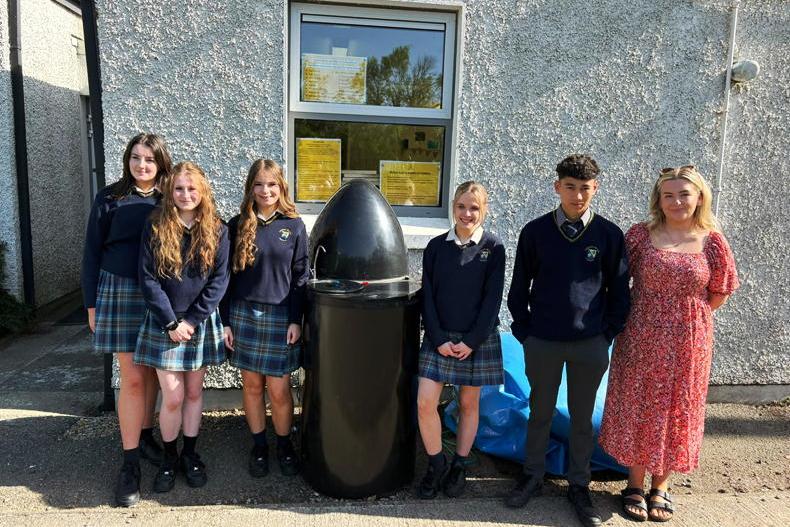
Mayo College of Further Education and Training.
Agriculture courses
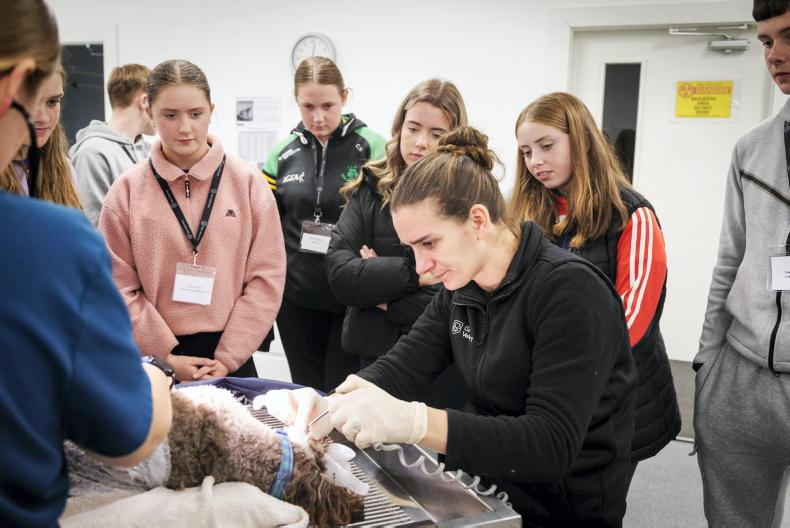
FET agriculture courses in Ireland provide a range of options for those seeking careers in farming or related fields.
These courses, often offered at the QQI Level 5 and Level 6, equip individuals with the technical skills, knowledge, and practical experience needed for various roles in agriculture, from managing farms to working in related industries.
Students can then progress from these further education courses into a BSc in agricultural science or related courses.
For students awaiting CAO courses or trying to navigate their next step following on from their Leaving Certificate, Michael offers the following advice.
“I always say to students, take a course that interests you. Because what I find is that students are picking the course where their friends are going to college. The course is either for one, two, three or four years, and you will make new friends.
But if you go to a course you don’t like, you won’t stick with it.
It’s very costly for parents if their paying for accommodation and to make a mistake of that nature, losing your SUSI grant, dropping out after that period of time – it’s a very costly mistake”.
Michael is also encouraging students to look at the Further Education and Training Course Hub to see what courses are offered and avail of the free guidance services that are available during this time.
“All FET courses are on fetchcourses.ie. We run a phone line (1800 100 100) so there’s lots of advice available. I would say 20 years ago, if you missed your CAO place, it was probably detrimental because you might not get into a course until the following year. Your choice was to repeat.
“I would say now check the CAO website, because that’s the bible. There are so many routes into further education courses, so check the FET section on it.
“Research shows that if you do a FET course and continue on in to higher education, your chances of finishing the degree are higher,” Michael says.

Further Education and Training (FET) in Ireland offers a wide range of options for those finishing secondary school or seeking to upskill or reskill at any age. FET can be a great first choice for individuals unsure about their next steps, those who want to explore different career paths, or those who want to build practical skills before pursuing higher education.
There are over 1,500 Further Education and Training (FET) courses available in Ireland. These courses, offered by various institutions like Education and Training Boards (ETBs), cover a wide range of subjects and levels.
One of the key benefits of these Post-Leaving Cert (PLC) courses is the growing number of opportunities to progress onto higher education through the Higher Education Links Scheme (HELS), with almost 20% of all CAO applicants now presenting a Level 5 or Level 6 PLC award to access these opportunities.
The HELS is the process by which students can progress from further education PLC courses into Higher Education programmes using their Level 5 or Level 6 Major award. There are over 1,800 of these linked PLC courses throughout the country that students can study across a diverse range of areas.
Local learning
With 740 full-time students and 500 part-time students attending the Mayo College of Further Education and Training, principal Michael Murphy has seen a lot of progress in education in the regions.
“ETBI is the national representative association for Ireland’s 16 Education and Training Boards (ETBs). From September, all further education courses in Mayo from Level 1 to Level 6 will be operated under the Mayo College of Further Education and Training banner.
“We’re working towards a unified approach to our learner system and a standard service provider of guidance, literacy, language supports if required, counselling supports if required; they’ll all be there in place, and we are working on that project now,” Michael explains.
A significant development has taken place recently with the multi-million-euro plans to build a College of Further Education and Training on the site of the former military barracks in Castlebar.
Mayo Sligo Leitrim Education and Training Board (MSLETB) has been approved to enter into a formal negotiation process with Mayo County Council in regard to acquiring the site.
MSLETB’s proposal involves providing a state-of-the-art, purpose-built college building on the barracks site, which will allow for training in such diverse fields as agricultural technology, life sciences, digital technology and applied research and skills, providing high-quality facilities for learners and staff.
“The appetite is there. We work hard to get students in. But FET’s value is rising all the time. People are seeing FET as the first choice.
“If you’re in a small school in Crossmolina, Co Mayo, with 200 students in total, and you go to UCD with a population of 25,000 people, you’re parachuted into that, and suddenly you’re trying to get supports; it’s a huge culture shock.
There is no town in Mayo with 250,000 people. Some students are able for it, but not all school leavers are.
FET is a pathway to that,” he says.

Mayo College of Further Education and Training.
Agriculture courses
FET agriculture courses in Ireland provide a range of options for those seeking careers in farming or related fields.
These courses, often offered at the QQI Level 5 and Level 6, equip individuals with the technical skills, knowledge, and practical experience needed for various roles in agriculture, from managing farms to working in related industries.
Students can then progress from these further education courses into a BSc in agricultural science or related courses.
For students awaiting CAO courses or trying to navigate their next step following on from their Leaving Certificate, Michael offers the following advice.
“I always say to students, take a course that interests you. Because what I find is that students are picking the course where their friends are going to college. The course is either for one, two, three or four years, and you will make new friends.
But if you go to a course you don’t like, you won’t stick with it.
It’s very costly for parents if their paying for accommodation and to make a mistake of that nature, losing your SUSI grant, dropping out after that period of time – it’s a very costly mistake”.
Michael is also encouraging students to look at the Further Education and Training Course Hub to see what courses are offered and avail of the free guidance services that are available during this time.
“All FET courses are on fetchcourses.ie. We run a phone line (1800 100 100) so there’s lots of advice available. I would say 20 years ago, if you missed your CAO place, it was probably detrimental because you might not get into a course until the following year. Your choice was to repeat.
“I would say now check the CAO website, because that’s the bible. There are so many routes into further education courses, so check the FET section on it.
“Research shows that if you do a FET course and continue on in to higher education, your chances of finishing the degree are higher,” Michael says.
SHARING OPTIONS