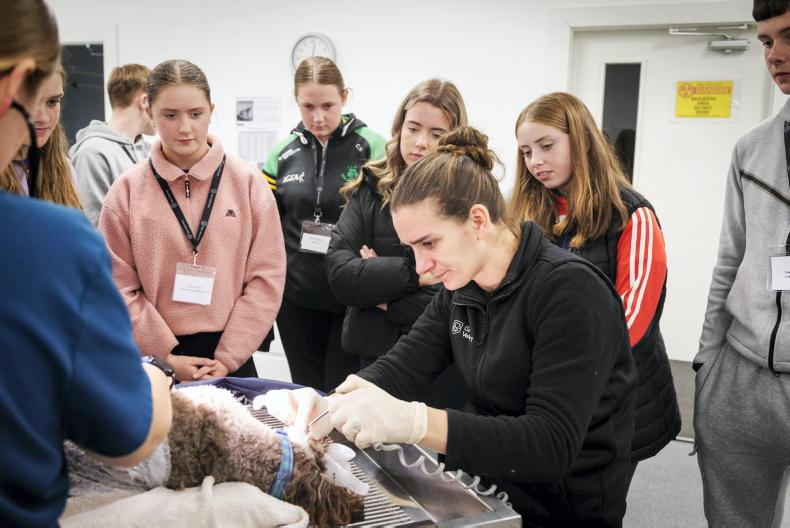
The CAO deadline is fast approaching and while this is the process that many go on towards third level education, there has been a remarkable growth in demand for Further Education and Training (FET) as an alternative pathway to direct university entry.
Over the last five years, there has been a 12% rise in the number of students choosing Post-Leaving Certificate (PLC) courses, apprenticeships and newly introduced tertiary degree programmes.
According to Nessa White, interim CEO in SOLAS, the Further Education and Training (FET) Authority, this positive trend reflects the increasing recognition of FET as a vital and valuable option for students after secondary school. The development has been strongly supported by initiatives such as the integration of FET courses and apprenticeship information on the CAO website in 2021.
Nessa says, “This evolution is broadening opportunities for learners, enabling them to make choices that truly suit their individual strengths and aspirations – whether that leads directly to employment or progression into higher education. Through the Education and Training Boards (ETBs), FET is available in every county, providing a flexible and supportive environment where learners can discover their passion and build fulfilling careers tailored to their interests.”
For students uncertain about their next steps after school, PLC courses offer a valuable chance to explore subjects of interest and ease the transition into third-level education.
“Research consistently shows that those who begin with a FET course are better prepared for university, with improved skills in research, presentations, writing, and communication. These graduates are less likely to drop out and benefit greatly from the extra year spent developing these essential abilities,” she explains.
School Leavers can consider over 1,500 Further Education and Training (FET) courses that are on offer across the country. They cover a wide range of subjects and are offered by the 16 ETBs across the country. They are full-time, generally lasting one to two years in length, leading to awards at Levels 4-6 of the National Framework of Qualifications (NFQ).

Minister for higher and further education, James Lawless.
Rise in apprenticeships
With 78 apprenticeship programmes available at Levels 5-10 on the National Framework of Qualifications (NFQ), learners gain real-world experience, valuable networks, and clear pathways into employment.
Bridging the gap between education and work through practical skills and mentorship, apprentices are a strong alternative to traditional college. They provide a pathway to immediate employment, build loyalty, and develop skills directly relevant to a specific industry, benefiting both the individual and the employer through skill development and retention. When there are larger skills shortages in certain sectors, often apprenticeships in that area will be developed and funded further to fill that shortage.
“Apprenticeships also represent a powerful route, allowing participants to earn while they learn and gain qualifications that are recognised across a range of industries, from agriculture and horticulture to Information and Communications Technology (ICT) and financial services to retail, and social work, in addition to the highly valued craft apprenticeships such as electrical and plumbing,” says Nessa.
It is important to note that apprenticeship waiting times, particularly for off-the-job training in Ireland, are typically three to six months, but significant backlogs have caused many to wait longer since the COVID-19 pandemic. Instructor recruitment and increased training places have been implemented to clear this backlog, with recent figures showing a substantial reduction in those waiting over six months.
The duration depends on the trade, training centre capacity, and phase, with later phases often aligning with academic calendars.
A full list of apprenticeships is available on apprentice.ie, where students can take a look at the different sectors offering the earn while learning model.

Nessa White, interim CEO SOLAS.
Tertiary options
A tertiary degree is a new blended degree programme that combines Further Education (FE) with Higher Education (HE), offering supportive, flexible pathways into higher education, breaking down traditional barriers like points requirements.
They are offered across a wide range of academic and professional fields, including business, engineering, health and welfare, and ICT.
“These programmes allow students to begin their studies at a FET College and, upon successful completion, automatically transfer to a higher education institute to finish their degree, making higher education more accessible than ever before,” says Nessa.
Since their launch in 2025, there are now over 40 joint degree programmes offered through the National Tertiary Office (NTO). They are driven by careers, not points and are learner-centric. These degrees provide a structured pathway for students to gain specialised knowledge and skills, with options ranging from certificates and diplomas to bachelor’s, master’s, and doctoral degrees.
With more pathways than ever before now available for students, the Minister for Further and Higher Education, James Lawless TD, encourages students to explore these routes.
New pathways
“From apprenticeships to further education and training, and into higher education, the opportunities are endless. I encourage everyone to explore these routes: whether you want to master green technologies, develop digital skills, or embrace modern methods of construction, there is now a pathway tailored to your talent and ambition,” he says.
Acknowledging the important milestone that CAO offers, Minister James Lawless explains they are only “one part of a much wider system of options”.
“Further education courses, apprenticeships, FET-to-HE progression routes, tertiary degree pathways and the expanded part-time fee scheme all provide high-quality alternatives or complements to the traditional CAO route.
“When it comes to the Leaving
Certificate, it is important to consider the options rather than just points alone.”
For more information, visit CAO.ie/options or contact your local ETB.

The CAO deadline is fast approaching and while this is the process that many go on towards third level education, there has been a remarkable growth in demand for Further Education and Training (FET) as an alternative pathway to direct university entry.
Over the last five years, there has been a 12% rise in the number of students choosing Post-Leaving Certificate (PLC) courses, apprenticeships and newly introduced tertiary degree programmes.
According to Nessa White, interim CEO in SOLAS, the Further Education and Training (FET) Authority, this positive trend reflects the increasing recognition of FET as a vital and valuable option for students after secondary school. The development has been strongly supported by initiatives such as the integration of FET courses and apprenticeship information on the CAO website in 2021.
Nessa says, “This evolution is broadening opportunities for learners, enabling them to make choices that truly suit their individual strengths and aspirations – whether that leads directly to employment or progression into higher education. Through the Education and Training Boards (ETBs), FET is available in every county, providing a flexible and supportive environment where learners can discover their passion and build fulfilling careers tailored to their interests.”
For students uncertain about their next steps after school, PLC courses offer a valuable chance to explore subjects of interest and ease the transition into third-level education.
“Research consistently shows that those who begin with a FET course are better prepared for university, with improved skills in research, presentations, writing, and communication. These graduates are less likely to drop out and benefit greatly from the extra year spent developing these essential abilities,” she explains.
School Leavers can consider over 1,500 Further Education and Training (FET) courses that are on offer across the country. They cover a wide range of subjects and are offered by the 16 ETBs across the country. They are full-time, generally lasting one to two years in length, leading to awards at Levels 4-6 of the National Framework of Qualifications (NFQ).

Minister for higher and further education, James Lawless.
Rise in apprenticeships
With 78 apprenticeship programmes available at Levels 5-10 on the National Framework of Qualifications (NFQ), learners gain real-world experience, valuable networks, and clear pathways into employment.
Bridging the gap between education and work through practical skills and mentorship, apprentices are a strong alternative to traditional college. They provide a pathway to immediate employment, build loyalty, and develop skills directly relevant to a specific industry, benefiting both the individual and the employer through skill development and retention. When there are larger skills shortages in certain sectors, often apprenticeships in that area will be developed and funded further to fill that shortage.
“Apprenticeships also represent a powerful route, allowing participants to earn while they learn and gain qualifications that are recognised across a range of industries, from agriculture and horticulture to Information and Communications Technology (ICT) and financial services to retail, and social work, in addition to the highly valued craft apprenticeships such as electrical and plumbing,” says Nessa.
It is important to note that apprenticeship waiting times, particularly for off-the-job training in Ireland, are typically three to six months, but significant backlogs have caused many to wait longer since the COVID-19 pandemic. Instructor recruitment and increased training places have been implemented to clear this backlog, with recent figures showing a substantial reduction in those waiting over six months.
The duration depends on the trade, training centre capacity, and phase, with later phases often aligning with academic calendars.
A full list of apprenticeships is available on apprentice.ie, where students can take a look at the different sectors offering the earn while learning model.

Nessa White, interim CEO SOLAS.
Tertiary options
A tertiary degree is a new blended degree programme that combines Further Education (FE) with Higher Education (HE), offering supportive, flexible pathways into higher education, breaking down traditional barriers like points requirements.
They are offered across a wide range of academic and professional fields, including business, engineering, health and welfare, and ICT.
“These programmes allow students to begin their studies at a FET College and, upon successful completion, automatically transfer to a higher education institute to finish their degree, making higher education more accessible than ever before,” says Nessa.
Since their launch in 2025, there are now over 40 joint degree programmes offered through the National Tertiary Office (NTO). They are driven by careers, not points and are learner-centric. These degrees provide a structured pathway for students to gain specialised knowledge and skills, with options ranging from certificates and diplomas to bachelor’s, master’s, and doctoral degrees.
With more pathways than ever before now available for students, the Minister for Further and Higher Education, James Lawless TD, encourages students to explore these routes.
New pathways
“From apprenticeships to further education and training, and into higher education, the opportunities are endless. I encourage everyone to explore these routes: whether you want to master green technologies, develop digital skills, or embrace modern methods of construction, there is now a pathway tailored to your talent and ambition,” he says.
Acknowledging the important milestone that CAO offers, Minister James Lawless explains they are only “one part of a much wider system of options”.
“Further education courses, apprenticeships, FET-to-HE progression routes, tertiary degree pathways and the expanded part-time fee scheme all provide high-quality alternatives or complements to the traditional CAO route.
“When it comes to the Leaving
Certificate, it is important to consider the options rather than just points alone.”
For more information, visit CAO.ie/options or contact your local ETB.
SHARING OPTIONS