While completing their agriculture science degree, students are required to undertake blocks of professional work experience.
The length of placement and requirements depends on what course and college you’re doing. What they all have in common is that the opportunity provides students with the chance to gain practical skills, expand their knowledge and gain a broader understanding of different enterprises, which ultimately makes it an essential part of their degree.
With the rising cost of living, it is becoming increasingly difficult for students to get financial support, and unfortunately, this means not everyone is in the position to complete their work experience abroad.
Over the last 11 years, the Agricultural Science Association (ASA) has teamed up with the Irish Farmers Journal, Seedtech and Tirlán to support agricultural science students looking to expand their knowledge abroad. The €1,000 scholarship aims to provide students with financial support, allowing them to travel to different countries to complete this placement and gain a more global understanding of agri food production.
The winners of the 2025 travel bursaries from University College Dublin (UCD), supported by the Irish Farmers Journal, were Siobhan Ryan, Edana Mimnagh and Liam Byrne. From South East Technological University (SETU), the successful students were Orla Bennis and David Prendergast, and their bursary was supported by Tirlán and Seedtech.
This year’s recipients travelled as far as Ohio, Idaho and Texas in the USA as well as Northumberland in England and Dumfries in Scotland. They return to college this autumn with fresh perspectives and invaluable experiences.
Moving abroad
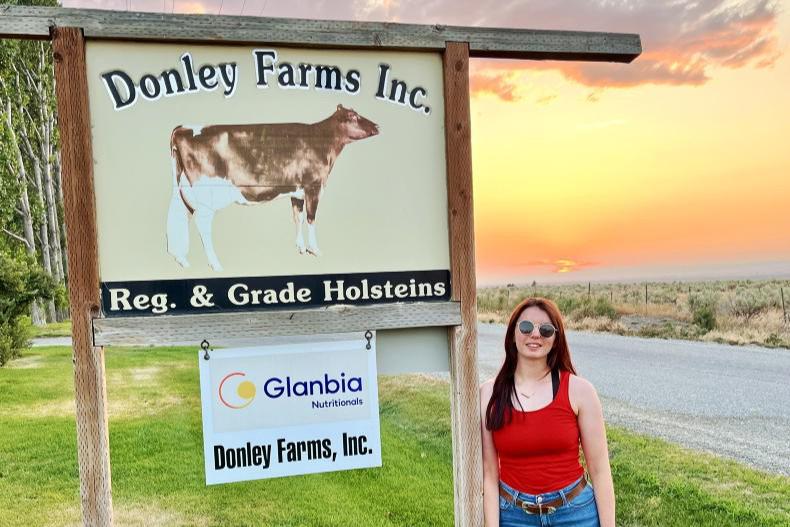
Moving abroad for placement is a big jump for a lot of students. For Siobhan Ryan in UCD, travelling to Idaho and working on the Donley Farm, with 700 beef cattle and a 1,000-strong dairy herd, gave her a different perspective and pushed her outside of her comfort zone.
“My time in Idaho opened my eyes to the scale, systems, and mindset of farming abroad. It gave me a new perspective on how American agriculture is compared to Irish agriculture.
“The biggest learning curve for me was stepping outside of my comfort zone and adapting to completely new farming systems and practices. Each placement [Siobhan had another in Ireland] challenged me differently, whether it was learning new skills such as AI (Artificial Insemination) or understanding the business side of agriculture.
“Seeing the large scale efficiency of Donley Farms in Idaho gave me a new appreciation for how innovative farmers can be.
“It made me realise how important it is to be open-minded, continuously learning, and not afraid to ask questions.”
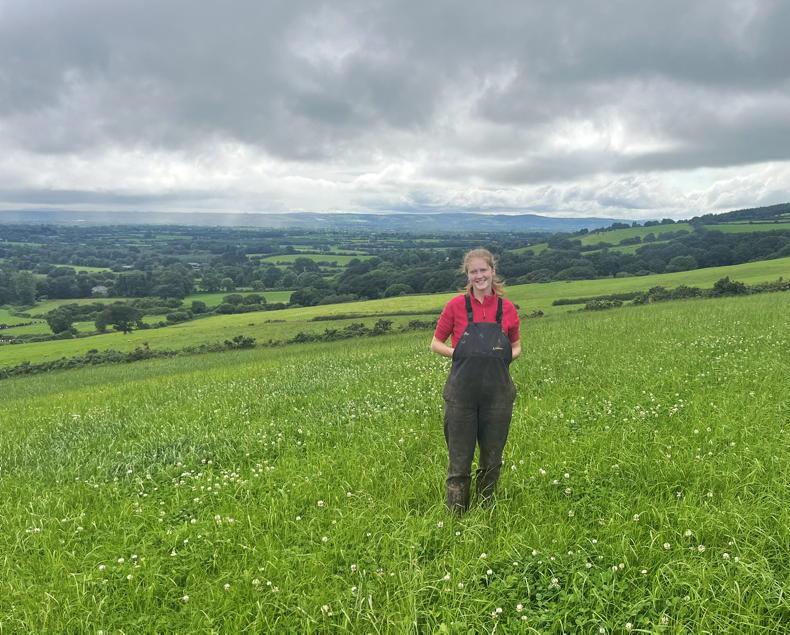
Orla Bennis on placement on Shawsholm Farm in Scotland.
Completing a placement on Shawsholm Farm – which has a 400-cow crossbred herd outside Dumfries in Scotland – and milking in a 32-unit parlour, allowed Orla Bennis from SETU to appreciate the wide variety of skills farmers have in Ireland.
“I don’t think farmers acknowledge the vast number of skills and knowledge they have built up over years of experience. Things that we would consider basic maintenance and often do ourselves – fencing, machinery upkeep, diet feeding, and even vermin control, to name a few – were all done by contractors on my placement farm. I was surprised that all the machinery work, including feeding, was contracted out.
The biggest takeaway for Orla was, “to cherish the family farm and appreciate both the knowledge of experienced farmers along with new scientific practices that can improve farm efficiency, productivity and animal health.”
Agricultural practices
Like everything in life, sometimes things don’t go to plan. Edana Mimnagh from UCD had hoped to travel abroad for part of her placement, but she had to find an alternative option.
“Similar to my classmates, I initially planned to spend the summer in the United States, gaining experience on both a dairy farm and a beef feedlot.
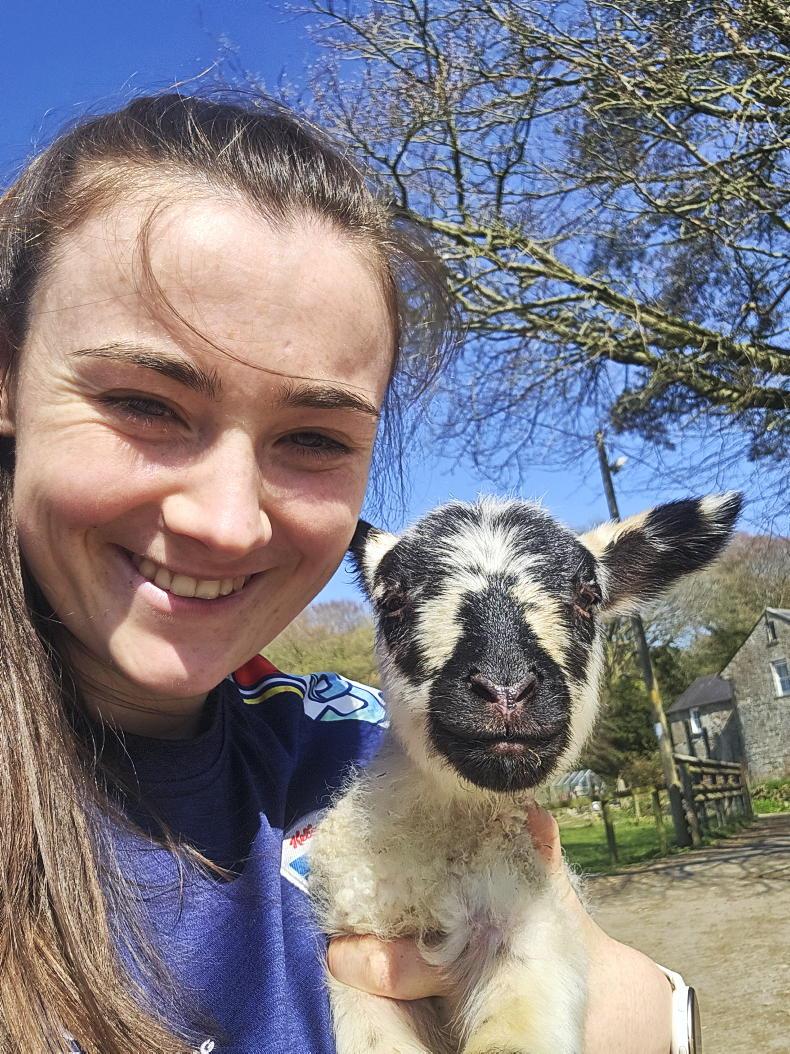
Edana Mimnagh on placement.
“However, due to visa complications, I was unable to secure the appropriate documentation.”
Edana ended up completing her placement on different enterprises in Ireland and gained valuable information on grazing systems, animal health and how to run an efficient beef enterprise.
It is the harsh weather conditions of Ohio that David Prendergast from SETU will remember from his placement. He experienced temperatures of -35°C while working on a large-scale farm there.
“For the first three months, I was working with the commercial herd of 560 high-yielding Holsteins, producing 13,500 litres per lactation at 3.4% protein and 4.4% fat, calving all-year-round.
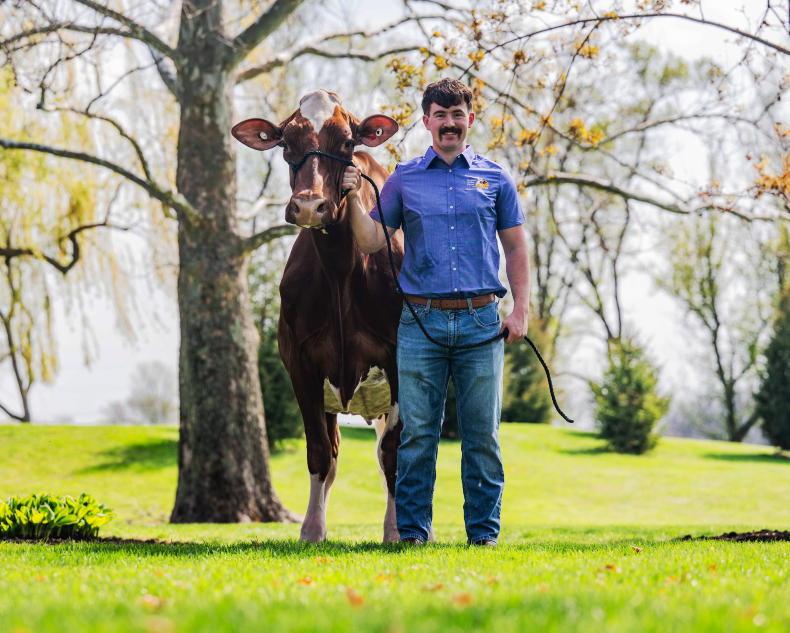
David Prendergast showing cattle while on placement in Ohio.
“My duties included calving, vaccinations, IV’ing cows, conducting daily health checks, using the Allflex SCR system, and moving cows to correct groups.
“There were very few vet calls to the farm, only for surgeries such as C-Sections,” he explains.
Having seen it first-hand, David was “in awe’”of the scale of these large operations.
“From my placement, I took away a lot, and it’s hard to put into words. I’m definitely more convinced that the indoor TMR (Total Mixed Ration) system is quite viable, and it may be pivotal in Ireland in years to come, as the grazing seasons are getting more volatile every year”.
Liam Byrne had a similar experience on a Texas A and M research farm that had 600 breeding stock and over 1,000 cattle. He chose this farm as he wanted to gain more experience in research.
“The farm has multiple ongoing studies with a particular focus on cattle reproduction and physiology.
“It has over 200 registered Brahman cows. The current drawback of these Brahman cattle is their late maturity and late age at puberty. This is why they are of particular interest to reproduction physiologists.
“During my work experience, I was exposed to both cattle work, systems and lab work, such as carrying out BSEs (Breeding Soundness Examinations), ultrasound scans of follicles, pregnancy checks and hormone examinations.
“I was also assisting in the calving field as the cows were calving outside,” says Liam.
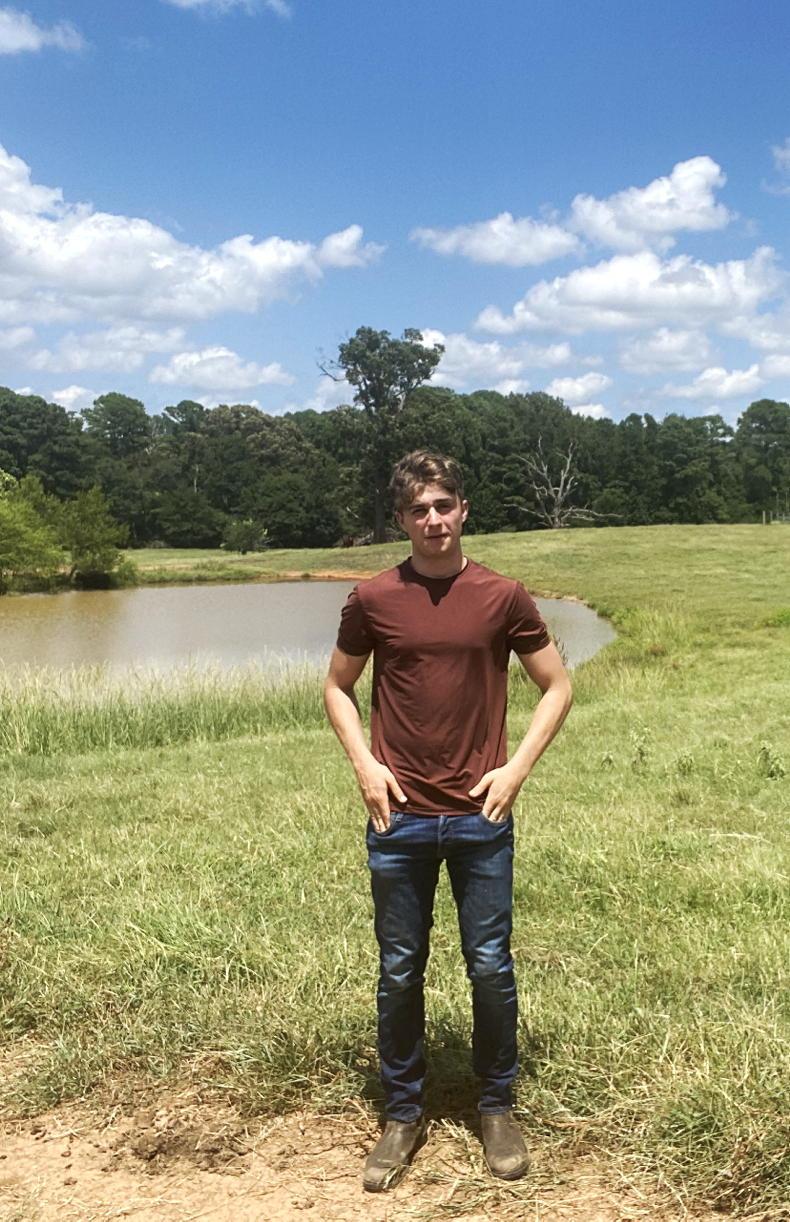
Liam Byrne on placement in Texas.
While completing their agriculture science degree, students are required to undertake blocks of professional work experience.
The length of placement and requirements depends on what course and college you’re doing. What they all have in common is that the opportunity provides students with the chance to gain practical skills, expand their knowledge and gain a broader understanding of different enterprises, which ultimately makes it an essential part of their degree.
With the rising cost of living, it is becoming increasingly difficult for students to get financial support, and unfortunately, this means not everyone is in the position to complete their work experience abroad.
Over the last 11 years, the Agricultural Science Association (ASA) has teamed up with the Irish Farmers Journal, Seedtech and Tirlán to support agricultural science students looking to expand their knowledge abroad. The €1,000 scholarship aims to provide students with financial support, allowing them to travel to different countries to complete this placement and gain a more global understanding of agri food production.
The winners of the 2025 travel bursaries from University College Dublin (UCD), supported by the Irish Farmers Journal, were Siobhan Ryan, Edana Mimnagh and Liam Byrne. From South East Technological University (SETU), the successful students were Orla Bennis and David Prendergast, and their bursary was supported by Tirlán and Seedtech.
This year’s recipients travelled as far as Ohio, Idaho and Texas in the USA as well as Northumberland in England and Dumfries in Scotland. They return to college this autumn with fresh perspectives and invaluable experiences.
Moving abroad
Moving abroad for placement is a big jump for a lot of students. For Siobhan Ryan in UCD, travelling to Idaho and working on the Donley Farm, with 700 beef cattle and a 1,000-strong dairy herd, gave her a different perspective and pushed her outside of her comfort zone.
“My time in Idaho opened my eyes to the scale, systems, and mindset of farming abroad. It gave me a new perspective on how American agriculture is compared to Irish agriculture.
“The biggest learning curve for me was stepping outside of my comfort zone and adapting to completely new farming systems and practices. Each placement [Siobhan had another in Ireland] challenged me differently, whether it was learning new skills such as AI (Artificial Insemination) or understanding the business side of agriculture.
“Seeing the large scale efficiency of Donley Farms in Idaho gave me a new appreciation for how innovative farmers can be.
“It made me realise how important it is to be open-minded, continuously learning, and not afraid to ask questions.”
Orla Bennis on placement on Shawsholm Farm in Scotland.
Completing a placement on Shawsholm Farm – which has a 400-cow crossbred herd outside Dumfries in Scotland – and milking in a 32-unit parlour, allowed Orla Bennis from SETU to appreciate the wide variety of skills farmers have in Ireland.
“I don’t think farmers acknowledge the vast number of skills and knowledge they have built up over years of experience. Things that we would consider basic maintenance and often do ourselves – fencing, machinery upkeep, diet feeding, and even vermin control, to name a few – were all done by contractors on my placement farm. I was surprised that all the machinery work, including feeding, was contracted out.
The biggest takeaway for Orla was, “to cherish the family farm and appreciate both the knowledge of experienced farmers along with new scientific practices that can improve farm efficiency, productivity and animal health.”
Agricultural practices
Like everything in life, sometimes things don’t go to plan. Edana Mimnagh from UCD had hoped to travel abroad for part of her placement, but she had to find an alternative option.
“Similar to my classmates, I initially planned to spend the summer in the United States, gaining experience on both a dairy farm and a beef feedlot.
Edana Mimnagh on placement.
“However, due to visa complications, I was unable to secure the appropriate documentation.”
Edana ended up completing her placement on different enterprises in Ireland and gained valuable information on grazing systems, animal health and how to run an efficient beef enterprise.
It is the harsh weather conditions of Ohio that David Prendergast from SETU will remember from his placement. He experienced temperatures of -35°C while working on a large-scale farm there.
“For the first three months, I was working with the commercial herd of 560 high-yielding Holsteins, producing 13,500 litres per lactation at 3.4% protein and 4.4% fat, calving all-year-round.
David Prendergast showing cattle while on placement in Ohio.
“My duties included calving, vaccinations, IV’ing cows, conducting daily health checks, using the Allflex SCR system, and moving cows to correct groups.
“There were very few vet calls to the farm, only for surgeries such as C-Sections,” he explains.
Having seen it first-hand, David was “in awe’”of the scale of these large operations.
“From my placement, I took away a lot, and it’s hard to put into words. I’m definitely more convinced that the indoor TMR (Total Mixed Ration) system is quite viable, and it may be pivotal in Ireland in years to come, as the grazing seasons are getting more volatile every year”.
Liam Byrne had a similar experience on a Texas A and M research farm that had 600 breeding stock and over 1,000 cattle. He chose this farm as he wanted to gain more experience in research.
“The farm has multiple ongoing studies with a particular focus on cattle reproduction and physiology.
“It has over 200 registered Brahman cows. The current drawback of these Brahman cattle is their late maturity and late age at puberty. This is why they are of particular interest to reproduction physiologists.
“During my work experience, I was exposed to both cattle work, systems and lab work, such as carrying out BSEs (Breeding Soundness Examinations), ultrasound scans of follicles, pregnancy checks and hormone examinations.
“I was also assisting in the calving field as the cows were calving outside,” says Liam.
Liam Byrne on placement in Texas.





SHARING OPTIONS