For many, the awareness of knowing where your food comes from isn’t something you second-guess. You might have grown up on a farm or visited a grandparent’s farm quite frequently. Seeing a cow being milked and understanding the production of food is something many take for granted.
Bord Bia’s research revealed this year that 55% of the Irish public have no connection to farming. Similarly, research published by the National Dairy Council (NDC) revealed that 57% of urban parents say their child has not seen a cow being milked, compared with 51% of rural parents.
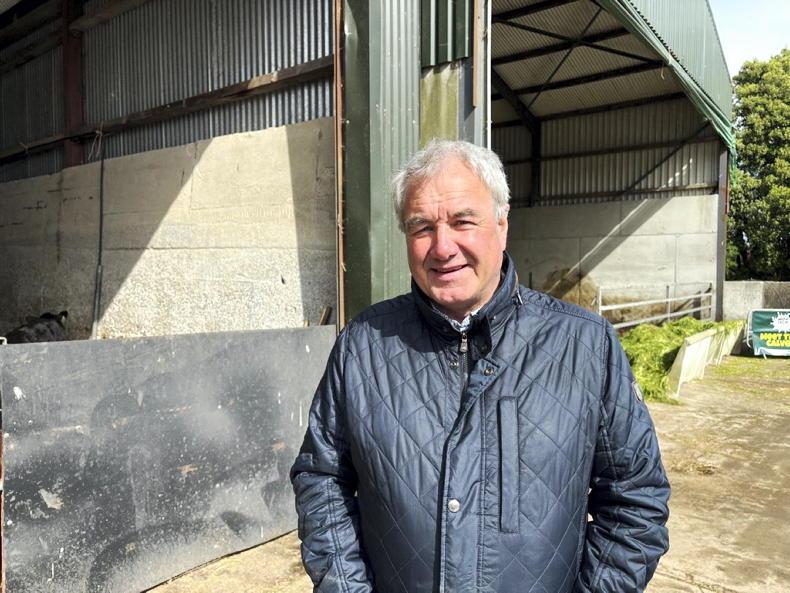
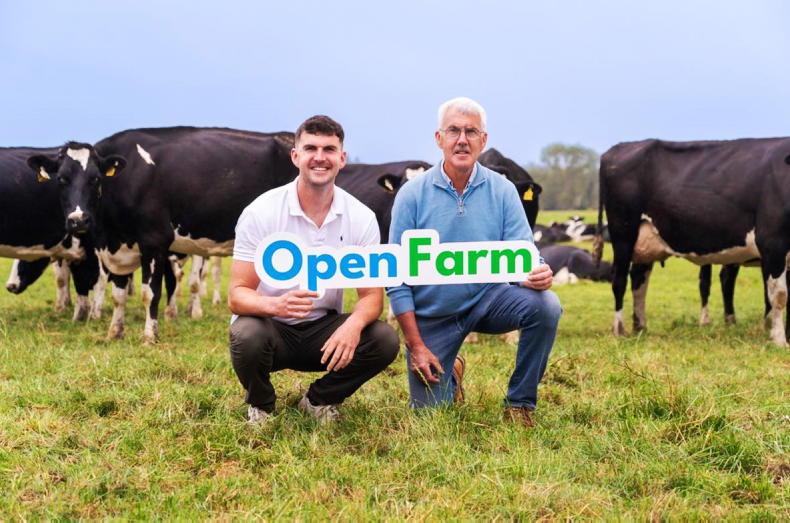
Tom Shortt tillage and dairy farmer from Newtown Mountkennedy, Co Wicklow.
Regional breakdowns show that parents in Munster are the most likely to say their child has seen a cow being milked (44%), compared with 39% in Dublin, 38% in Leinster and 30% in Connacht/Ulster.
There is also an indication of a marked trend in a generational gap: 72% of adults say they have seen a cow being milked, but that falls to 66% among 18-34 year-olds and 69% among urban adults, compared with 80% of rural adults.
Commenting on the research findings, Emma Walls, CEO of the National Dairy Council, acknowledges the widening of the urban-rural gap across generations.
“At one time, those of us living in towns and cities were just one generation removed from the farm, but that is clearly no longer the case, due to falling numbers of farmers and our changing, multi-cultural population.”
Educational experience
To combat the disconnect between children and their understanding of food production and farming, the NDC has organised five farm visits in locations across the country.
Over the next two weeks, more than 1,500 primary school students from 25 schools will get the opportunity to see, first hand, how a cow is milked.
“Our school farm visits are intended to help bridge the gap by bringing together food, farming, education and nutrition in a very practical way. Our dairy farmers are excited to open the farm gates and invite not only their own local community in, but also those further afield in towns and cities. They view it as a great opportunity to connect, and they are proud to showcase the work they are doing to produce top-quality dairy in an increasingly sustainable way,” says Emma.
Irish County Living went along to the second farm visit, which took place on Thursday 15 May, on Tom and Geraldine Shortt’s farm in Newtown Mountkennedy, Co Wicklow.
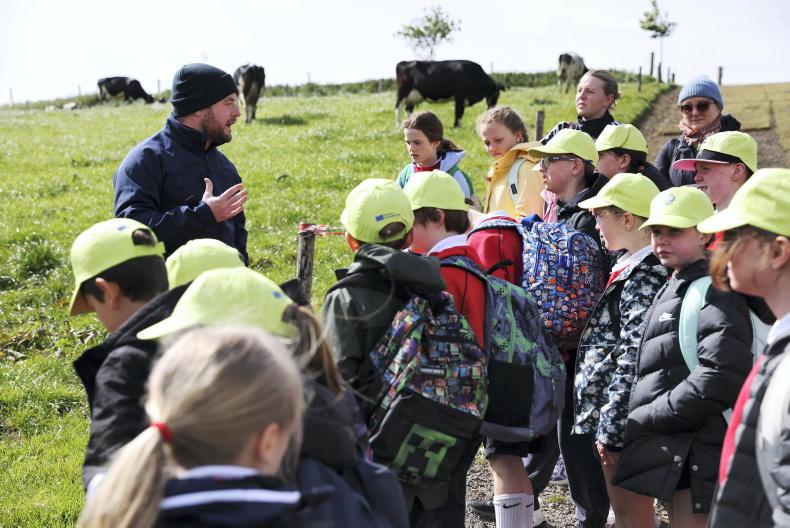
On the day, 240 schoolchildren witnessed firsthand the farm-to-fork journey. This involved witnessing the cows grazing in a field, being milked in a parlour, and then what happens to milk after it leaves the farm.
Tom Shortt inherited his family farm from his father. Up until six years ago, they had a sheep and tillage enterprise. The opportunity arose to go into partnership with a neighbour and enter the dairy industry – he is now milking 160 cows with a spring calving system.
As a milk supplier to Tirlán, his advisor asked him whether he would open the farm gates for a school visit.
“I thought, why not? It’s great that we can have a day like this to help the next generation understand what we are doing, because there is a big urban-rural divide. We felt it was good to try and abate that divide because farmers can get a lot of bad press. Farming is a tough life, but it is also a great way of life. We are producing food that every person needs three times a day, and we are so lucky to be able to do that.
“It was interesting to see the [NDC survey] results that nearly 60% of kids under 12 have never seen a cow being milked in real life. We hope to change that today – they will see the cows being milked, and the calves and the cows out grazing. It helps children understand the work that farmers do, what they produce and what happens when the milk leaves the farm. It’s a big industry, and the next generation must understand.”
Teacher’s perspective
Cliona Lowry, teacher, Stanhope Street School, Stoneybatter, Dublin
“When children step onto a farm, meet the farmer and see how milk is produced, the learning becomes real for them in a completely different way. It helps them understand where food comes from and opens up wider conversations in their world about nutrition, farming and everyday life that are much harder to bring to life in the classroom alone.
We are here today for the kids to have a look around the farm. A lot of them have grown up in the city and wouldn’t be that familiar with farms. It is good for them to see where their food is coming from and how their food is made. They were all very excited to come here today. A lot of their experience with farms is from petting zoos on school tours; this is a different experience.
“It’s the kind of experience that stays with them. The children are curious, they ask brilliant questions, and they come away with a much stronger understanding of how food and farming connect. That is hugely valuable, especially for children who may have had very little direct exposure to farming before.”
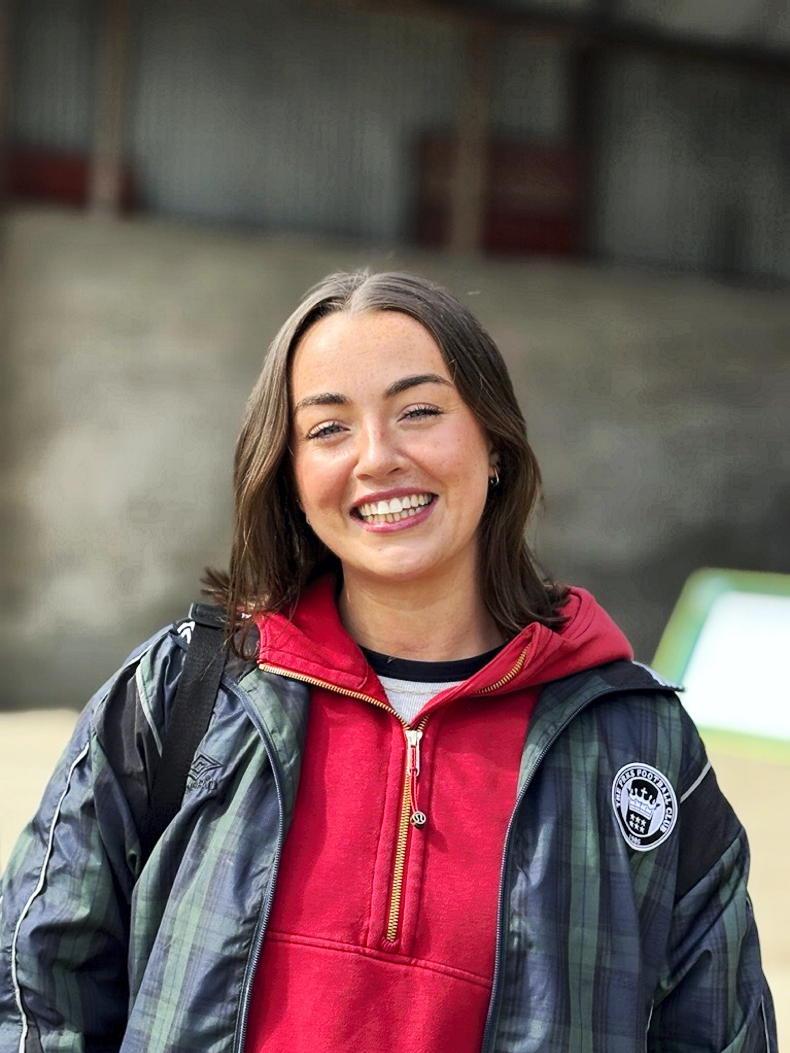
Cliona Lowry, teacher, Stanhope Street School, Stoneybatter, Co Dublin.
Student’s perspective
Elodie Lord, The Harold Glasthule,
Dublin
“I am in third class, and I haven’t been to a farm before. I think it’s really fun. My favourite part so far has been watching the cows being milked; it’s all very interesting. I didn’t know that they used that machine to milk the cows – I thought they milked them with their hands.”
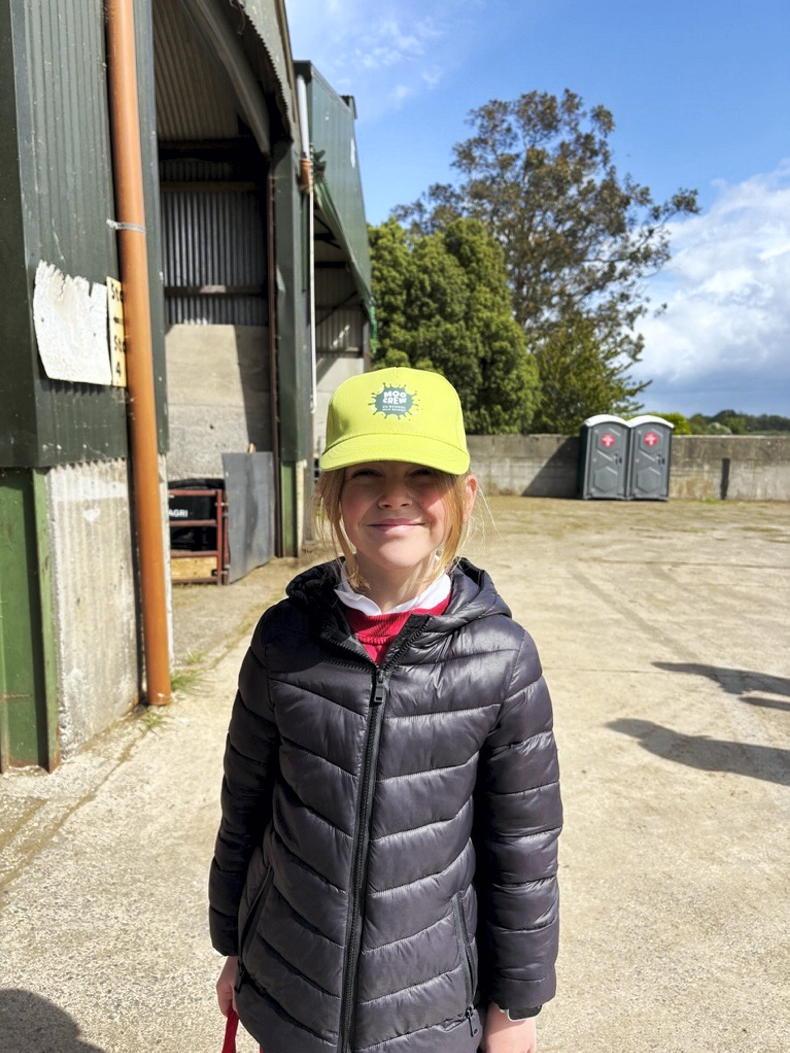
Elodie Lord, student from The Harold Glasthule, Co Dublin.
Nella Boylan Grimes, Stanhope Street School, Stoneybatter, Dublin
“I was at a farm before with loads of animals, and we did lots of activities. I am excited to be here because I love animals and the way they come up to you. I have seen a cow being milked on the news, but not in person. I am looking forward to seeing how the milk comes out.”
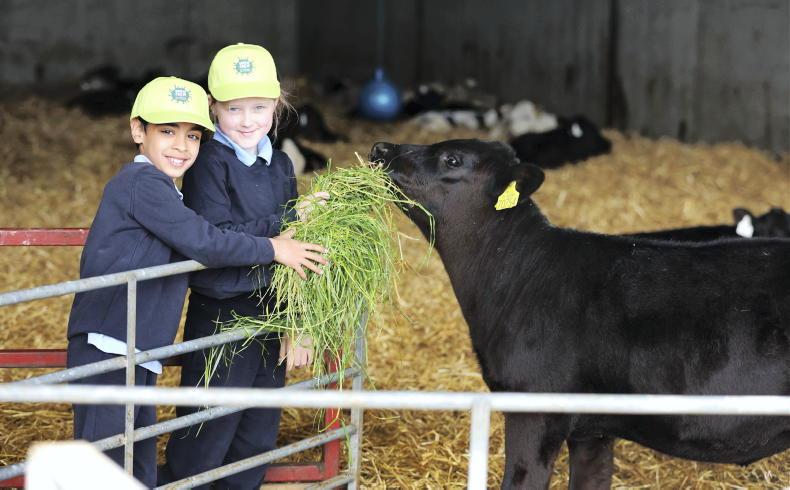
Abeer Varshikar and Nella Boylan Grimes from Stanhope Street School, Stoneybatter, Co Dublin.
The school farm visits are connecting children with food production through hands-on learning on working dairy farms.
During their visit, they are educated on animal welfare, grass management, milking, nutrition and food traceability, as well as providing pupils with the opportunity to meet farmers, see first-hand how milk is produced and take part in a five-station learning journey covering areas including nutrition, milk production and life on a working farm.
These school trips are fully funded and they also aim to showcase participants of the EU School Milk Scheme. The scheme provides participating schools with a daily supply of milk at discounted rates, together with educational supports that promote the nutritional value of daily dairy consumption.
Through this combination of milk provision and learning activities, the scheme is designed to help reconnect children with agriculture and encourage healthy eating habits for life.
The School Milk Scheme is open to primary, secondary and Montessori schools nationwide. Schools interested in learning more or enquiring about joining can visit moocrew.ie/schoolmilk
For many, the awareness of knowing where your food comes from isn’t something you second-guess. You might have grown up on a farm or visited a grandparent’s farm quite frequently. Seeing a cow being milked and understanding the production of food is something many take for granted.
Bord Bia’s research revealed this year that 55% of the Irish public have no connection to farming. Similarly, research published by the National Dairy Council (NDC) revealed that 57% of urban parents say their child has not seen a cow being milked, compared with 51% of rural parents.

Tom Shortt tillage and dairy farmer from Newtown Mountkennedy, Co Wicklow.
Regional breakdowns show that parents in Munster are the most likely to say their child has seen a cow being milked (44%), compared with 39% in Dublin, 38% in Leinster and 30% in Connacht/Ulster.
There is also an indication of a marked trend in a generational gap: 72% of adults say they have seen a cow being milked, but that falls to 66% among 18-34 year-olds and 69% among urban adults, compared with 80% of rural adults.
Commenting on the research findings, Emma Walls, CEO of the National Dairy Council, acknowledges the widening of the urban-rural gap across generations.
“At one time, those of us living in towns and cities were just one generation removed from the farm, but that is clearly no longer the case, due to falling numbers of farmers and our changing, multi-cultural population.”
Educational experience
To combat the disconnect between children and their understanding of food production and farming, the NDC has organised five farm visits in locations across the country.
Over the next two weeks, more than 1,500 primary school students from 25 schools will get the opportunity to see, first hand, how a cow is milked.
“Our school farm visits are intended to help bridge the gap by bringing together food, farming, education and nutrition in a very practical way. Our dairy farmers are excited to open the farm gates and invite not only their own local community in, but also those further afield in towns and cities. They view it as a great opportunity to connect, and they are proud to showcase the work they are doing to produce top-quality dairy in an increasingly sustainable way,” says Emma.
Irish County Living went along to the second farm visit, which took place on Thursday 15 May, on Tom and Geraldine Shortt’s farm in Newtown Mountkennedy, Co Wicklow.
On the day, 240 schoolchildren witnessed firsthand the farm-to-fork journey. This involved witnessing the cows grazing in a field, being milked in a parlour, and then what happens to milk after it leaves the farm.
Tom Shortt inherited his family farm from his father. Up until six years ago, they had a sheep and tillage enterprise. The opportunity arose to go into partnership with a neighbour and enter the dairy industry – he is now milking 160 cows with a spring calving system.
As a milk supplier to Tirlán, his advisor asked him whether he would open the farm gates for a school visit.
“I thought, why not? It’s great that we can have a day like this to help the next generation understand what we are doing, because there is a big urban-rural divide. We felt it was good to try and abate that divide because farmers can get a lot of bad press. Farming is a tough life, but it is also a great way of life. We are producing food that every person needs three times a day, and we are so lucky to be able to do that.
“It was interesting to see the [NDC survey] results that nearly 60% of kids under 12 have never seen a cow being milked in real life. We hope to change that today – they will see the cows being milked, and the calves and the cows out grazing. It helps children understand the work that farmers do, what they produce and what happens when the milk leaves the farm. It’s a big industry, and the next generation must understand.”
Teacher’s perspective
Cliona Lowry, teacher, Stanhope Street School, Stoneybatter, Dublin
“When children step onto a farm, meet the farmer and see how milk is produced, the learning becomes real for them in a completely different way. It helps them understand where food comes from and opens up wider conversations in their world about nutrition, farming and everyday life that are much harder to bring to life in the classroom alone.
We are here today for the kids to have a look around the farm. A lot of them have grown up in the city and wouldn’t be that familiar with farms. It is good for them to see where their food is coming from and how their food is made. They were all very excited to come here today. A lot of their experience with farms is from petting zoos on school tours; this is a different experience.
“It’s the kind of experience that stays with them. The children are curious, they ask brilliant questions, and they come away with a much stronger understanding of how food and farming connect. That is hugely valuable, especially for children who may have had very little direct exposure to farming before.”

Cliona Lowry, teacher, Stanhope Street School, Stoneybatter, Co Dublin.
Student’s perspective
Elodie Lord, The Harold Glasthule,
Dublin
“I am in third class, and I haven’t been to a farm before. I think it’s really fun. My favourite part so far has been watching the cows being milked; it’s all very interesting. I didn’t know that they used that machine to milk the cows – I thought they milked them with their hands.”

Elodie Lord, student from The Harold Glasthule, Co Dublin.
Nella Boylan Grimes, Stanhope Street School, Stoneybatter, Dublin
“I was at a farm before with loads of animals, and we did lots of activities. I am excited to be here because I love animals and the way they come up to you. I have seen a cow being milked on the news, but not in person. I am looking forward to seeing how the milk comes out.”

Abeer Varshikar and Nella Boylan Grimes from Stanhope Street School, Stoneybatter, Co Dublin.
The school farm visits are connecting children with food production through hands-on learning on working dairy farms.
During their visit, they are educated on animal welfare, grass management, milking, nutrition and food traceability, as well as providing pupils with the opportunity to meet farmers, see first-hand how milk is produced and take part in a five-station learning journey covering areas including nutrition, milk production and life on a working farm.
These school trips are fully funded and they also aim to showcase participants of the EU School Milk Scheme. The scheme provides participating schools with a daily supply of milk at discounted rates, together with educational supports that promote the nutritional value of daily dairy consumption.
Through this combination of milk provision and learning activities, the scheme is designed to help reconnect children with agriculture and encourage healthy eating habits for life.
The School Milk Scheme is open to primary, secondary and Montessori schools nationwide. Schools interested in learning more or enquiring about joining can visit moocrew.ie/schoolmilk
SHARING OPTIONS