Are you an outdoors-type who likes to travel? Do you enjoy a teamwork challenge but can demonstrate leadership potential? Then a career in the military might be one for you.
The Defence Forces is recruiting all year round now for general service in the army and navy. It has also just opened for applications for cadets. This is training that is completed over 17 months, after which you are commissioned as an officer.
“This is a yearly competition to ensure that we are gaining our leaders and managers of the troops,” Defence Forces recruitment officer Patrick Moroney told Irish Country Living.
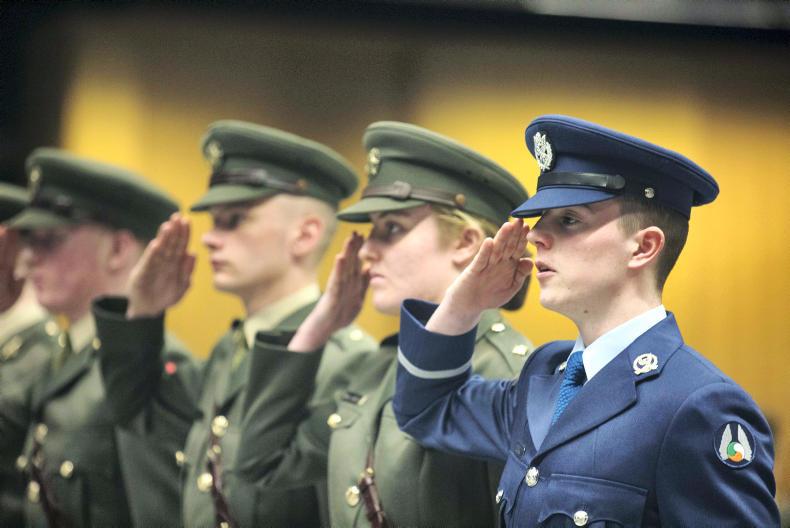
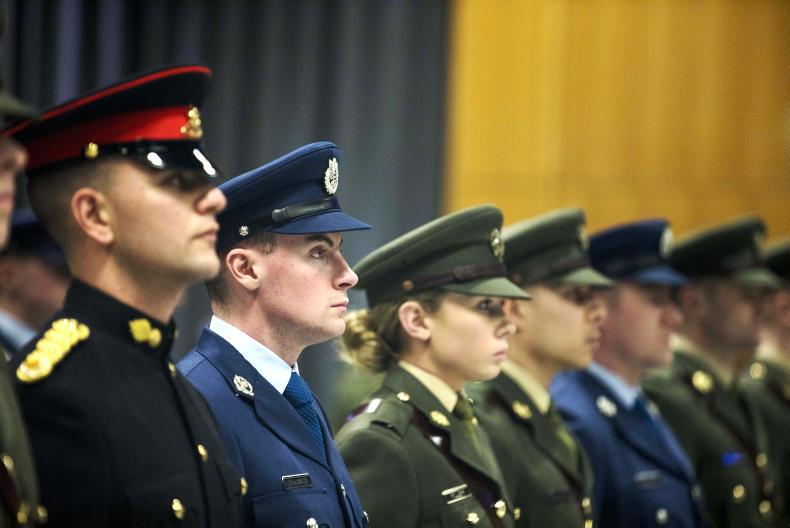
Commissioning of the 95th Cadet Class on 19 February 2020. \ Óglaigh na hÉireann
Candidates for the cadet school must be aged 18. The minimum level of education required from school leavers is grade H5 in three higher-level Leaving Certificate papers, and, Grade O6 in three ordinary level papers or grade H6 in three higher-level papers.
Candidates must have obtained these grades in a single sitting of the Leaving Certificate and must have a minimum of grade O6 at ordinary level or H6 at higher level of maths, Irish and English.
Graduate applicants for the cadet school must have completed a level eight bachelor degree.
The defence forces are recruiting:
50 army cadets.15 Navy cadets.10 Air Corps cadets.General service
You can apply to join the military in general service at any time. Army applicants must be at least 18 years old and under the age of 25, while Naval Service can be up to the age of 27. No formal education qualifications are required to join the Defence Forces as a recruit.
All applications are completed online and include a psychometric test before a face-to-face interview. The interview also includes a fitness test, which is not as stringent as Special Forces: Ultimate Hell Week by any means. It includes sit ups, push ups and a 2.4km run, see Table 1.
The Defence Forces invites you to join a diverse and inclusive team within an organisation who respects and values difference. The Defence Forces promotes equality of opportunity regardless of gender, civil status, family status, religious beliefs, race or sexual orientation. Currently, women represent 6.7% of the forces and the organisation is actively seeking to increase this figure.
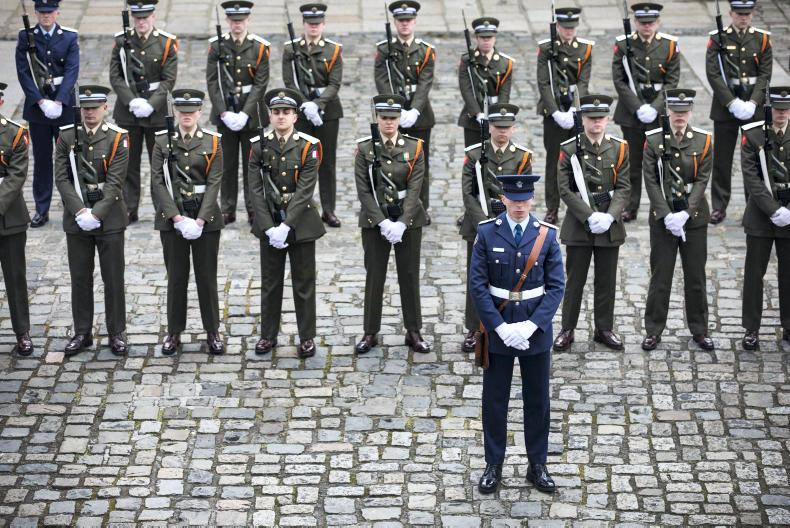
Commissioning of the 95th Cadet Class on 19 February 2020. \ Óglaigh na hÉireann
Women are operating across all streams army, naval service and air corps and at all levels to include infantry soldiers, engineers, bomb disposal, medics, pilots, commanders and crews of ships. In recent weeks, Capt Rosie Wild became the first woman to pass the parachute regiment entry test in the UK.
Training for new recruits in general service lasts 17 weeks in total, conducted in four phases. The first part is a two-week induction which includes orientation, adventure training, physical education and health and safety. Phase two is six weeks of rifle marksmanship, drills, weapons test and physical fitness.
The third part is six weeks of tactical training, while the three weeks of phase four include final approval of the recruit and preparing for the passing out parade.
For general service training you are in a platoon of 42 to 48 individuals who you stay with for two- and three-star training afterwards before you are placed in a unit, often in the brigade that you requested to be a part of. The first brigade covers the south of the country, while the second brigade covers the northern half.
“Young people nowadays and our demographic are open to so many external influences and are so used to technology that it has changed their ability and their conduct when in recruit training,” Patrick says about the current generation of recruits.
“That can be often a positive. So when it comes to utilising the weapons they’re often a lot better. We find that their emotional intelligence is high; so they’re able get on in a team and interact with the instructors to a good degree.
“This can be invaluable then when they’re conducting training or exercises, especially when they’re overseas. A young three-star could easily be in a situation where they need to use their savvy and that emotional intelligence to overcome a situation.”
He added that applicants come from every walk of life, from all levels of academic qualifications including those who have their Junior Cert right up to those who have a third-level degree.
Career
There are some 8,500 people currently working in the military and there is a wide variety of roles within the organisation. 
Patrick says that it is possible to map out a career and choose the qualifications you want to attain that will allow you to progress through the ranks.
After two years of service, army personnel can take part in up to 10 apprenticeships. These include plumbing, carpentry, ordnance, printing press and computer information system (CIS) technician qualifications.
They are all accredited through an external third-level college and it is possible to go up to level nine on the national framework of qualifications. If there is a course outside of those available within the military, the cost of these can be supplemented. The defence forces also encourage employees to learn a language such as Irish, Arabic or French.
Travel
Currently, members of the Irish Defence Forces are involved in 14 missions in 13 countries, with two in Mali. There are infantry battalions in Lebanon and Syria involved in United Nations peacekeeping missions. In addition, Irish troops contribute to EU missions and battlegroups at readiness.
Military personnel can be deployed abroad for anywhere between six months and three years at a time. If it is the latter, it is possible to accommodate families going abroad with them.
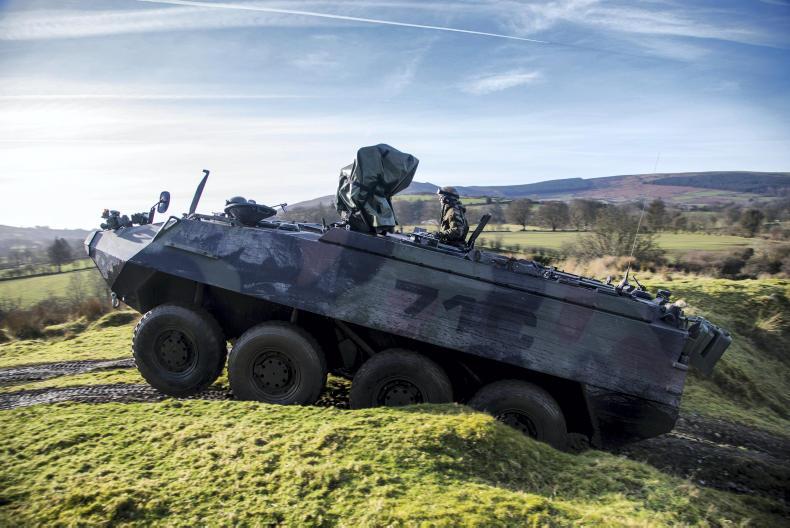
Mowag offroad driving. \ Óglaigh na hÉireann
“With so many opportunities available to those seeking employment or further education, the Defence Forces offers the experience and training to ensure a person is best set for the rigors of life and any future career desires,” says Patrick. “Working in this team environment at home and abroad may well set them apart from contemporaries finding their way in the competitive labour market.”
Click here for more information
The Defence Forces moved to a ‘status yellow’ force posture and made 330 troops available to help the Health Service Executive (HSE) in response to the coronavirus.
Hundreds more troops are available within an hour’s notice under ‘status yellow’.
Cadets have been enlisted to help with contact tracing. The Irish Naval Service has ships stationed in Cork, Dublin and Galway to increase testing capacity for COVID-19. Meanwhile members of the military have been deployed to help at other HSE testing centres around the country.
Read more
Focus: Lieutenant Commander David Fleming
Are you an outdoors-type who likes to travel? Do you enjoy a teamwork challenge but can demonstrate leadership potential? Then a career in the military might be one for you.
The Defence Forces is recruiting all year round now for general service in the army and navy. It has also just opened for applications for cadets. This is training that is completed over 17 months, after which you are commissioned as an officer.
“This is a yearly competition to ensure that we are gaining our leaders and managers of the troops,” Defence Forces recruitment officer Patrick Moroney told Irish Country Living.
Commissioning of the 95th Cadet Class on 19 February 2020. \ Óglaigh na hÉireann
Candidates for the cadet school must be aged 18. The minimum level of education required from school leavers is grade H5 in three higher-level Leaving Certificate papers, and, Grade O6 in three ordinary level papers or grade H6 in three higher-level papers.
Candidates must have obtained these grades in a single sitting of the Leaving Certificate and must have a minimum of grade O6 at ordinary level or H6 at higher level of maths, Irish and English.
Graduate applicants for the cadet school must have completed a level eight bachelor degree.
The defence forces are recruiting:
50 army cadets.15 Navy cadets.10 Air Corps cadets.General service
You can apply to join the military in general service at any time. Army applicants must be at least 18 years old and under the age of 25, while Naval Service can be up to the age of 27. No formal education qualifications are required to join the Defence Forces as a recruit.
All applications are completed online and include a psychometric test before a face-to-face interview. The interview also includes a fitness test, which is not as stringent as Special Forces: Ultimate Hell Week by any means. It includes sit ups, push ups and a 2.4km run, see Table 1.
The Defence Forces invites you to join a diverse and inclusive team within an organisation who respects and values difference. The Defence Forces promotes equality of opportunity regardless of gender, civil status, family status, religious beliefs, race or sexual orientation. Currently, women represent 6.7% of the forces and the organisation is actively seeking to increase this figure.
Commissioning of the 95th Cadet Class on 19 February 2020. \ Óglaigh na hÉireann
Women are operating across all streams army, naval service and air corps and at all levels to include infantry soldiers, engineers, bomb disposal, medics, pilots, commanders and crews of ships. In recent weeks, Capt Rosie Wild became the first woman to pass the parachute regiment entry test in the UK.
Training for new recruits in general service lasts 17 weeks in total, conducted in four phases. The first part is a two-week induction which includes orientation, adventure training, physical education and health and safety. Phase two is six weeks of rifle marksmanship, drills, weapons test and physical fitness.
The third part is six weeks of tactical training, while the three weeks of phase four include final approval of the recruit and preparing for the passing out parade.
For general service training you are in a platoon of 42 to 48 individuals who you stay with for two- and three-star training afterwards before you are placed in a unit, often in the brigade that you requested to be a part of. The first brigade covers the south of the country, while the second brigade covers the northern half.
“Young people nowadays and our demographic are open to so many external influences and are so used to technology that it has changed their ability and their conduct when in recruit training,” Patrick says about the current generation of recruits.
“That can be often a positive. So when it comes to utilising the weapons they’re often a lot better. We find that their emotional intelligence is high; so they’re able get on in a team and interact with the instructors to a good degree.
“This can be invaluable then when they’re conducting training or exercises, especially when they’re overseas. A young three-star could easily be in a situation where they need to use their savvy and that emotional intelligence to overcome a situation.”
He added that applicants come from every walk of life, from all levels of academic qualifications including those who have their Junior Cert right up to those who have a third-level degree.
Career
There are some 8,500 people currently working in the military and there is a wide variety of roles within the organisation.
Patrick says that it is possible to map out a career and choose the qualifications you want to attain that will allow you to progress through the ranks.
After two years of service, army personnel can take part in up to 10 apprenticeships. These include plumbing, carpentry, ordnance, printing press and computer information system (CIS) technician qualifications.
They are all accredited through an external third-level college and it is possible to go up to level nine on the national framework of qualifications. If there is a course outside of those available within the military, the cost of these can be supplemented. The defence forces also encourage employees to learn a language such as Irish, Arabic or French.
Travel
Currently, members of the Irish Defence Forces are involved in 14 missions in 13 countries, with two in Mali. There are infantry battalions in Lebanon and Syria involved in United Nations peacekeeping missions. In addition, Irish troops contribute to EU missions and battlegroups at readiness.
Military personnel can be deployed abroad for anywhere between six months and three years at a time. If it is the latter, it is possible to accommodate families going abroad with them.
Mowag offroad driving. \ Óglaigh na hÉireann
“With so many opportunities available to those seeking employment or further education, the Defence Forces offers the experience and training to ensure a person is best set for the rigors of life and any future career desires,” says Patrick. “Working in this team environment at home and abroad may well set them apart from contemporaries finding their way in the competitive labour market.”
Click here for more information
The Defence Forces moved to a ‘status yellow’ force posture and made 330 troops available to help the Health Service Executive (HSE) in response to the coronavirus.
Hundreds more troops are available within an hour’s notice under ‘status yellow’.
Cadets have been enlisted to help with contact tracing. The Irish Naval Service has ships stationed in Cork, Dublin and Galway to increase testing capacity for COVID-19. Meanwhile members of the military have been deployed to help at other HSE testing centres around the country.
Read more
Focus: Lieutenant Commander David Fleming






SHARING OPTIONS