


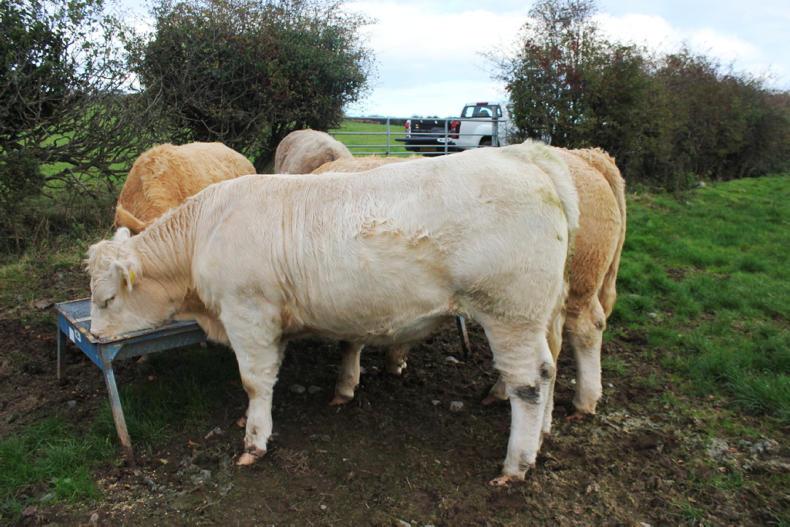
Just like a badly behaved child, I have gradually altered my habits and now conform to the standards expected of me.
For years, I bought quality store cattle, managed them in a way that suited this farm, and produced heavy U and R grading carcases weighing up to 470kg.
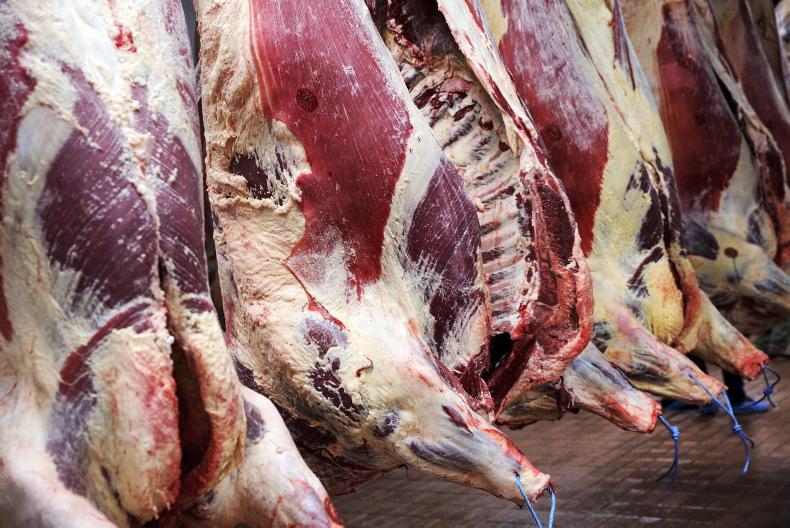
However, this sort of farming is now considered unacceptable, and the current market (we are told) insists on in-spec sides of beef. More and more outlets are now penalising heavy animals, with some of them (including Scotland) simply refusing to buy anything either heavy and/or lean.
Unfortunately, there may not be any link between producing what the market wants, and increased profitability. If you are in the business of buying store cattle, then the sole objective must still be the financial gap between buying and selling. And even though this outdated attitude may be viewed as selfish and counterproductive for the long-term good of the whole beef industry, I would still argue that in order to survive in the long term, you have to make money firstly in the short term.
Perhaps those producers with a calf-to-beef suckler herd can respond more quickly to this tightening requirement (possibly by moving to a traditional type of bull), but for anyone looking for a suitable store animal, things can get a bit confusing.
Intensive systems (feedlots) may be able to achieve suitable levels of fat on carcases under 420kg, but those of us who prefer to aim for a lower-cost method of fattening cattle now find ourselves having to buy a lesser type of beast.
Theoretically, this is straightforward, except that too many buyers are now trying to buy from a smaller pool of store bullocks and heifers.
Plan
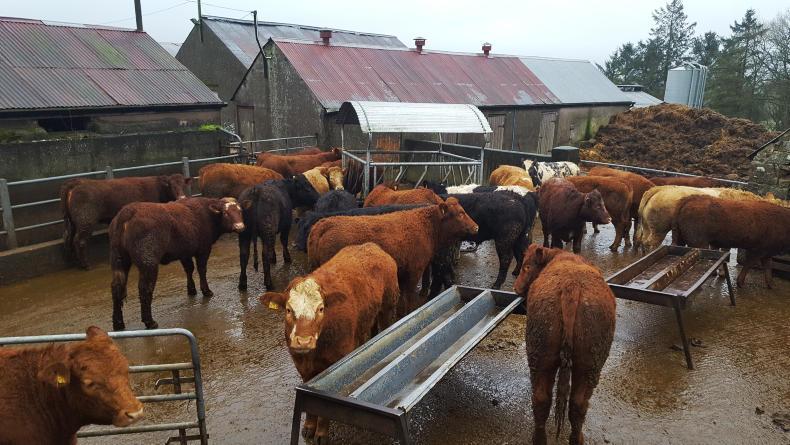
On this farm, last year’s stores and suckled calves were turned out to grass with a definite plan of action. The more forward (heavier) ones were fed meal from June onwards, with a couple of kilogrammes of a finishing blend keeping them motoring on. This was stepped up a bit in August, and the first eight steers killed towards the end of that month.
They were all in-spec, averaged 408kg carcase weight with seven U grades and one R grade.
About seven weeks later, another eight were sold. These ones averaged 412kg, with six Us and two Rs. One of them was overweight, and was suitably punished.
However, it remains to be seen later in the year what the benchmarking results will reveal. I am far from convinced that the slight increase in speed of finishing from the extra concentrate feeding will be offset by lower grassland costs.
In addition, the decision to buy strong suckled calves rather than stores last autumn has been something of a mixed blessing.
After weighing them before Christmas, I did a few rough calculations and arrived at the conclusion that anything over 470kg going to grass could be finished in October/November out of the field, whereas the lighter ones might fall between two stools.
This was pretty accurate, and those lighter ones are probably suitable for a traditional winter finish. However, since I have never managed to make money at feeding cattle out of the house, I’m going to opt for turning out a very forward store, and hope to kill them next June.
The alternative, of course, is to pour meal into them, sell them as beef in March, then go out and buy a load of suitable replacements. However, buying decent quality stores in the spring of the year is almost as unappealing to me as winter finishing itself.
Stuck
I remember talking to a pedigree breeder (about 20 years ago) and his words have stuck in my mind ever since. He was as droll a character as you could ever imagine, and I was discussing the business of trying to make money from finishing butchers’ heifers. I can see him yet, leaning on a gate as he told me: “The only way to produce fat cattle is to feed a bull ration and pretend it costs nothing.” While not for one second advocating this practice, I think I know exactly what he means.




SHARING OPTIONS