


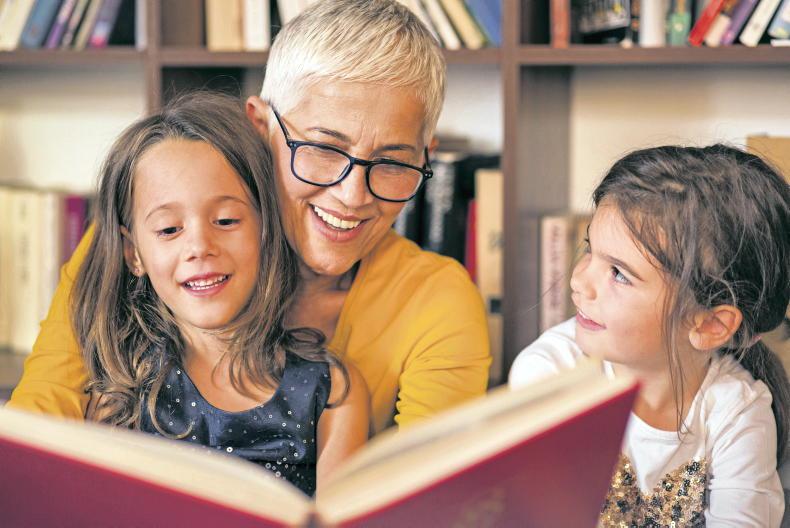
They say it takes a village to raise a child and in rural Ireland, this has been the approach for generations.
When a woman was out at work or on the farm, it was family members and neighbours who stepped up when it came to childcare duties.
Long before there was ever a creche in Ireland, there was the community.
Childminders continue to play a pivotal role in the childcare sector in Ireland.
In Irish Country Living’s recent childcare survey, 25% of parents stated they use childminders to care for their children and many readers spoke of the caring and loving home environment provided by their childminder as well as the flexibility that is not available in a creche setting.
According to the Department of Children, it is estimated there are 15,000 childminders in Ireland but Bernadette Orbinski Burke, Chief Executive of Childminding Ireland, the national association for childminding says that figure is conservative.
“CSO figures indicate there are 35,000 childminders in Ireland minding an estimated 88,000 children. According to our most recent report, ‘Childminding in Ireland 2021’, 40% are living in rural Ireland and that is a number that continues to rise, up 5% from our report in 2017.”
The reason that it is hard to determine the exact number of childminders in the country is because the sector is mostly unregulated. Bernadette continues, “Childminding is a very traditional form of childcare and it has never really been formulised in Ireland.”
Childminders can become members of Childminding Ireland, which can offer some reassurance to parents. “We have over 700 members and to become a member, childminders need to be Garda vetted, have current paediatric first aid training and have completed Tusla’s on-line Child Safeguarding course. They must also have a safety statement, insurance for childminding and sign up to a Code of Ethics.”
However, these childminders cannot offer the National Childcare Scheme (NCS). In fact, there are only 77 childminders currently registered with Tusla. To offer the subsidy, you must register with Tusla but many childminders are exempt from this.
Childminders are exempt from registering with Tusla if they are minding:
- 3 or less unrelated pre-school children or
- Pre-school children from the same family only or
- 6 or less school age only children or
- 6 or less mixed age children (provided no more than 3 are pre-school)
“Many childminders are raising their own children and might just take on an extra child or two,” says Bernadette.
“Or if someone has raised their own children, taking on six children or more would be considered a big operation. Many childminders are not operating at this level.”
This is all set to change however. Last year, the National Action Plan for Childminding 2021-2028 was introduced.
In conversation with Irish Country Living, Minister for Children, Roderic O’Gorman says, “Childminders have been excluded from regulation as a result of exemptions in the Child Care Act 1991, and there has been no access to subsidies for parents who choose childminders for their children’s care and early learning.
This action plan is a roadmap to increase education and training opportunities for childminders, to bring them into an appropriate regulatory framework.
Once they are regulated, they will be able to benefit from financial subsidies and it will also allow parents who use their service to benefit from the NCS.
The National Action Plan for Childminding sets out how this will happen and the different phases that are involved.”
There are four different advisory groups involved as well as a steering group.
the regulation has to be appropriately designed to the role of the childminder, and not an adaption of a creche setting
Currently, the plan is in Phase 1, the planning stage which will take two to three years to complete and Bernadette says, this is a crucial stage.
“As an organisation, we would absolutely support the need for regulation of childminding. It is a very important role, entrusting your child to someone else.
However, the regulation has to be appropriately designed to the role of the childminder, and not an adaption of a creche setting. Childminding is a very different model and the new regulations need to be childminding specific.”
The National Action Plan for Childminding outlines key areas that will be addressed in this programme. It’s expected that for childminders to become registered, they will need to undergo Garda vetting and undertake training.
This will include a foundation training programme and a quality development programme. Bernadette says that to date, it is unclear if experienced childminders will be exempt from this.
“Our research shows that over 50% of childminders have been minding children in their own home for at least ten years, with 21.6% having minded children for 20 years or more.
It is hoped this level of experience would be considered.”
There will also be inspection services, with an appropriate inspection model bespoke to childminders.
“Again, this is important. Many childminders aren’t running a creche, they are minding children in their own home environment so regulations should be cognisant of this.
Also, the administrative workload has to be achievable in regards to all of this. There is a fear that if the system is changed beyond recognition, you could lose a huge number of people.”
Read more Regulation incoming



SHARING OPTIONS