


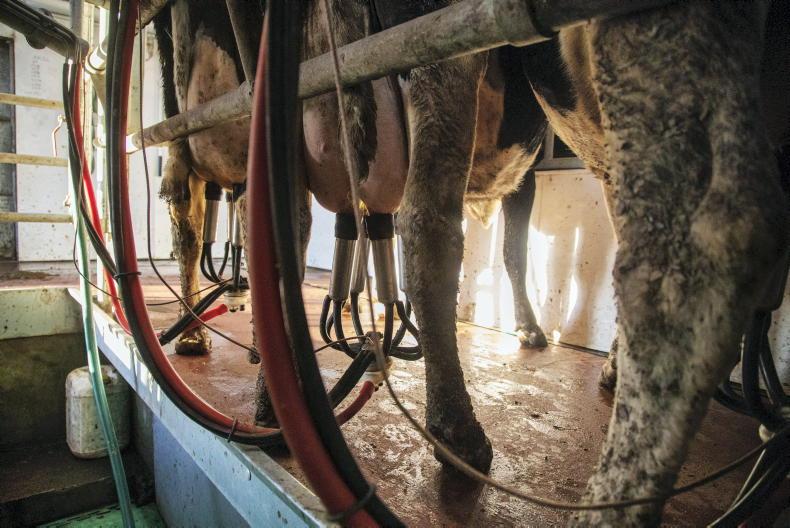
A consultation document outlining possible options for a dairy cull scheme will be circulated to industry stakeholders next week, the Irish Farmers Journal understands.
The consultation document is being drawn up by a working group within the Department of Agriculture.
No details of the possible compensation package were discussed at the meeting, but it is envisaged that a scheme to reduce numbers in the dairy herd will be announced by the third quarter of the year.
While strong opposition to a possible cull was voiced at a meeting of the Food Vision dairy group on Friday, the discussions were described as “constructive” by the participants.
Numbers down
Some stakeholders pointed out that overall cow numbers are set to fall by around 1% this year. Even though dairy cow numbers are up 1%, this has more than been balanced by a 2% fall in beef cows.
Fears have been expressed in farming circles that any cow cull compensation package for the dairy herd will have to be accompanied by an overall cap on livestock numbers to secure the support of the Department of Public Expenditure.
However, others believe that the overall capping of cow numbers will be delivered by tighter water quality controls and changes to the nitrates derogation.
They argue that the immediate purpose of a cull will be to deliver a “once-off reduction in emissions ahead of 2025”.
Recommendations
Under the original recommendations from the Food Vision dairy group, farmers who committed to taking cows out for three lactations could be paid up to €2,910/cow.
“A package like that would suit an awful lot of farmers and there’ll be no shortage of takers,” one source conceded before the meeting.
“I still think there will be huge demand for some sort of a retirement package,” the same official told the Irish Farmers Journal following the meeting.
However, serious reservations have been expressed within the dairy sector around the long-term implications of a cull in terms of the processing industry, given the likely impact on milk supplies.
Moreover, some within the industry are concerned that the conditions imposed as a consequence of a cow cull will restrict expansion opportunities for individual farmers and shut down access for new entrants.



SHARING OPTIONS