Grass
Grass growth rates across the country continue to defy expectations. Growth rates are more akin to May than August, but so too is rainfall and this is a problem, especially along the western seaboard where more rain is falling and soils have less ability to deal with it. But farmers have to deal with it. The only option is to do what you can: 12-hour breaks, back fencing, using multiple access points, etc. Elsewhere, dealing with surplus grass is the main issue. It’s not a bad complaint but it’s not a good complaint either. If we had excess grass in September it would be better as we could carry it over into October.
My main concern is that those who cut surplus paddocks for silage now will regret it in a few weeks’ time when growth drops and grass demand remains high. It’s hard to know the right thing to do. Make informed decisions by comparing actual average farm cover to target. If stocked at around 3 cows/ha, then average farm cover should be around 220kg/cow now and rotation length should be extended to 25 days. Using these figures, many farmers won’t have the surplus they might think they have. Remember, we’re in autumn now, not summer, and the priority is to build up grass.
Even where a surplus is present, it might be worth looking into deferred grazing. This would mean rather than cutting for silage now, the field can be skipped over and grazed in a few weeks. Grass quality would want to be good and pre-grazing yield wouldn’t want to be any greater than 2,800kg/ha when it comes to grazing it. Grazing by night or by day, or even for a few hours before or after milking will help to extend the rotation length in September without compromising on overall feed quality.
Mastitis
There is a lot of interest in non-antibiotic treatments for mastitis in milking cows. Companies selling such products are reporting a huge increase in demand. Their products cost multiples of antibiotic-based treatments (see page 27). Like with everything, it’s a case of let the buyer beware. Most of the products claim to help the cows’ immune system as opposed to specifically targeting the cause of the infection. As one vet said to me, there is no evidence that they work but there is no evidence that they do any harm either. But is there a logical reason to move away from antibiotics for the treatment of mastitis? Penicillin became commercially available in the 1940s and we know it’s effective at treating most infections. Even organic farmers use antibiotics. Using antibiotics to prevent infections (such as dry cow therapy) is going to be restricted in the future. The reason for that is to ensure that when antibiotics are prescribed (such as for mastitis) that they will work.
Fertiliser
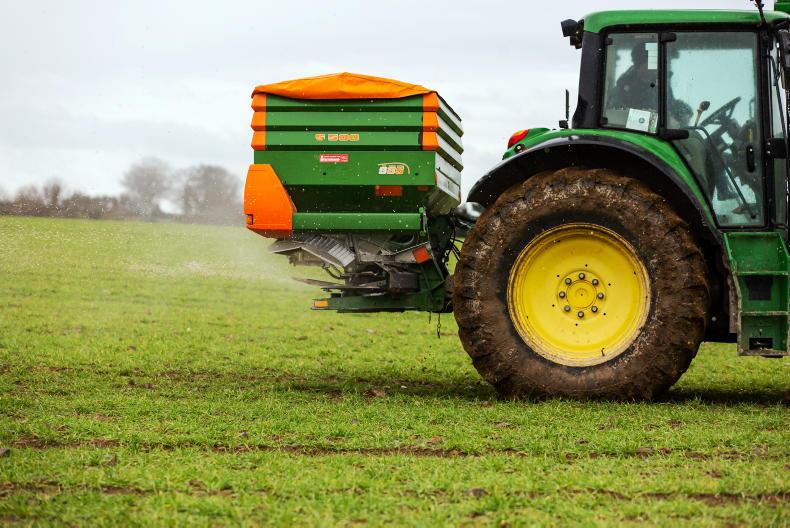
At this time of year I often think it’s worthwhile blanket spreading fertiliser as there are probably only two rounds of nitrogen left to be spread. Blanket spreading will ensure every paddock gets covered as there is a risk some slow-growing fields that will be grazed less often will get less nitrogen and compound the problem. Now is also the time to arrange for muriate of potash to be spread on low-potash fields.
Read more
MSD acquires coccidiosis dose Vecoxan
When to start building grass covers for the autumn
Grass
Grass growth rates across the country continue to defy expectations. Growth rates are more akin to May than August, but so too is rainfall and this is a problem, especially along the western seaboard where more rain is falling and soils have less ability to deal with it. But farmers have to deal with it. The only option is to do what you can: 12-hour breaks, back fencing, using multiple access points, etc. Elsewhere, dealing with surplus grass is the main issue. It’s not a bad complaint but it’s not a good complaint either. If we had excess grass in September it would be better as we could carry it over into October.
My main concern is that those who cut surplus paddocks for silage now will regret it in a few weeks’ time when growth drops and grass demand remains high. It’s hard to know the right thing to do. Make informed decisions by comparing actual average farm cover to target. If stocked at around 3 cows/ha, then average farm cover should be around 220kg/cow now and rotation length should be extended to 25 days. Using these figures, many farmers won’t have the surplus they might think they have. Remember, we’re in autumn now, not summer, and the priority is to build up grass.
Even where a surplus is present, it might be worth looking into deferred grazing. This would mean rather than cutting for silage now, the field can be skipped over and grazed in a few weeks. Grass quality would want to be good and pre-grazing yield wouldn’t want to be any greater than 2,800kg/ha when it comes to grazing it. Grazing by night or by day, or even for a few hours before or after milking will help to extend the rotation length in September without compromising on overall feed quality.
Mastitis
There is a lot of interest in non-antibiotic treatments for mastitis in milking cows. Companies selling such products are reporting a huge increase in demand. Their products cost multiples of antibiotic-based treatments (see page 27). Like with everything, it’s a case of let the buyer beware. Most of the products claim to help the cows’ immune system as opposed to specifically targeting the cause of the infection. As one vet said to me, there is no evidence that they work but there is no evidence that they do any harm either. But is there a logical reason to move away from antibiotics for the treatment of mastitis? Penicillin became commercially available in the 1940s and we know it’s effective at treating most infections. Even organic farmers use antibiotics. Using antibiotics to prevent infections (such as dry cow therapy) is going to be restricted in the future. The reason for that is to ensure that when antibiotics are prescribed (such as for mastitis) that they will work.
Fertiliser
At this time of year I often think it’s worthwhile blanket spreading fertiliser as there are probably only two rounds of nitrogen left to be spread. Blanket spreading will ensure every paddock gets covered as there is a risk some slow-growing fields that will be grazed less often will get less nitrogen and compound the problem. Now is also the time to arrange for muriate of potash to be spread on low-potash fields.
Read more
MSD acquires coccidiosis dose Vecoxan
When to start building grass covers for the autumn








SHARING OPTIONS