Olin Greenan
Morrinsville, Waikato

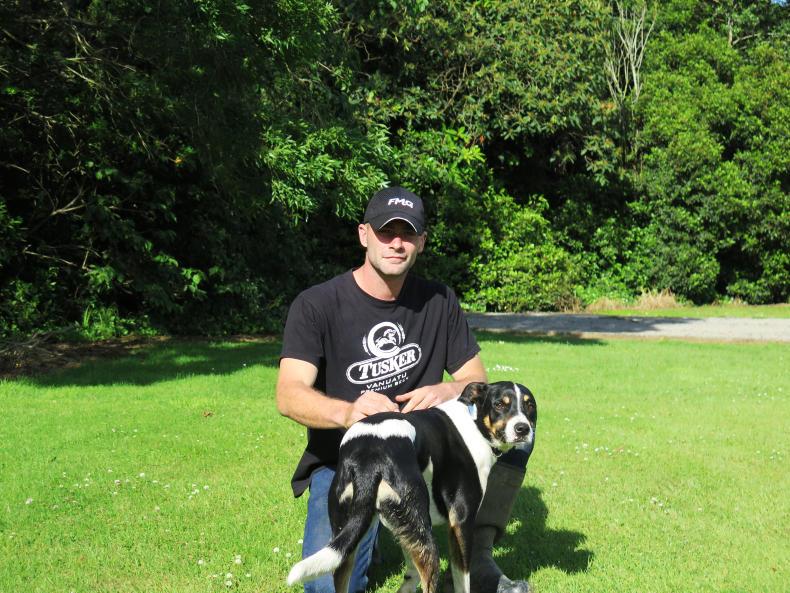
Olin Greenan.
Monaghan man Olin Greenan has been in New Zealand for 18 years. Married to Anna and with two young boys, Jack and Noah, Olin has progressed from farm assistant to herd-owning share-milker.
On 1 June this year, the family and cows moved from Clevedon near Auckland to Morrinsville in the Waikato. The new farm is a step up from his previous job.
Cow numbers have increased from 480 to 650. Land quality is also much better in the Waikato – this is prime dairy farming country. Moving to a bigger farm meant that Olin and Anna had to buy more cows, so an extra 120 heifers were purchased to bring numbers up to 650 cows wintered.
Olin is a 50:50 share-milker, so he provides the cows and machinery and in return he gets 50% of the milk cheque and pays 50% of some costs and 100% of the labour, electricity and parlour running costs.
The farm owners are responsible for the capital infrastructure on the farm and they also pay for the maintenance costs. Effectively, the farm owner employs the share-milker to run the farm for them. That said, there are two separate businesses being operated from the one farm and there are clear guidelines set for who is responsible for what.
Olin’s new farm has 214ha and at the moment he is milking 640 cows, which is a big farm for the area and one of the few share-milking jobs at that scale in the Waikato. The overall stocking rate is three cows/ha, but with 14ha of maize grown on farm, the stocking rate is currently 3.2 cows/ha. The farm is split in two, with two milking parlours.
Paddy Raftice from Mullinavat in Co Kilkenny manages the 95ha block on his own with 230 cows milked in a 20-unit parlour. Olin and his second in charge look after the main farm, with 410 cows milked in a 36-unit parlour.
The focus is all on pasture management. Compared to last season, the farm is 15% ahead on milk production with the same number of cows. That is despite feeding only 10% of the supplement that was fed to date last season. Olin says this has generated the farm an extra $180,000 (€108,000), which is split evenly between him and the farm owners. Some of this is down to more favourable weather, but the main reason is better grassland management.
With the long-term ambition of buying a farm, Olin, like many others, is weighing up the right time to exchange cows for hectares. As things stand, land values are too high for Olin to get a good return from buying land in the area.
Darfield, Canterbury

John Garvey.
Kerry man John Garvey was awarded the Stephen Cullinane Scholarship in 2011, which gave him his first taste of New Zealand. John is on track to be a share-milker in a large herd by the 2020-2021 milking season. Long-term, himself and Christchurch-born wife Michelle want to be farm owners. John is currently contract-milking 870 cows on a 260ha farm for Alistair and Sharon Rayne at Darfield in Canterbury on the South Island.
The Raynes purchased 56ha next to the farm last season. This allowed cow numbers to increase, so John was given the opportunity to buy some of the cows.
“I bought 135 cows in the North Island and they are being leased into the farm for a fixed return. At the end of the term, I will get back the same number of cows I leased in, but Alistair and Sharon get to keep the calves. It works out at about a 9% return on capital for me, versus getting only 2% for money in the bank,” John says.
John took out a loan from the bank to buy the stock, even though he had enough savings to buy them outright.
Reputation
“I borrowed the money to get a reputation with the bank and more importantly to get a reputation of paying them back. Borrowing the money was really only a reputation-building exercise,” he says.
This is John’s second year as a contract-milker on this farm. His plan is to contract-milk for one more season and to then be in a position to go share-milking, ideally on the same farm. To do so, he’d have to buy the herd of 870 cows plus youngstock, which would cost him around $1.6m (€960,000). The highest amount that the banks will lend is around 65% to 70% of the value.
To achieve his goals, John needs to save money from his contract-milking job and prove himself as a top-class farmer with really low costs of production. The method of achieving this is to focus on growing and utilising a lot of feed.
The overall stocking rate is high at 3.55 cows/ha including the 24ha of beet that will be grazed in the autumn and winter. John is achieving the best residuals I have seen in my travels around New Zealand.
Cows are on 12-hour breaks all year and all the staff on the farm are trained to know when the correct residual has been hit. There’s a slight tolerance involved: seven out of 10 grazings must be at a post-grazing residual of 1,500kg/ha (zero available cover). That means three out of 10 grazings can be slightly higher than 1,500kg, but not any higher than 1,650kg.
With the herd producing 1,500kg of milk solids/ha from no purchased supplement, it’s a recipe for success.

Aidan O'Leary.
Cork man Aidan O’Leary is flying high. He’s in his second year as a contract-milker on a farm owned by Dairy Holdings on the coast near Ashburton. Dairy Holdings is a large corporate farming business and one of the few really profitable ones. Last year was Aidan’s first year as a contract-milker on a 335ha irrigated farm with 1,340 cows.
Despite a challenging spring, performance was excellent and Aidan won the award for running the most profitable farm out of the 59 farms in the group. Profitability is measured in New Zealand as EBIT/ha (earnings before interest and tax). Last year, Aidan’s farm had an EBIT of $4,734/ha (€2,846/ha). It’s a fair achievement considering the competition within the Dairy Holdings business. It’s an even greater achievement for someone in their first year.
“It’s all about consistency of feeding and pasture quality and quantity. Last season, we fed 33kg of purchased supplement per cow. So far this season, we have fed 32kg of supplement,” Aidan says
Like John and Olin, it’s all about getting residuals right, particularly in the first few months of the season. Aidan’s goal is to buy a farm, and if he can do it without buying stock first well and good. His attitude is that using cows to grow your equity is a risky strategy.
“Livestock values fluctuate greatly with milk payout. It’s possible to do very well by growing a herd of cows but this needs to be a well thought out investment strategy rather than doing it just because you can. Cost of capital, cow price, replacement costs, lease fees and potential sale price when looking to move to a new opportunity should all be considered.”
Aidan’s medium-term plan is to continue to use contract-milking as a vehicle for generating cash and use this cash to service debt in farmland.
He places a big emphasis on the people working on the farm team. They have a quick stand-up meeting every evening before they go home, chaired by a different member of the team every day. The first thing on the agenda is always health and safety. Any near misses or safety issues are reported and someone is assigned to deal with it. Next they discuss what went well that day and what could’ve gone better.
“It’s not a management meeting. I rarely say anything at the meetings. It’s about the farm and the team and how things can be done better. People are more empowered when they have a say. All the notes are recorded in a notebook and when it’s written down it needs to be acted upon. It helps to build a good culture within the team.”
Read more
Building a $70m dairy business
What are they doing Down Under?
Olin Greenan
Morrinsville, Waikato
Olin Greenan.
Monaghan man Olin Greenan has been in New Zealand for 18 years. Married to Anna and with two young boys, Jack and Noah, Olin has progressed from farm assistant to herd-owning share-milker.
On 1 June this year, the family and cows moved from Clevedon near Auckland to Morrinsville in the Waikato. The new farm is a step up from his previous job.
Cow numbers have increased from 480 to 650. Land quality is also much better in the Waikato – this is prime dairy farming country. Moving to a bigger farm meant that Olin and Anna had to buy more cows, so an extra 120 heifers were purchased to bring numbers up to 650 cows wintered.
Olin is a 50:50 share-milker, so he provides the cows and machinery and in return he gets 50% of the milk cheque and pays 50% of some costs and 100% of the labour, electricity and parlour running costs.
The farm owners are responsible for the capital infrastructure on the farm and they also pay for the maintenance costs. Effectively, the farm owner employs the share-milker to run the farm for them. That said, there are two separate businesses being operated from the one farm and there are clear guidelines set for who is responsible for what.
Olin’s new farm has 214ha and at the moment he is milking 640 cows, which is a big farm for the area and one of the few share-milking jobs at that scale in the Waikato. The overall stocking rate is three cows/ha, but with 14ha of maize grown on farm, the stocking rate is currently 3.2 cows/ha. The farm is split in two, with two milking parlours.
Paddy Raftice from Mullinavat in Co Kilkenny manages the 95ha block on his own with 230 cows milked in a 20-unit parlour. Olin and his second in charge look after the main farm, with 410 cows milked in a 36-unit parlour.
The focus is all on pasture management. Compared to last season, the farm is 15% ahead on milk production with the same number of cows. That is despite feeding only 10% of the supplement that was fed to date last season. Olin says this has generated the farm an extra $180,000 (€108,000), which is split evenly between him and the farm owners. Some of this is down to more favourable weather, but the main reason is better grassland management.
With the long-term ambition of buying a farm, Olin, like many others, is weighing up the right time to exchange cows for hectares. As things stand, land values are too high for Olin to get a good return from buying land in the area.
Darfield, Canterbury
John Garvey.
Kerry man John Garvey was awarded the Stephen Cullinane Scholarship in 2011, which gave him his first taste of New Zealand. John is on track to be a share-milker in a large herd by the 2020-2021 milking season. Long-term, himself and Christchurch-born wife Michelle want to be farm owners. John is currently contract-milking 870 cows on a 260ha farm for Alistair and Sharon Rayne at Darfield in Canterbury on the South Island.
The Raynes purchased 56ha next to the farm last season. This allowed cow numbers to increase, so John was given the opportunity to buy some of the cows.
“I bought 135 cows in the North Island and they are being leased into the farm for a fixed return. At the end of the term, I will get back the same number of cows I leased in, but Alistair and Sharon get to keep the calves. It works out at about a 9% return on capital for me, versus getting only 2% for money in the bank,” John says.
John took out a loan from the bank to buy the stock, even though he had enough savings to buy them outright.
Reputation
“I borrowed the money to get a reputation with the bank and more importantly to get a reputation of paying them back. Borrowing the money was really only a reputation-building exercise,” he says.
This is John’s second year as a contract-milker on this farm. His plan is to contract-milk for one more season and to then be in a position to go share-milking, ideally on the same farm. To do so, he’d have to buy the herd of 870 cows plus youngstock, which would cost him around $1.6m (€960,000). The highest amount that the banks will lend is around 65% to 70% of the value.
To achieve his goals, John needs to save money from his contract-milking job and prove himself as a top-class farmer with really low costs of production. The method of achieving this is to focus on growing and utilising a lot of feed.
The overall stocking rate is high at 3.55 cows/ha including the 24ha of beet that will be grazed in the autumn and winter. John is achieving the best residuals I have seen in my travels around New Zealand.
Cows are on 12-hour breaks all year and all the staff on the farm are trained to know when the correct residual has been hit. There’s a slight tolerance involved: seven out of 10 grazings must be at a post-grazing residual of 1,500kg/ha (zero available cover). That means three out of 10 grazings can be slightly higher than 1,500kg, but not any higher than 1,650kg.
With the herd producing 1,500kg of milk solids/ha from no purchased supplement, it’s a recipe for success.
Aidan O'Leary.
Cork man Aidan O’Leary is flying high. He’s in his second year as a contract-milker on a farm owned by Dairy Holdings on the coast near Ashburton. Dairy Holdings is a large corporate farming business and one of the few really profitable ones. Last year was Aidan’s first year as a contract-milker on a 335ha irrigated farm with 1,340 cows.
Despite a challenging spring, performance was excellent and Aidan won the award for running the most profitable farm out of the 59 farms in the group. Profitability is measured in New Zealand as EBIT/ha (earnings before interest and tax). Last year, Aidan’s farm had an EBIT of $4,734/ha (€2,846/ha). It’s a fair achievement considering the competition within the Dairy Holdings business. It’s an even greater achievement for someone in their first year.
“It’s all about consistency of feeding and pasture quality and quantity. Last season, we fed 33kg of purchased supplement per cow. So far this season, we have fed 32kg of supplement,” Aidan says
Like John and Olin, it’s all about getting residuals right, particularly in the first few months of the season. Aidan’s goal is to buy a farm, and if he can do it without buying stock first well and good. His attitude is that using cows to grow your equity is a risky strategy.
“Livestock values fluctuate greatly with milk payout. It’s possible to do very well by growing a herd of cows but this needs to be a well thought out investment strategy rather than doing it just because you can. Cost of capital, cow price, replacement costs, lease fees and potential sale price when looking to move to a new opportunity should all be considered.”
Aidan’s medium-term plan is to continue to use contract-milking as a vehicle for generating cash and use this cash to service debt in farmland.
He places a big emphasis on the people working on the farm team. They have a quick stand-up meeting every evening before they go home, chaired by a different member of the team every day. The first thing on the agenda is always health and safety. Any near misses or safety issues are reported and someone is assigned to deal with it. Next they discuss what went well that day and what could’ve gone better.
“It’s not a management meeting. I rarely say anything at the meetings. It’s about the farm and the team and how things can be done better. People are more empowered when they have a say. All the notes are recorded in a notebook and when it’s written down it needs to be acted upon. It helps to build a good culture within the team.”
Read more
Building a $70m dairy business
What are they doing Down Under?





SHARING OPTIONS