



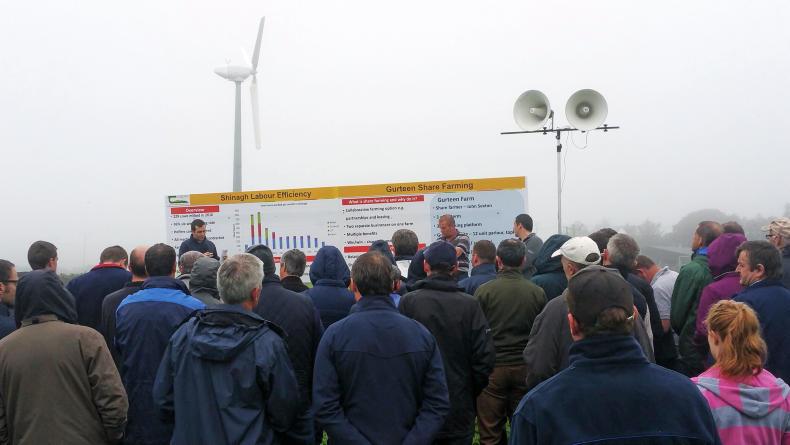
Last week, Shinagh farm near Bandon in west Cork, which is owned by the four west Cork co-ops, held a public open day to highlight the financial, herd, grass and labour performance of the farm since it started producing milk in 2011.
There is no doubt the farm is delivering some very clear messages and warnings to those farmers considering setting up new dairy units.
Remember this was a beef unit that has been converted to a dairy farm with the construction of a new parlour and the redesign of wintering facilities to allow the dairy business develop.
The herd started milking 195 freshly calved bought-in heifers in 2011 and today there are 229 cows milking. About 70 of the original herd purchased remain in their sixth lactation. This Bandon farm was an established grassland farm, so the challenge of building soil fertility was not as great as converting a tillage farm.
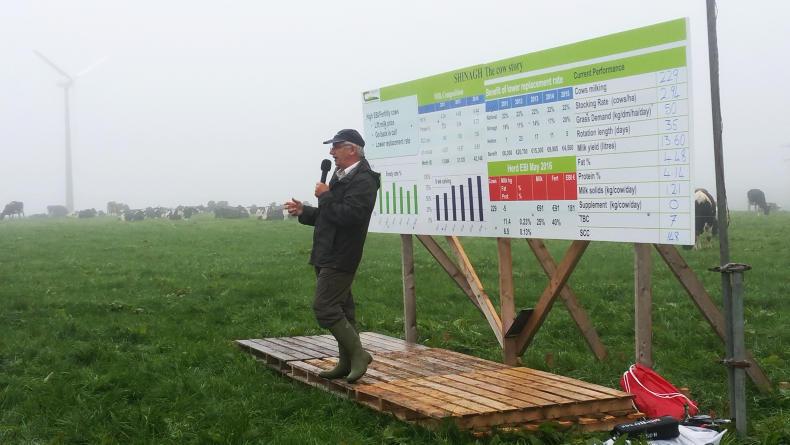
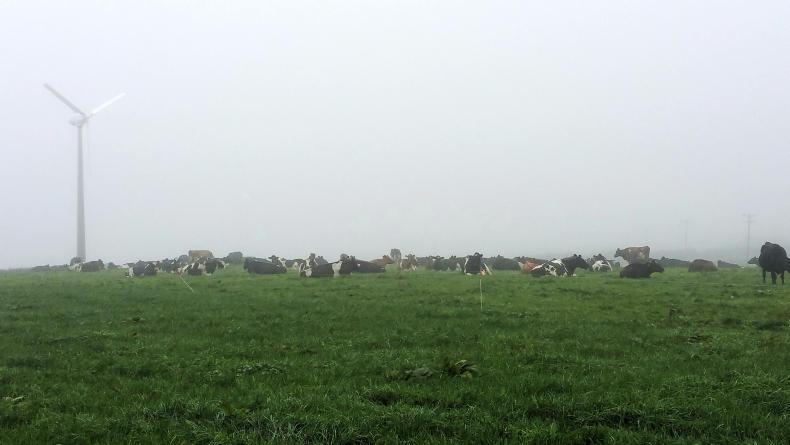
Over 400 dairy farmers braved the wet weather last Thursday to visit Shinagh. The farmers heard from farm manager Kevin Ahern and Teagasc personnel Laurence Shalloo, John McNamara, Padraig French and Paidi Kelly. The 229-cow spring-calving herd was working hard grazing as the sun started to lift the fog by midday but the financial performance board brought home the stark reality of the global dairy downturn.
This is year six of a 15-year business and the farm’s technical performance is as impressive as any other farm in the country. It’s also important to remember that the farm is supplying the best-paying co-op in Ireland.
In 2015, 425kg of milk solids/cow were sold. This is likely to drop to 400kg milk solid/cow this year. In 2015, the farm utilised 12.4t DM/ha from 15.6t DM/ha grown. So far this year, 150kg of concentrates per cow have been fed. They budget for 450kg/cow/year but so far 2013 is the only year they have gone over this figure.
Laurence Shalloo said locking in a milk price has helped insulate the farm this year.
“The farm is predicted to make €23,000 this year and between €18,000 and €20,000 of this is because the fixed price we took in the Carbery fixed milk price scheme is higher than current market returns.”
A farmer in attendance said if the Shinagh land rental price and contract rearing price were closer to market value it would show the vulnerability of the system to poor milk price. Shalloo agreed but said it was all the more reason to deliver top technical performance from grazed grass.
Also speaking at the open day was Shinagh farm manager Kevin Ahern, who went through labour management and taking time out.
Kevin is the only full-time employee but he has developed a team of part-time help for spring work and relief work through the year. As he said on the day, he is very lucky to have good contractors that do almost all the machinery work on the farm.
He said: “You need time out. Everyone should be taking more time off. Having a backup who knows your system that is a phone call away is crucial.”
Heifers are contract-reared. They leave the farm as weaned calves in early May.
The quicker the Irish dairy industry moves to discussing returns in euro per kilo milk solids and nothing else, the better. For this to happen, those who are setting milk price need to talk that language and drop the cents per litre or we will never change.
The co-op board members need to talk that language with suppliers and all management must use these figures at regional meetings, etc. We are long enough as an industry setting the price at euro per kilo milk solids to start walking the walk rather than just talking the talk.
For farms like Shinagh, where full costs are thankfully available, then the simple barometer or measure of efficiency is the total cost figure divided by the total volume of milk solids sold from the farm. That way there is no confusion among farmers. I talked to a number of farmers at the walk and they were wondering about breakeven price and fat and protein percentages, etc.
Let’s be clear – all costs need to be included and if there is a need to qualify or estimate a cost such as labour then it should be done. Our co-op board members need to drive the change to make euro per milk solids the only game in town.
Calving date
Management at Shinagh has pushed back start of calving to 10 February, which for this herd would push back mean calving date to 20 February. Now for me this start of calving is late for west Cork, where early grazing can make up a large part of the diet for freshly calved cows. However, the specifics of this herd in terms of labour, a super herd fertility performance (over 90% due to calve in the first six weeks), and a relatively high stocking rate (2.9 cows/ha) goes some way to justifying the slightly later calving date.
In my opinion, there are plenty of herds where stocking rate is not as high or fertility not as good who would be better calving in early February rather than milking more cows into December. What is of course helping is that while the due date is 10 February, a proportion of the herd will have calved before this date as short-gestation sires.
Milk solids
John McNamara told us the herd was producing 1.2kg of milk solids per cow on grazed grass. The weekend in advance of the walk was very wet and yield was down towards 13 litres per cow. The most recent fat and protein results (4.48% and 4.14%) combined with the 13 litres was delivering the 1.2kg of milk solids per cow.




SHARING OPTIONS