Almost every farm policy conversation now includes the words “generational renewal”. It’s as though politicians, Government bodies and agribusinesses have only just cottoned on to the fact that for farming to survive, we need farmers.
We know there are fewer young people getting involved in farming and as a result the age profile of Irish farmers is getting older.
We are already seeing the impacts on reduced agricultural output. While dairy exports were up in 2025, they declined in both 2023 and 2024.
Beef output was back 5% in 2025 and sheepmeat exports were back by a staggering 15% in 2025.
Some of this is due to Government policy, such as generous incentives for farmers to convert to organics, so it’s not only down to fewer farmers.
However, the facts remain that if there are fewer farms there will be lower agricultural output and this has knock-on impacts for the rural economy and rural jobs.
Actions
On the dairy side, co-ops are taking steps towards addressing the issues.
Tirlán, Lakeland Dairies, Carbery, Dairygold and now Kerry Dairy Ireland all have programmes in place to address generational renewal.
Tirlán’s programme is based around giving younger milk suppliers top-ups and pre-payments on milk price, while Dairygold’s programmes is based on ensuring that land in dairy stays in dairy with a dedicated succession planner appointed.
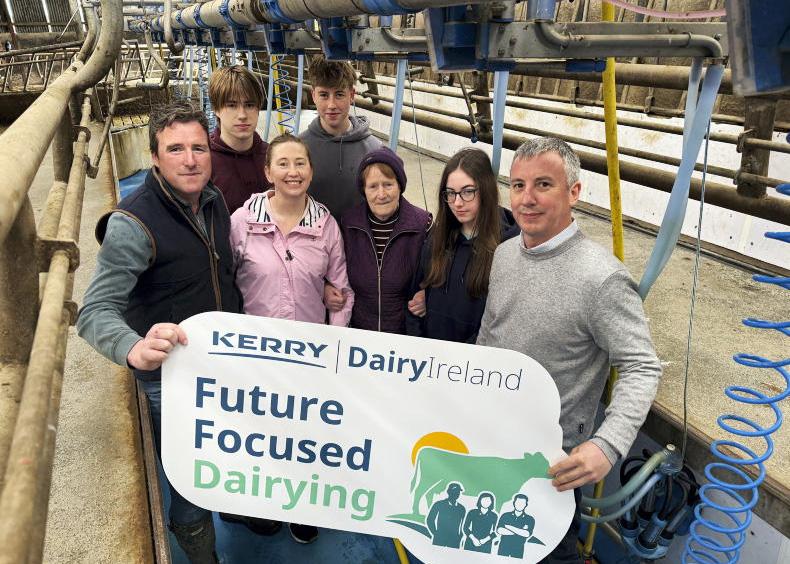
The latest to announce a programme is Kerry Dairy Ireland (KDI) who have incorporated it into their Evolve sustainability programme under the Future Focused Dairy heading.
Participants can get 0.1c/l for participating in one of six options under the pillars perception, people and performance.
Perception is all about engaging with the local community to build confidence in the sustainability and integrity of the dairy sector.
KDI will reward farmers who take part in the KDI schools programme and host two visits from local schools.
There are three options under the people pillar.
One option is to take part in a two-day labour efficiency and people management course.
Another option is to take part in a farm succession or options consultation and submit a detailed plan for the farm while the third option is to participate in two farm succession/options group workshops.
Under the performance pillar, farmers can attend a two-day business performance, strategy and planning course.
This course is all about improving financial performance and learning the skills of financial planning and budgeting.
The final option under this pillar is to become a grazing mentor, whereby the farmer that is skilled at grassland management can become an adviser to two other milk suppliers.
Sean McCarthy, head of sustainability with KDI says that the programme is designed to look at the issue of succession and generational renewal from a different lens;
“We know that dairy farming can be a rewarding career choice, but sometimes that message is lost, particularly among young people who are assessing their options.
“The perception of farming is sometimes seen as long hours for low pay, but this shouldn’t be the case.
“The actions in this programme are designed to challenge that perception and we are already seeing big uptake among milk suppliers to take part in the labour efficiency and people management course and also the business performance and strategy course,” he says.
Case study: Stack family, Abbeydorney, Co Kerry
Aidan and Tina Stack are milking 150 cows on their 84ha farm outside Abbeydorney in Co Kerry. The land is pretty good but this spring has still been a big challenge for Aidan and Tina, with a lot of on/off grazing and a lot more silage fed than planned.
When the Irish Farmers Journal visited the Stacks last Friday, the cows were out but the wind and rain was stinging. Aidan had eight days left in the first rotation but has good covers back on the first grazed paddocks so is in a good position.
While they might not like to admit it, the Stacks are a farming success story. Aidan availed of new entrant milk quota and got into dairying in 2007, having previously had sucklers and cattle which he ran with his parents Helen and John.
They started with 48 cows and grew to 100 over the following years. The addition in recent years of leased land has allowed cow numbers to grow further, peaking at 160 last year but are back to 150 this year.
Some of this is due to TB, but Aidan also reckons 150 is the optimum number for the land and facilities.
Last year, Tina gave up full-time work as an accountant to work with Aidan on the farm. While she still does some project work, her time is her own. It’s a family farm, with all members of the family helping out when needed.
Aidan’s mother Helen is very active as are their three children Dylan, Sean and Lucy who range in age from 18 to 13. We discussed the topic of succession.
Buy-in
Both Tina and Aidan were firm in their view that there is no obligation on any of the children to take over the farm, but that doesn’t mean they don’t work on the farm.
With three teenagers and only some of them interested in farming, I asked Tina how they get buy-in?
“Firstly, start off with a very light or small job such as crossing cows, washing parlour, etc. Agree a rate per job or per day and at the end of the week at the table say ‘how many days did you wash this week?’ They will say ‘five days’ or sometimes it’s ‘two days’ and you say OK, well you are getting €X this week.
“That’s a great incentive because if you do it you get paid and if you don’t do it, you don’t get paid,” she says.
The other thing Tina says works well is to assign jobs based on their interest and ability as this generally avoids “kickbacks”.
Both Tina and Aidan stressed the importance of flexibility, which Tina described as being the biggest competitive advantage farming has relative to other part-time jobs.
“Try and work around them if at all possible. In our case, bar a few exceptional times, we can work around them.
“Don’t have them missing out on something all their friends are at because they ‘have’ to work. These times are not very frequent but they are very important to them.
“They are teenagers – accept it! Give them evening milkings and let them do the tractor work late in the morning or early afternoon and be flexible.
“Make sure they get a break. Farming is cyclical so it naturally gives breaks but during the spring give them time off.
“They need to enjoy their school holidays too.”
Tina also said that it’s important to reinforce the point that the farm is not their children’s responsibility, it’s their own.
Aidan made the point that they want to demonstrate that farming offers a good lifestyle which he says comes down to not working late into the evening.
A very late evening milking for Aidan would be going for cows at 5pm.
They also have relief milkers for holidays and Sundays.
Whether or not any of the children end up pursuing a career in farming, the Stack’s are keen to point out that if one of the children does go farming they wouldn’t like them coming back to the home farm too early.
“We’re still young so we’re thinking that if one of the children was to go farming, then maybe they would start out on a leased farm away from home.
“It would make the overall pie bigger and give them and us independence,” Aidan says.
Almost every farm policy conversation now includes the words “generational renewal”. It’s as though politicians, Government bodies and agribusinesses have only just cottoned on to the fact that for farming to survive, we need farmers.
We know there are fewer young people getting involved in farming and as a result the age profile of Irish farmers is getting older.
We are already seeing the impacts on reduced agricultural output. While dairy exports were up in 2025, they declined in both 2023 and 2024.
Beef output was back 5% in 2025 and sheepmeat exports were back by a staggering 15% in 2025.
Some of this is due to Government policy, such as generous incentives for farmers to convert to organics, so it’s not only down to fewer farmers.
However, the facts remain that if there are fewer farms there will be lower agricultural output and this has knock-on impacts for the rural economy and rural jobs.
Actions
On the dairy side, co-ops are taking steps towards addressing the issues.
Tirlán, Lakeland Dairies, Carbery, Dairygold and now Kerry Dairy Ireland all have programmes in place to address generational renewal.
Tirlán’s programme is based around giving younger milk suppliers top-ups and pre-payments on milk price, while Dairygold’s programmes is based on ensuring that land in dairy stays in dairy with a dedicated succession planner appointed.
The latest to announce a programme is Kerry Dairy Ireland (KDI) who have incorporated it into their Evolve sustainability programme under the Future Focused Dairy heading.
Participants can get 0.1c/l for participating in one of six options under the pillars perception, people and performance.
Perception is all about engaging with the local community to build confidence in the sustainability and integrity of the dairy sector.
KDI will reward farmers who take part in the KDI schools programme and host two visits from local schools.
There are three options under the people pillar.
One option is to take part in a two-day labour efficiency and people management course.
Another option is to take part in a farm succession or options consultation and submit a detailed plan for the farm while the third option is to participate in two farm succession/options group workshops.
Under the performance pillar, farmers can attend a two-day business performance, strategy and planning course.
This course is all about improving financial performance and learning the skills of financial planning and budgeting.
The final option under this pillar is to become a grazing mentor, whereby the farmer that is skilled at grassland management can become an adviser to two other milk suppliers.
Sean McCarthy, head of sustainability with KDI says that the programme is designed to look at the issue of succession and generational renewal from a different lens;
“We know that dairy farming can be a rewarding career choice, but sometimes that message is lost, particularly among young people who are assessing their options.
“The perception of farming is sometimes seen as long hours for low pay, but this shouldn’t be the case.
“The actions in this programme are designed to challenge that perception and we are already seeing big uptake among milk suppliers to take part in the labour efficiency and people management course and also the business performance and strategy course,” he says.
Case study: Stack family, Abbeydorney, Co Kerry
Aidan and Tina Stack are milking 150 cows on their 84ha farm outside Abbeydorney in Co Kerry. The land is pretty good but this spring has still been a big challenge for Aidan and Tina, with a lot of on/off grazing and a lot more silage fed than planned.
When the Irish Farmers Journal visited the Stacks last Friday, the cows were out but the wind and rain was stinging. Aidan had eight days left in the first rotation but has good covers back on the first grazed paddocks so is in a good position.
While they might not like to admit it, the Stacks are a farming success story. Aidan availed of new entrant milk quota and got into dairying in 2007, having previously had sucklers and cattle which he ran with his parents Helen and John.
They started with 48 cows and grew to 100 over the following years. The addition in recent years of leased land has allowed cow numbers to grow further, peaking at 160 last year but are back to 150 this year.
Some of this is due to TB, but Aidan also reckons 150 is the optimum number for the land and facilities.
Last year, Tina gave up full-time work as an accountant to work with Aidan on the farm. While she still does some project work, her time is her own. It’s a family farm, with all members of the family helping out when needed.
Aidan’s mother Helen is very active as are their three children Dylan, Sean and Lucy who range in age from 18 to 13. We discussed the topic of succession.
Buy-in
Both Tina and Aidan were firm in their view that there is no obligation on any of the children to take over the farm, but that doesn’t mean they don’t work on the farm.
With three teenagers and only some of them interested in farming, I asked Tina how they get buy-in?
“Firstly, start off with a very light or small job such as crossing cows, washing parlour, etc. Agree a rate per job or per day and at the end of the week at the table say ‘how many days did you wash this week?’ They will say ‘five days’ or sometimes it’s ‘two days’ and you say OK, well you are getting €X this week.
“That’s a great incentive because if you do it you get paid and if you don’t do it, you don’t get paid,” she says.
The other thing Tina says works well is to assign jobs based on their interest and ability as this generally avoids “kickbacks”.
Both Tina and Aidan stressed the importance of flexibility, which Tina described as being the biggest competitive advantage farming has relative to other part-time jobs.
“Try and work around them if at all possible. In our case, bar a few exceptional times, we can work around them.
“Don’t have them missing out on something all their friends are at because they ‘have’ to work. These times are not very frequent but they are very important to them.
“They are teenagers – accept it! Give them evening milkings and let them do the tractor work late in the morning or early afternoon and be flexible.
“Make sure they get a break. Farming is cyclical so it naturally gives breaks but during the spring give them time off.
“They need to enjoy their school holidays too.”
Tina also said that it’s important to reinforce the point that the farm is not their children’s responsibility, it’s their own.
Aidan made the point that they want to demonstrate that farming offers a good lifestyle which he says comes down to not working late into the evening.
A very late evening milking for Aidan would be going for cows at 5pm.
They also have relief milkers for holidays and Sundays.
Whether or not any of the children end up pursuing a career in farming, the Stack’s are keen to point out that if one of the children does go farming they wouldn’t like them coming back to the home farm too early.
“We’re still young so we’re thinking that if one of the children was to go farming, then maybe they would start out on a leased farm away from home.
“It would make the overall pie bigger and give them and us independence,” Aidan says.

SHARING OPTIONS