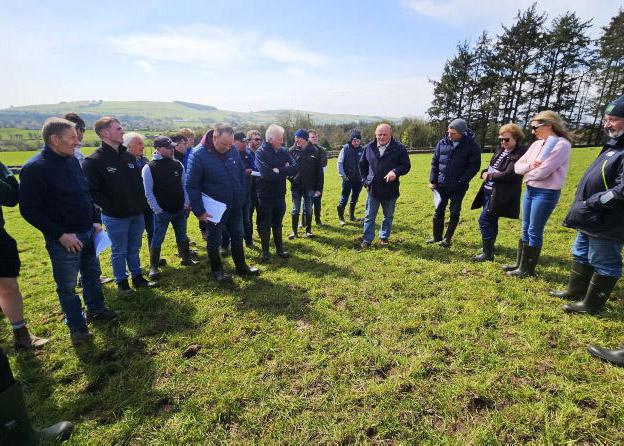
Over 300 farmers descended on the farms of David Brady and Owen Brodie in Co Cavan last week on day two of the IGA summer tour sponsored by AIB.
One of the main themes across both farms was how the farmers made the most from what they had.
Both farmers cited varying land types, high rainfall levels and road crossings on the milking block as everyday issues on their farm, yet both farms were technically excellent with David producing 541kg of milk solids per hectare and Owen producing 519kg in 2022.
David and Owen referred to grass measuring as being the catalyst for improving all aspects of their farm.
Talking points on the day evolved around breeding their perfect cow, getting the most milk possible from grass, soil fertility and their views on clover.
There was big discussion on land drainage and the costs involved to do it right.
David explained that it costs him between €3,000 and €3,500 per acre to drain his fields but they go from being grazed four times a year to nine times with much better grass and utilisation.
The tour began in Co Meath on the farm of Mark Cassidy where farmers were impressed with the technical performance and labour efficiency on show.
One of the main talking points on the day was Mark’s extensive list of standard operating procedures (SOPs). Every job on the farm has a written SOP and farmers were surprised to learn that there was over 170 pages of jobs.
Owen attended Ballyhaise Agricultural College in 1986 and bought the farm off his parents in 1989, aged 21. His parents continued their cheese-making business and Owen began milking 36 cows.
He said that while uncommon, purchasing the farm at such a young age worked out well and everyone in the family knew where they stood. “It took me two years to realise I needed to start making money,” he said.
While being held back by milk quotas and looking for opportunities, Owen took over the management a large dairy goat farm in 2002.
He said he learned a lot in this venture and there was strong demand for goats’ milk at the time.
As time went on, he realised that the cow side of his business had advantages in terms of the co-op structure, independent research and farmers sharing information and he exited the goat business in 2011.
Today, Owen is milking 194 cows across 77ha, with a grazing platform of 58ha. Owen explained that his farm is long, narrow, and hilly with walks of 2.5km.
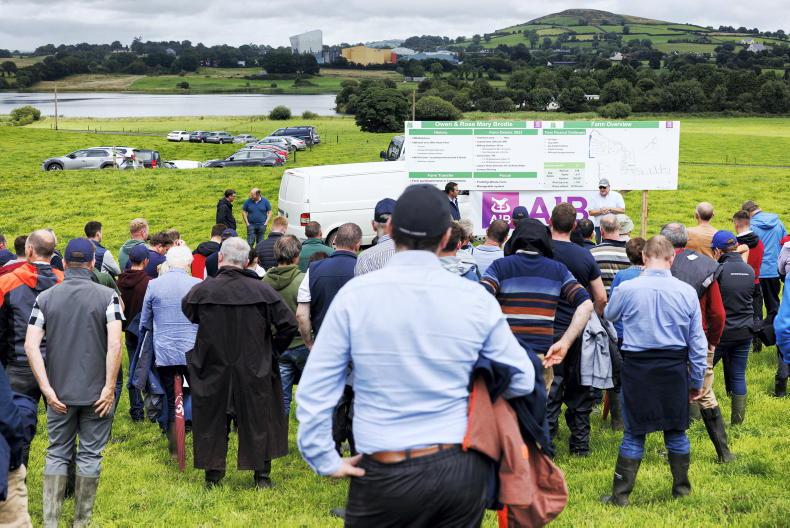
The Irish Grassland Association summer dairy tour farm walk on the farm of Owen Brodie, Ryefield, Virginia, Co Cavan. \ Donal O'Leary
In his experience, walks hit litres more than solids but he calculated that it is taking about 20kg of milk solids off each cow’s annual milk production.
To minimise production losses and even out the walks, Owen grazes far paddocks by day and near paddocks at night.
A farmer in attendance suggested that this can lead to increased dung deposits in paddocks near the parlour, thus robbing the far paddock of nutrients. Owen confirmed that this was his experience and uses slurry to bring nutrients back to the day paddocks.
Milk production last year was 519kg of milk solids at 4.7% fat and 3.78% protein from 1.1t of meal. The herd is maturing and currently averages 3.6 lactations per cow.
There were questions on the day whether this could be pushed much higher. Owen felt that four lactations per cow was possible if you can manage somatic cell count, fertility and feet.
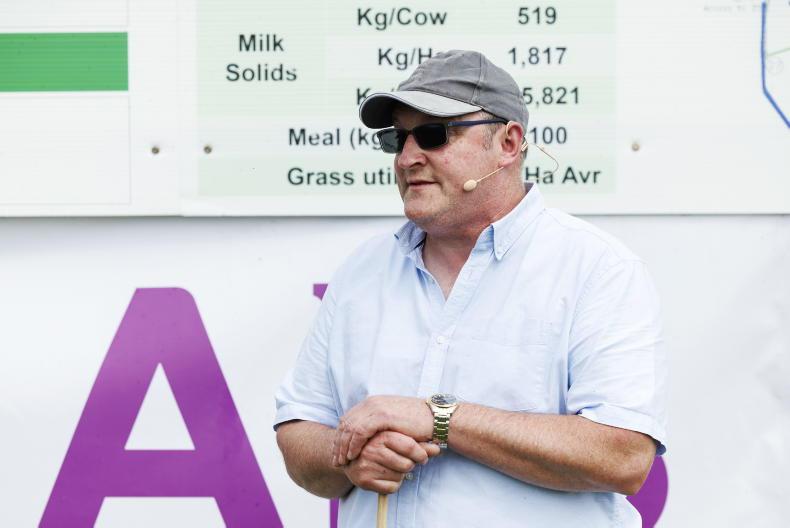
Host farmer Owen Brodie speaking at the Irish Grassland Association summer dairy tour farm walk on his farm at Ryefield, Virginia, Co Cavan. \ Donal O'Leary
Owen stressed the importance of keeping animals in the herd from year to year, especially getting young cows back in calf.
Each spring, Owen plans to graze 25% of the farm in February. By getting grass into the diet early in lactation Owen has noticed an increase in milk solids.
“Grass keeps the milk up high and lets them peak,” he said.
Grass growth averaged 15t over the last number of years. Excellent soil fertility was said to be a key driver of this, and it was shown that 98% of soil was optimum for phosphorus, 80% for potassium and 72% for lime.
In quota times there was clover present on the farm, but Owen didn’t pay much attention to it.
In recent years, there was no clover, but Owen said he started taking it seriously last year.
Clover is now in the reseeding programme and he is managing it by cutting back nitrogen on fields with high levels of clover.
Ballyhaise clover experience
Teagasc’s Donal Patton gave an update on the ongoing clover trials in Ballyhaise which began in 2021. Donal explained that like a lot of farms Ballyhaise had no clover in their swards when the trial commenced. They attempted to incorporate clover in every paddock over a three-year period while running their commercial herd.
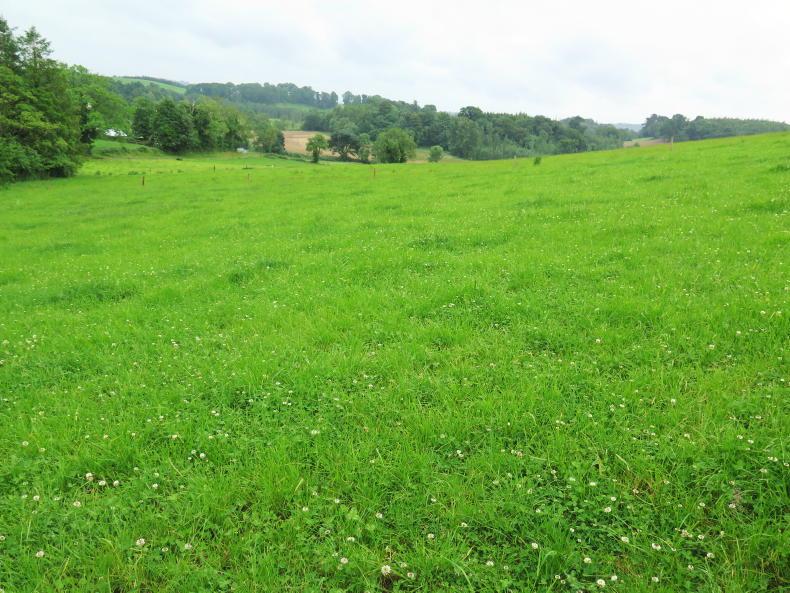
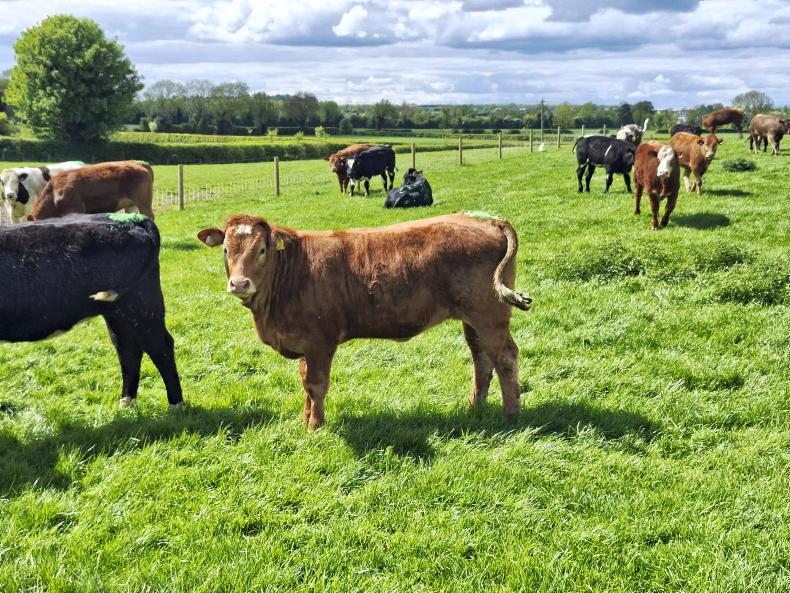
Clover field at Ballyhaise, Co Cavan.
Donal called this transition phase the “messy bit” as cows are grazing clover in one paddock and there might be no clover in the next paddock. This makes management more difficult and increases the risk of bloat.
He explained that bloat is the big worry among farmers and said it was the biggest barrier to adoption, adding that it adds another layer to the farm’s management.
Donal’s top tips for farmers looking to increase clover percentages on their farms was to keep the cows full, use bloat oil and start with a small area in clover that can be managed correctly while cutting nitrogen.
Ballyhaise has used bloat oil and has had no issues with bloat. He said that full reseeds have been more successful for clover establishment and, if oversowing, it must be done before the end of April.
David attended Ballyhaise College in 1996 and when he came home to farm, his parents were milking 40 cows with limited opportunities for expansion.
With his mind set on full-time farming, David built a 5,000-bird hen house in 1997. This enabled him to remain at home and after a tough first year learning the ropes, he was enjoying it. Over the years through leasing and purchasing land, David is milking 110 cows today.
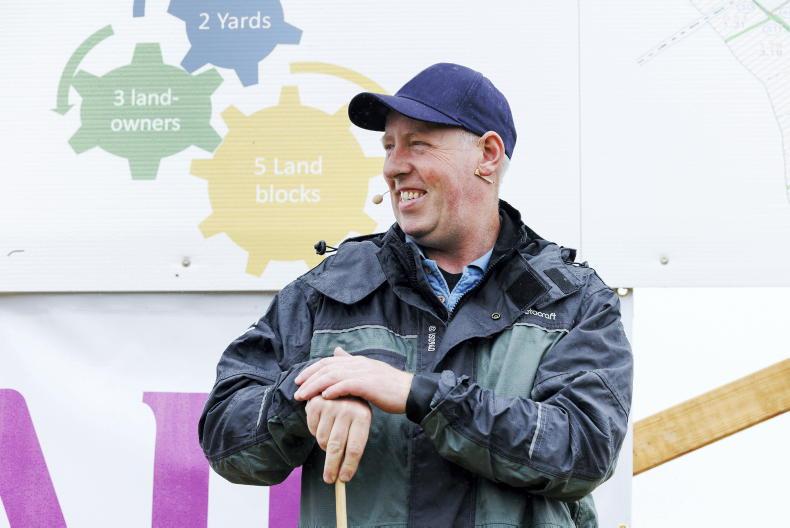
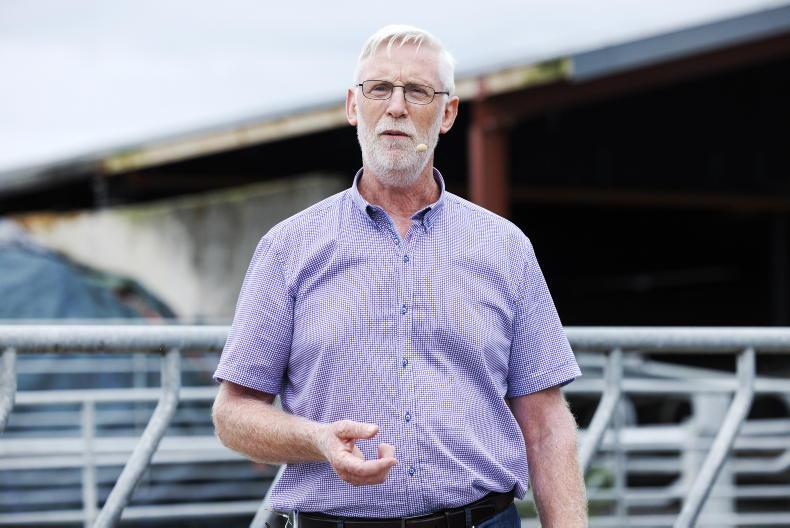
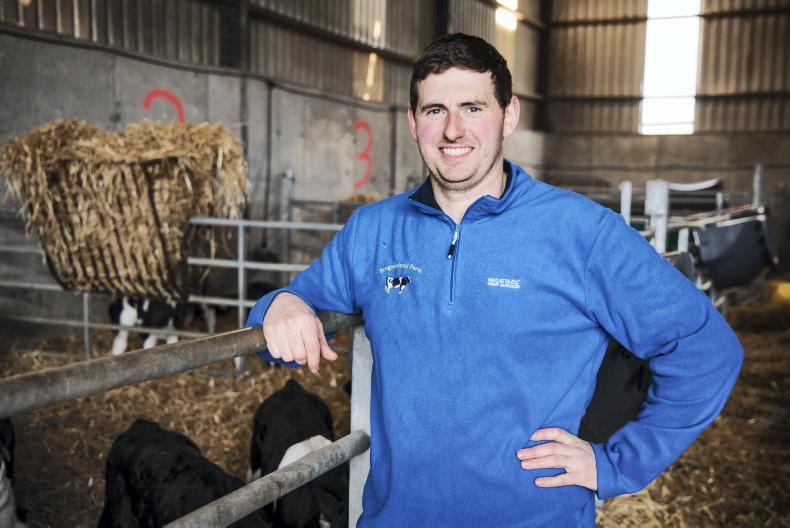
Host farmer David Brady speaking at the Irish Grassland Association summer dairy tour farm walk on his farm at Stradone, Co Cavan. \ Donal O'Leary
David feels that while his 40ha milking platform could take 120 cows, the land can turn fast and they are never too far from housing. For this reason, he is happy stocking the milking platform at 2.8 cows per hectare.
David’s farm infrastructure includes two yards split by a road and has grown to two hen houses with 15,000 birds. He explained that it is very much a family farm with his parents, brother and kids all helping. Hens alone take six hours of work each day.
David explained that before he began grass measuring, he “didn’t know what the cows were eating, yet I could tell you to the gram what the hens needed. Cows were doing low protein grazing stemmy grass,” he said. David completed a grass-measuring course in Ballyhaise in 2015 and “never looked back”.
David’s cows are averaging around 560kg liveweight and produced 541kg at 4.44% fat and 3.63% protein on 1.2 tonne of meal last year.
“The cows are ticking all the boxes for me. I need cows that work in the shed and field. When it gets wet it gets wet quick,” he said.
While happy with the litres, David is now focusing on increasing his percentages. “The milk is there. Its solids I need to improve”, he said, pointing out that his heifers have the potential to do 4% protein. He plans to pull out poor-performing cows and replace them with heifers. In the breeding season, cow selection was said to be as important as bull selection with only the best cows receiving dairy straws and the rest getting beef.
A farmer on the day asked how milk solids jumped from 463kg in 2019 to 555kg in 2020. David simply replied doing the simple things right, adding that he likes to listen to people and take their advice and again cited grass measuring as the biggest step.
One-third of David’s soils were said to be in perfect fertility for phosphorus, potassium and lime. He said he needed to replace off takes better and is now following the cows with slurry using the dribble bar.
On the day, David was asked whether he might specialise in either hens or cows in the future? David said he would like to continue with both and that they work quite well together, explaining that last year was good for milk but very bad for poultry.
A new shed for 12,000 birds now costs €850,000 and added that he gets more enjoyment out of the cows.
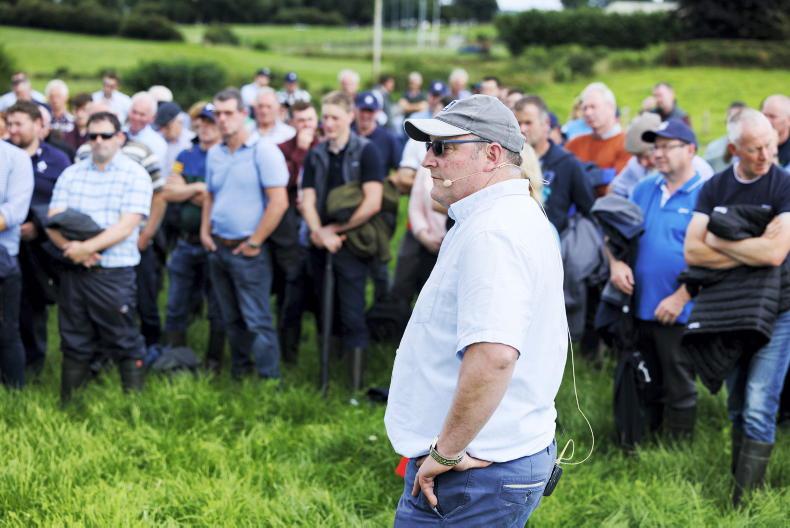
Host farmer Mark Cassidy, Kells, Co Meath, speaking to the large crowd on the first of the Irish Grassland Association summer dairy tour farm walks across Meath and Cavan. \ Donal O'Leary
Over 300 farmers descended on the farms of David Brady and Owen Brodie in Co Cavan last week on day two of the IGA summer tour sponsored by AIB.
One of the main themes across both farms was how the farmers made the most from what they had.
Both farmers cited varying land types, high rainfall levels and road crossings on the milking block as everyday issues on their farm, yet both farms were technically excellent with David producing 541kg of milk solids per hectare and Owen producing 519kg in 2022.
David and Owen referred to grass measuring as being the catalyst for improving all aspects of their farm.
Talking points on the day evolved around breeding their perfect cow, getting the most milk possible from grass, soil fertility and their views on clover.
There was big discussion on land drainage and the costs involved to do it right.
David explained that it costs him between €3,000 and €3,500 per acre to drain his fields but they go from being grazed four times a year to nine times with much better grass and utilisation.
The tour began in Co Meath on the farm of Mark Cassidy where farmers were impressed with the technical performance and labour efficiency on show.
One of the main talking points on the day was Mark’s extensive list of standard operating procedures (SOPs). Every job on the farm has a written SOP and farmers were surprised to learn that there was over 170 pages of jobs.
Owen attended Ballyhaise Agricultural College in 1986 and bought the farm off his parents in 1989, aged 21. His parents continued their cheese-making business and Owen began milking 36 cows.
He said that while uncommon, purchasing the farm at such a young age worked out well and everyone in the family knew where they stood. “It took me two years to realise I needed to start making money,” he said.
While being held back by milk quotas and looking for opportunities, Owen took over the management a large dairy goat farm in 2002.
He said he learned a lot in this venture and there was strong demand for goats’ milk at the time.
As time went on, he realised that the cow side of his business had advantages in terms of the co-op structure, independent research and farmers sharing information and he exited the goat business in 2011.
Today, Owen is milking 194 cows across 77ha, with a grazing platform of 58ha. Owen explained that his farm is long, narrow, and hilly with walks of 2.5km.
The Irish Grassland Association summer dairy tour farm walk on the farm of Owen Brodie, Ryefield, Virginia, Co Cavan. \ Donal O'Leary
In his experience, walks hit litres more than solids but he calculated that it is taking about 20kg of milk solids off each cow’s annual milk production.
To minimise production losses and even out the walks, Owen grazes far paddocks by day and near paddocks at night.
A farmer in attendance suggested that this can lead to increased dung deposits in paddocks near the parlour, thus robbing the far paddock of nutrients. Owen confirmed that this was his experience and uses slurry to bring nutrients back to the day paddocks.
Milk production last year was 519kg of milk solids at 4.7% fat and 3.78% protein from 1.1t of meal. The herd is maturing and currently averages 3.6 lactations per cow.
There were questions on the day whether this could be pushed much higher. Owen felt that four lactations per cow was possible if you can manage somatic cell count, fertility and feet.
Host farmer Owen Brodie speaking at the Irish Grassland Association summer dairy tour farm walk on his farm at Ryefield, Virginia, Co Cavan. \ Donal O'Leary
Owen stressed the importance of keeping animals in the herd from year to year, especially getting young cows back in calf.
Each spring, Owen plans to graze 25% of the farm in February. By getting grass into the diet early in lactation Owen has noticed an increase in milk solids.
“Grass keeps the milk up high and lets them peak,” he said.
Grass growth averaged 15t over the last number of years. Excellent soil fertility was said to be a key driver of this, and it was shown that 98% of soil was optimum for phosphorus, 80% for potassium and 72% for lime.
In quota times there was clover present on the farm, but Owen didn’t pay much attention to it.
In recent years, there was no clover, but Owen said he started taking it seriously last year.
Clover is now in the reseeding programme and he is managing it by cutting back nitrogen on fields with high levels of clover.
Ballyhaise clover experience
Teagasc’s Donal Patton gave an update on the ongoing clover trials in Ballyhaise which began in 2021. Donal explained that like a lot of farms Ballyhaise had no clover in their swards when the trial commenced. They attempted to incorporate clover in every paddock over a three-year period while running their commercial herd.
Clover field at Ballyhaise, Co Cavan.
Donal called this transition phase the “messy bit” as cows are grazing clover in one paddock and there might be no clover in the next paddock. This makes management more difficult and increases the risk of bloat.
He explained that bloat is the big worry among farmers and said it was the biggest barrier to adoption, adding that it adds another layer to the farm’s management.
Donal’s top tips for farmers looking to increase clover percentages on their farms was to keep the cows full, use bloat oil and start with a small area in clover that can be managed correctly while cutting nitrogen.
Ballyhaise has used bloat oil and has had no issues with bloat. He said that full reseeds have been more successful for clover establishment and, if oversowing, it must be done before the end of April.
David attended Ballyhaise College in 1996 and when he came home to farm, his parents were milking 40 cows with limited opportunities for expansion.
With his mind set on full-time farming, David built a 5,000-bird hen house in 1997. This enabled him to remain at home and after a tough first year learning the ropes, he was enjoying it. Over the years through leasing and purchasing land, David is milking 110 cows today.
Host farmer David Brady speaking at the Irish Grassland Association summer dairy tour farm walk on his farm at Stradone, Co Cavan. \ Donal O'Leary
David feels that while his 40ha milking platform could take 120 cows, the land can turn fast and they are never too far from housing. For this reason, he is happy stocking the milking platform at 2.8 cows per hectare.
David’s farm infrastructure includes two yards split by a road and has grown to two hen houses with 15,000 birds. He explained that it is very much a family farm with his parents, brother and kids all helping. Hens alone take six hours of work each day.
David explained that before he began grass measuring, he “didn’t know what the cows were eating, yet I could tell you to the gram what the hens needed. Cows were doing low protein grazing stemmy grass,” he said. David completed a grass-measuring course in Ballyhaise in 2015 and “never looked back”.
David’s cows are averaging around 560kg liveweight and produced 541kg at 4.44% fat and 3.63% protein on 1.2 tonne of meal last year.
“The cows are ticking all the boxes for me. I need cows that work in the shed and field. When it gets wet it gets wet quick,” he said.
While happy with the litres, David is now focusing on increasing his percentages. “The milk is there. Its solids I need to improve”, he said, pointing out that his heifers have the potential to do 4% protein. He plans to pull out poor-performing cows and replace them with heifers. In the breeding season, cow selection was said to be as important as bull selection with only the best cows receiving dairy straws and the rest getting beef.
A farmer on the day asked how milk solids jumped from 463kg in 2019 to 555kg in 2020. David simply replied doing the simple things right, adding that he likes to listen to people and take their advice and again cited grass measuring as the biggest step.
One-third of David’s soils were said to be in perfect fertility for phosphorus, potassium and lime. He said he needed to replace off takes better and is now following the cows with slurry using the dribble bar.
On the day, David was asked whether he might specialise in either hens or cows in the future? David said he would like to continue with both and that they work quite well together, explaining that last year was good for milk but very bad for poultry.
A new shed for 12,000 birds now costs €850,000 and added that he gets more enjoyment out of the cows.
Host farmer Mark Cassidy, Kells, Co Meath, speaking to the large crowd on the first of the Irish Grassland Association summer dairy tour farm walks across Meath and Cavan. \ Donal O'Leary






SHARING OPTIONS