




Soil moisture deficits have increased again this week, with every part of the country now experiencing some level of restriction in growth.
The southeast remains the worst-affected region, registering soil moisture deficits as high as 90mm this week. The rest of Munster and Leinster aren’t far behind with deficits in the northwest still below 50mm for the most part.
As SMDs continue to rise and growth rates continue to fall nationwide, the only option for farms is to extend rotation length to between 25 and 30 days, match demand to growth in an effort to hold some grass ahead of cows and supplement to fill the gap.
All farms should complete a winter fodder budget over the coming week to assess how much silage can afford to be used in the weeks ahead based on the silage demand over the dry period.
Once the rain does come, heavy feeding will need to continue for a minimum of ten days to allow cover to build. Therefore, on farms where grass is already scarce, budget to feed heavily for at least another three weeks.
Once the calculation for winter fodder is completed, work back to identify how much additional feed is required in the form of either concentrates or purchased silage.
On p40 of this week’s drought focus there is a cost analysis of the different feed options. Feeding meal in the parlour is the highest cost option and with a low milk price, farms should be looking to make use of some of the other lower-cost options to fill feed gaps.
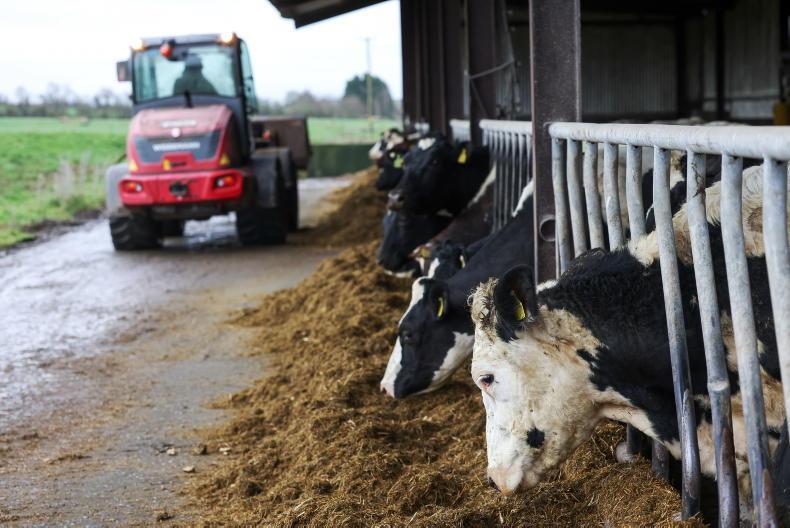
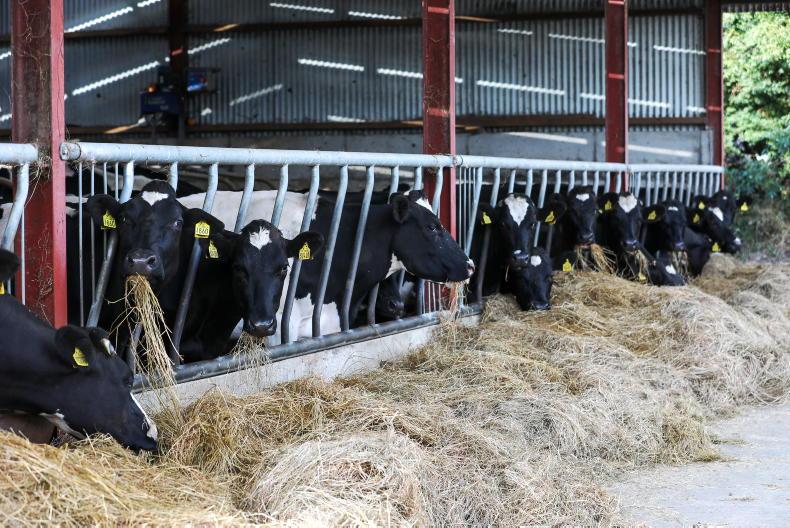
Where cows are being fed heavily and have only a few hours pre- or post-milking to get their allocation in, feed space is important. If feed space is limited, housing animals by day or by night might solve the problem.
Fertiliser
At this stage fertiliser spreading is a waste of time and money for the majority.
Where growth is below 40kg DM/ha, hold off on spreading until rain comes.
The recently reseeded paddocks should still be growing. If growth is above 40kg on these, parlour washings could be a good option for getting some nutrients out on these swards.
Eoin McCormack – Clonakilty, Co Cork
Growth is back this week and we’re planning to house some cows by day and others by night for feed space reasons. Cows will get 7kg of silage, 8kg of grass and 3kg of meal in the parlour.
Housing the cows will allow us to stretch what grass is left for another two weeks. I’d say we’ll be tight on winter feed so we will have to do a fodder budget this week to see what we need in regards to additional feed.
In terms of fertiliser, we were going with around eight units of nitrogen/acre up to this week but we won’t spread again until rain comes.
Milk yield is back more than we’d like which is something we’ll be keeping an eye on over the next week.
Stocking rate (LU/ha) 3.07
Growth (kg/ha) 24
Average farm cover (kg/ha) 408
Yield (l/cow) 17.3
Fat (%) 4.44
Protein (%) 3.65
Milk solids (kg/cow) 1.44
Concentrates (kg/cow) 3
Bronwyn Fitzpatrick – Ballyhaise, Co Cavan
Growth is back to 40kg, a drop of over 20kg in five days, so the lack of moisture is starting to have an effect.
With growth above 40kg we have been spreading away but this is probably going to stop next week. Rotation length is still around 20 days as it had been business as usual here with a cover of 226kg/cow, but we’ll look at extending this if we don’t get rain this week. The cows are only getting a couple of kilograms of meal, with the rest of the diet coming from grass.
We’re almost finished breeding now. The bulls are still running with the cows and it’s busier than we’d like so we’ll look to do another week bringing us to 11 weeks of breeding in total.
Stocking rate (LU/ha) 2.7
Growth (kg/ha) 40
Average farm cover (kg/ha) 609
Yield (l/cow) 20
Fat (%) 4.37
Protein (%) 3.66
Milk solids (kg/cow) 1.65
Concentrates (kg/cow) 2
Mike Ahern – Ballyduff, Co Waterford
Growth took a big dive this week and we’re starting to lose grass from paddocks ahead of cows. We extended to a 30-day round, and dropped demand significantly.
Cows are getting a 6kg mix of high-quality silage plus maize, with 2kg of soya hulls through the feed wagon and we’ll continue to feed that as needed. We have a separate pit then for winter feed that we know has enough to cover us.
Separate pits is something we started doing after 2018 and it works well. The milk protein is the lowest it’s been all year. That’s just down to the grass quality. The grass is high dry matter but the feed quality of it is fairly poor.
Stocking rate (LU/ha) 3.3
Growth (kg/ha) 5
Average farm cover (kg/ha) 463
Yield (l/cow) 19
Fat (%) 4.97
Protein (%) 3.73
Milk solids (kg/cow) 1.7
Concentrates (kg/cow) 2.5


SHARING OPTIONS