



The renowned Sustainable Grassland Farmer of the Year competition, organised and run by the Teagasc Grass10 team, is back; and the format has had a shake up. The new name for the competition is the Pasture Progress Awards and the finalists are now chosen based on the progress they have made over three years in key metrics of grassland management.
Some of the main metrics are tonnes of pasture growth, number of grazings per paddock, number of times the farm was measured and average pre-grazing yield.
Instead of farms having to apply for the awards, as was the case in previous years, a desktop exercise is carried out by the Grass10 team using farmers’ Pasturebase Ireland data to compare 2025 performance versus 2023 and 2024. From there, winners were picked for each county and subsequently regional winners were then selected from the Munster, Leinster and the combined Connacht/Ulster competitions.
Judging
Once the three regional winners were announced, a judging team was tasked with visiting each farm and selecting a winner. The panel of judges for this year’s competition comprised of John Maher of Teagasc Grass10, Liz Hyland from the Department of Agriculture, Sean McMahon of Grassland Agro, John Farrell of AIB, Colin Heaney of FBD and myself.
The judges rank the farms based on a number of criteria – grassland management, nutrient management, grazing infrastructure, sustainability, reseeding, clover and health and safety.
Winner
The overall winner of the awards is to be announced at a ceremony in Teagasc Oakpark, Co Carlow, on Thursday 18 June.
The Irish Farmers Journal will be profiling the winner in next week’s dairy pages and an interview will be available on the Inside Dairy podcast next week.
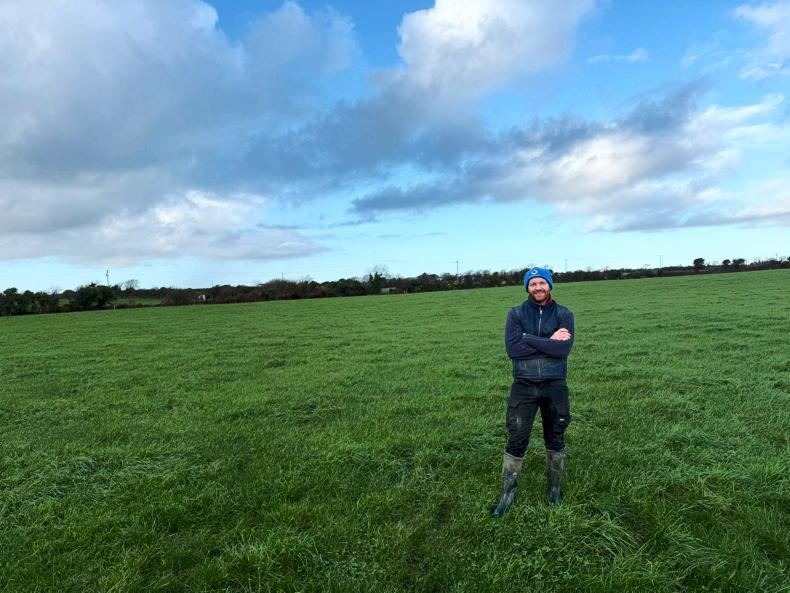
Leinster winner: Liam Rochford
Cleariestown, Co Wexford
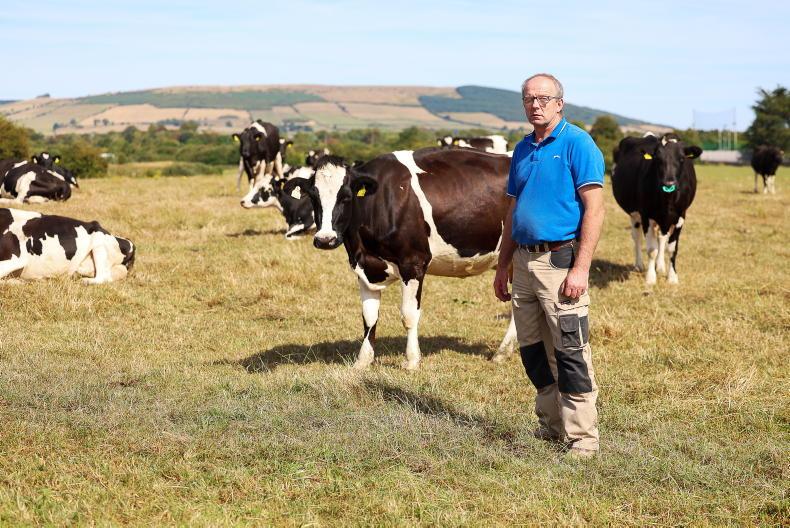
Liam is milking 140 cows across 160ha in south Wexford. Of the total farm area, 56ha is the milking platform. The Rochfords have several large outblocks and are also running a tillage and calf-to-beef enterprise.
Upon returning home from New Zealand in 2017, Liam has taken charge of the grassland management on the farm and has been making significant improvements in a short space of time.
The starting point for Liam was walking the farm more often. In order to get a better understanding of where the farm needed to go, he felt he needed to be clear on where it was.
Since taking responsibility for the running of the business, he’s been steadily increasing the number of times grass is measured on the farm each year. In 2025, he completed 41 grass measures. This was up from 31 measures in 2024 and just over 20 walks in 2023.
Walking the farm more often in peak growing season has helped Liam to make more informed decisions throughout the year. In 2025 he increased the number of grazing’s per paddock to 8.7 from 7.3 in 2024 and significantly reduced the average pre-grazing yield from 1,462kg DM/ha to 1,319kg DM/ha.
By making these small changes, cows are now grazing higher quality grass throughout the year and as a result meal feeding has dropped to 1.06t/cow and milk solids delivered increased by over 70kg/cow to 500kg/cow in 2025 from 424kg/cow in 2024.
The farm is heavy in nature and grazing can be challenging in the shoulders of the year. On/off grazing is a big part of Liam’s management in the spring and autumn and grazing infrastructure has been improved to make this easier.
Each paddock has three to four access points and more than one water trough to allow fields to be divided for smaller allocations.
Liam reseeded 13% of the milking platform in 2025 and clover is going in all the reseeds. To date, there has been mixed success with clover but it’s something Liam is hoping to improve on. From a biodiversity viewpoint, the farm is very well equipped with hedgerows that run along the boundaries of the majority of the Rochford’s land and is an area they continue to invest time in.
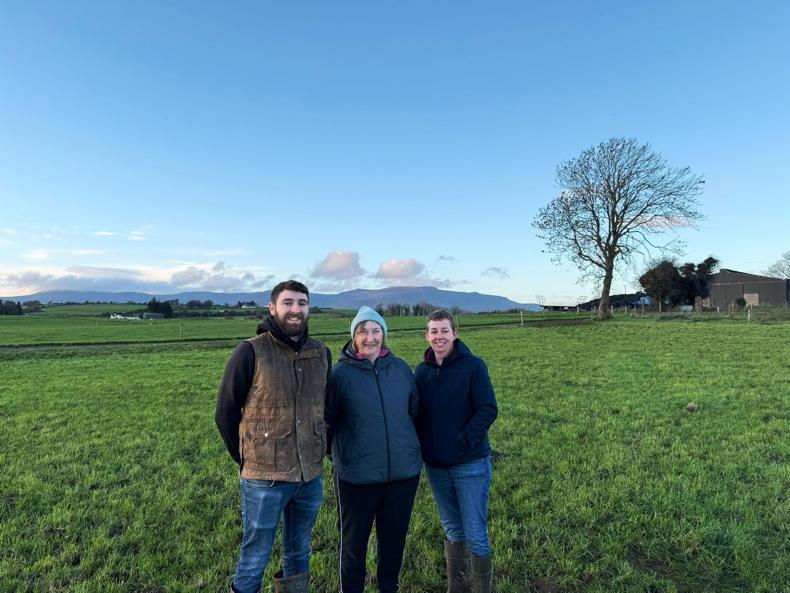
Munster winner: Anne Keane and Esther Walsh
Kilmacthomas, Co Waterford
The second farm the judges visited was that of Anne Keane in Kilmacthomas, Co Waterford. The farm comprises of 74ha, 45ha of which are the milking platform, and carries 142 cows. The farm is managed and run day-to-day by Esther Walsh and Oisin Shannon.
Located less than 10km from the Waterford coastline, the land is very dry in nature, meaning February and November grazing are very possible, however, the farm does tend to suffer from moisture deficit during the summer months.
Although 2025 was a challenging year for growing grass, with three ‘mini-droughts’ on the farm, according to Esther, it still managed to grow 12.1t DM/ha. This was up from the 9t DM/ha grown in 2024.
The dry spells meant more supplement was fed than Esther would have hoped for, with 1.67t of meal/cow fed in 2025, but the cows produced a lot of milk, with just over 550kg/cow sold for the year.
Over the last two years, the farm has made investments in roadways and grazing infrastructure.
Most of the paddocks on the farm are now served by two roadways and a gap at each corner. This allows fields to be accessed from four different entry points.
There are several water troughs in each paddock, allowing for easy sub-division.
Like the Rochfords, the investment is paying off. In 2024, the farm grazed each paddock an average of 7.6 times and in 2025, this number had increased to 8.5.
Soil fertility on the farm is also excellent, with the average Ps and Ks in index three and the average pH of the farm being optimal at 6.57.
Clover is the next step for the business. To date, the farm has some level of clover and with soil fertility in such a good place, Esther is expecting the farm to be able to carry higher levels of clover into the future.
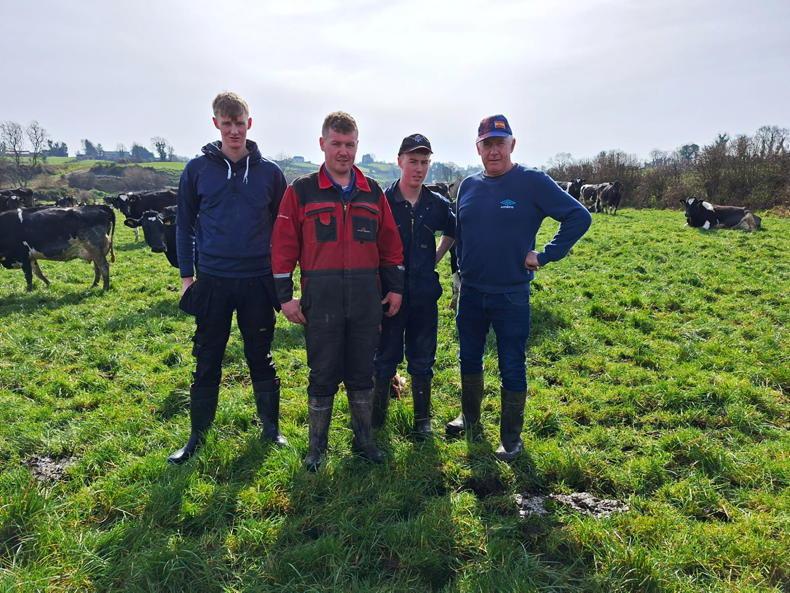
Connacht/Ulster winner: David Williamson
Bailieboro, Co Cavan
The Williamsons operate a family-run business, with David and his two sons Ian and Glen heavily involved in the farm. The enterprise is located in the hills of Cavan, with the farm 600ft above sea level. The area experiences high levels of rainfall, which makes grazing in the shoulders of the year more challenging.
The Williamsons are currently milking 220 cows on a 67ha milking platform. The herd delivered over 500kg of milk solids/cow from 1.05t of meal/cow in 2025.
Last year, the farm grew a total of 12.5t DM/ha, which was up from 11.3t DM/ha in 2024. The Williamsons measured an impressive total of 52 times in 2025, up from the 40 grass walks done in 2024.
The high rainfall and heavy soils make early grazing a challenge and in 2025 the Williamsons only began grazing on 28 February. From that point on, each paddock was grazed an average of 7.9 times, up from 7.0 grazings in 2024.
The family has a strong focus on reseeding, with a target of 10% reseeded annually. In 2025, this figure was up to 15%.
Some of the land requires significant drainage work prior to reseeding, but David feels the benefits of reseeding are very worthwhile.
The farm also made a big effort to incorporate clover into the system, and to date over 30% of the farm has some level of clover in the sward.
Slurry use on-farm is targeted toward the silage ground, with the indexes on this ground lower than the milking platform.



SHARING OPTIONS