Late November in New Zealand is the equivalent of late May in Britain and Ireland. Just like at home, the weather at this time is changeable in New Zealand.
Thursday, the day of my arrival, was a blistering hot summer's day, but Friday was a miserably wet day. Milk production is well up in New Zealand and farmers are happy with the weather.
Friday started out with a visit to Dale and Colin Armer. The Armers are among the largest farmers in New Zealand.
The amount of farms under their control and the wealth they have generated from dairy farming is mind-blowing.
Dairy Holdings
They own a 37% share of Dairy Holdings Ltd, which owns 58 farms and 48,000 cows in the South Island. Dairy Holdings is valued at NZ$850m (€508m) and has a 50% debt-to-equity ratio. This business is managed by Colin Glass, who is the CEO, and most of the farms are managed by share-milkers.
Colin and Dale Armer are the sole owners of the Armer Group, which operates 15 farms and about 14,000 cows in the North Island. Nine of the farms are around the Lake Taupo district, which is near the centre of the North Island.
Contract-milking
Peter Wichman is a contract-milker on two of the Armer Group’s 1,100-cow farms. The two farms are next to each other. Peter manages one farm himself, with an assistant farm manager (called a second in charge or 2IC in New Zealand) and two general workers.
The second farm he contract milks in has a farm manager, assistant manager and two employees.
Contract-milking is where the contract-milker provides all the labour and machinery, such as quad bikes and tractors, and pays for the running costs of the milking parlour in return for a fixed payment per milk solids produced.
Share-milkers provide all of the above but they own their own the cows and pay more of the costs for a 50% share of the milk payment.

A simple drafting unit on Peter's farm.
1,100 cows
Both farms that Peter runs have 1,100 cows and rear 350 calves to weaning off milk. This works out at 275 cows per person. Peter and the employees work no more than 6.5 hours per day all year round. Cows are milked twice per day.
The farms made an Economic Farm Surplus (EFS, which is equivalent to net profit) of around NZ$3,500/ha (€2,000/ha) in the 2017/2018 season.
The average in the region, according to Dairy Base results on 54 farms, was an EFS of NZ$2,000/ha (€1,200/ha).
Low labour
So the Armer Group farms have very low labour input and are still very profitable. Working six-and-a-half-hour days is common all year round, even in springtime. Peter explains the system.
“We run a simple grass-based system. We tend not to feed any supplement except some crops for the winter so other than doing the basics there’s not a lot else to do.
“I tell my guys to milk the cows in the morning, go home and watch a film and then talk about the film during the evening milking,” he says jokingly.
The most important thing for Peter is to get grazing residuals right. Colin says good residuals are the most important thing. He talks about the extra tonne per hectare of grass utilised in spring when residuals are right.

The rotary parlour has no ACRs or other accessories.
We run a simple grass-based system
For Colin and Peter, a good residual in spring is a post-grazing cover of 1,100kg/ha total cover, or about 2.7 to 3cm post-grazing height.
By making the cows graze down hard they are utilising more grass. Colin says research has proven that the tightly grazed swards subsequently grow 38% more of a higher-quality feed over the next eight weeks compared to laxly grazed swards.
No silage is made on the grazing platforms. Today, Peter has 50ha of the 385ha farm closed for deferred grazing. This will be grazed in February and March depending on growth rates. The farms are not irrigated and are prone to droughts every summer.
Good grass
The deferred grass will be grazed by milking cows by night and they will be on good grass by day. It will be used to slow down the rotation length to 40 days during the drought. At this stage it will have a cover of 5,000kg/ha total growth (3,500kg/ha available cover).
By not cutting silage he is not incurring the costs of harvesting or feeding out. Cows are culled hard during a drought with all cows that are not going to be milked in the following season gone before he starts grazing the deferred grass.
Performance is measured in profit per hectare, not production per hectare. Colin says he wants to farm land, not cows. The farms are stocked higher than average and start calving earlier than average.
Target
An important measure for Colin is cow days in milk per hectare before Christmas, which is when the drought usually hits. His target is 600 while the industry average is 460. This allows him to cull and dry off cows aggressively when it gets dry.
Milk solids production per hectare is between 900 and 1,100kg/ha across the 15 Armer farms.
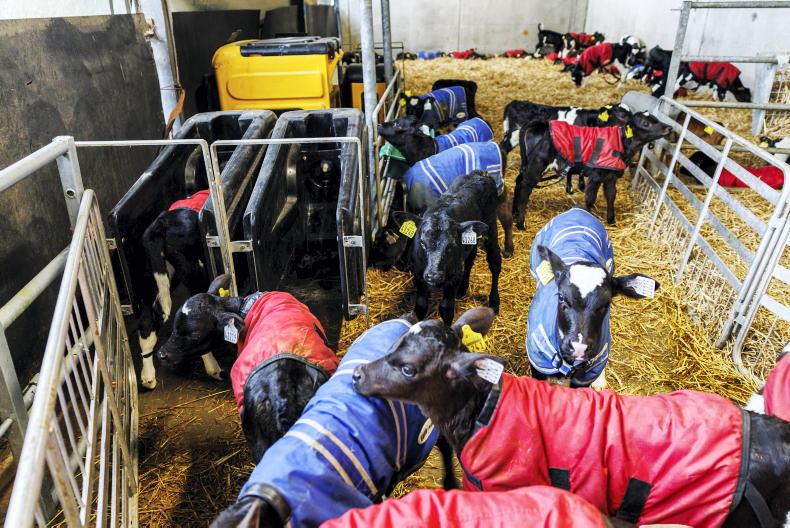
Cows calve outside and freshly calved cows and calves are brought in at milking time. Calves are batched in groups and are fed colostrum through a 10-teat feeder. All calves are fed milk once per day. After five days they are trained to the big trailed feeder and put out the field.
Late November in New Zealand is the equivalent of late May in Britain and Ireland. Just like at home, the weather at this time is changeable in New Zealand.
Thursday, the day of my arrival, was a blistering hot summer's day, but Friday was a miserably wet day. Milk production is well up in New Zealand and farmers are happy with the weather.
Friday started out with a visit to Dale and Colin Armer. The Armers are among the largest farmers in New Zealand.
The amount of farms under their control and the wealth they have generated from dairy farming is mind-blowing.
Dairy Holdings
They own a 37% share of Dairy Holdings Ltd, which owns 58 farms and 48,000 cows in the South Island. Dairy Holdings is valued at NZ$850m (€508m) and has a 50% debt-to-equity ratio. This business is managed by Colin Glass, who is the CEO, and most of the farms are managed by share-milkers.
Colin and Dale Armer are the sole owners of the Armer Group, which operates 15 farms and about 14,000 cows in the North Island. Nine of the farms are around the Lake Taupo district, which is near the centre of the North Island.
Contract-milking
Peter Wichman is a contract-milker on two of the Armer Group’s 1,100-cow farms. The two farms are next to each other. Peter manages one farm himself, with an assistant farm manager (called a second in charge or 2IC in New Zealand) and two general workers.
The second farm he contract milks in has a farm manager, assistant manager and two employees.
Contract-milking is where the contract-milker provides all the labour and machinery, such as quad bikes and tractors, and pays for the running costs of the milking parlour in return for a fixed payment per milk solids produced.
Share-milkers provide all of the above but they own their own the cows and pay more of the costs for a 50% share of the milk payment.
A simple drafting unit on Peter's farm.
1,100 cows
Both farms that Peter runs have 1,100 cows and rear 350 calves to weaning off milk. This works out at 275 cows per person. Peter and the employees work no more than 6.5 hours per day all year round. Cows are milked twice per day.
The farms made an Economic Farm Surplus (EFS, which is equivalent to net profit) of around NZ$3,500/ha (€2,000/ha) in the 2017/2018 season.
The average in the region, according to Dairy Base results on 54 farms, was an EFS of NZ$2,000/ha (€1,200/ha).
Low labour
So the Armer Group farms have very low labour input and are still very profitable. Working six-and-a-half-hour days is common all year round, even in springtime. Peter explains the system.
“We run a simple grass-based system. We tend not to feed any supplement except some crops for the winter so other than doing the basics there’s not a lot else to do.
“I tell my guys to milk the cows in the morning, go home and watch a film and then talk about the film during the evening milking,” he says jokingly.
The most important thing for Peter is to get grazing residuals right. Colin says good residuals are the most important thing. He talks about the extra tonne per hectare of grass utilised in spring when residuals are right.
The rotary parlour has no ACRs or other accessories.
We run a simple grass-based system
For Colin and Peter, a good residual in spring is a post-grazing cover of 1,100kg/ha total cover, or about 2.7 to 3cm post-grazing height.
By making the cows graze down hard they are utilising more grass. Colin says research has proven that the tightly grazed swards subsequently grow 38% more of a higher-quality feed over the next eight weeks compared to laxly grazed swards.
No silage is made on the grazing platforms. Today, Peter has 50ha of the 385ha farm closed for deferred grazing. This will be grazed in February and March depending on growth rates. The farms are not irrigated and are prone to droughts every summer.
Good grass
The deferred grass will be grazed by milking cows by night and they will be on good grass by day. It will be used to slow down the rotation length to 40 days during the drought. At this stage it will have a cover of 5,000kg/ha total growth (3,500kg/ha available cover).
By not cutting silage he is not incurring the costs of harvesting or feeding out. Cows are culled hard during a drought with all cows that are not going to be milked in the following season gone before he starts grazing the deferred grass.
Performance is measured in profit per hectare, not production per hectare. Colin says he wants to farm land, not cows. The farms are stocked higher than average and start calving earlier than average.
Target
An important measure for Colin is cow days in milk per hectare before Christmas, which is when the drought usually hits. His target is 600 while the industry average is 460. This allows him to cull and dry off cows aggressively when it gets dry.
Milk solids production per hectare is between 900 and 1,100kg/ha across the 15 Armer farms.
Cows calve outside and freshly calved cows and calves are brought in at milking time. Calves are batched in groups and are fed colostrum through a 10-teat feeder. All calves are fed milk once per day. After five days they are trained to the big trailed feeder and put out the field.






SHARING OPTIONS