



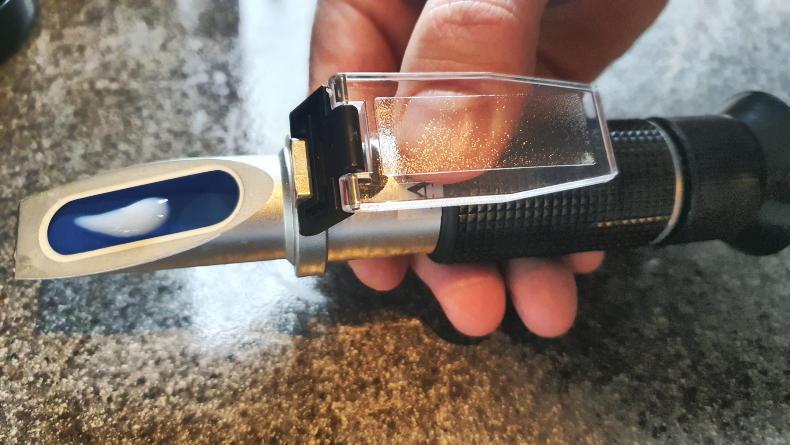
Calves are born with low levels of antibodies, and it is essential that they receive the antibody-rich colostrum from their dam in the first few hours of life.
This is a vital step in reducing the incidence of neonatal calf disease and mortality.
Inadequate colostrum intake significantly increases the risk of infectious disease.
Therefore, providing calves with the correct amount of high-quality colostrum and maintaining a clean calving environment are essential for ensuring passive immunity and disease protection.
Farmers can quickly assess colostrum quality by using a Brixometer.
In suckler herds, this helps identify whether a cow’s colostrum contains sufficient antibodies to provide strong early immunity to the newborn calf.
A reading of 22% Brix or higher indicates good-quality colostrum suitable for feeding.
If the reading is below 22%, the colostrum is low in antibodies, so a powdered colostrum substitute should be fed.
Artificial colostrum products are useful when maternal colostrum quality, quantity or absorption has been compromised.
Products differ in composition and must be mixed correctly depending on whether they are used as a supplement or full replacement.
The substitute should be fed within the first 2 hours after birth, with a second feed by 12 hours to ensure good passive immunity.
High-quality products provide 100–150g IgG per feed, helping protect the calf from early infections.
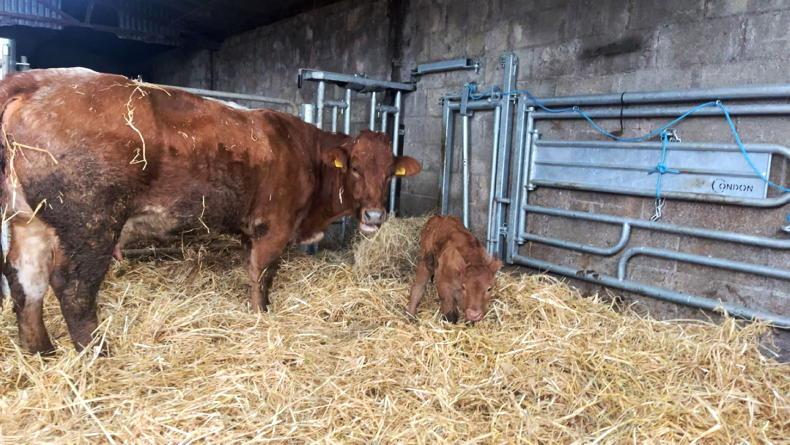
Safety at calving time
A calving gate is essential for safety at calving time. It securely restrains the cow, protecting the farmer when assisting difficult births or handling newborn calves. Using a calving gate reduces stress, prevents injury, and ensures safer, more controlled intervention during busy calving periods.
Lighting is often overlooked, and it is only when cows calve during the night that the value of good-quality lighting becomes clear. Ensuring adequate lighting in calving pens makes the process much safer for the farmer.
Neonatal disease fatalities in calves
A key performance indicator for a profitable suckler farm is weaning one calf per cow per year. An important aspect of achieving this target is minimising calf mortality at birth and in the first month of life.
The national average mortality rates for suckler beef calves at birth and within the first 28 days of life are 0.93% and 2.37%, respectively. A high rate of calf deaths reflects underlying health and welfare issues in a suckler beef herd.
Diseases associated with poor colostrum intake include systemic infections, gastrointestinal infections, navel ill/joint ill, and respiratory infections.

Scour
Neonatal scour causes significant economic losses in suckler herds due to high morbidity, treatment costs, and mortality.
Gastrointestinal tract (GIT) infections remain the most commonly diagnosed cause of death in young calves, accounting for 28.5% of cases in all-island regional veterinary laboratories.
Scour is caused by a combination of infectious pathogens (viruses, bacteria, and parasites), poor environmental hygiene, and inadequate colostrum intake. Some pathogens causing neonatal scour also pose a potential zoonotic risk.
Pre-calving vaccines are available for the four major pathogens: rotavirus, coronavirus,E. coli and cryptosporidium.
It is important to consult your vet and follow manufacturer’s recommendations. It is not possible to determine the cause of scour based on appearance alone; therefore, diagnostic testing should be carried out before treatment is initiated.
Scour test kits are rapid, on-farm diagnostic tools designed to identify the cause of scour in calves.
They work by testing a small sample of faeces for the most common pathogens responsible for neonatal scour.
These kits screen for cryptosporidium, rotavirus, coronavirus and E. coli (K99 strain).
Results are available within minutes, allowing farmers and vets to pinpoint the cause and take targeted action, including informing appropriate vaccination strategies for the herd.
By providing fast and accurate results, these kits help reduce calf losses, improve treatment decisions, and minimise unnecessary antibiotic use.
Pneumonia in calves
Calf pneumonia is a multifactorial disease caused by a range of organisms including viruses, bacteria and mycoplasmas. Environmental factors also play a crucial role in disease development and control.
Many pathogens associated with calf pneumonia are commonly present in healthy calves and on farms without causing disease; however, they can trigger pneumonia when calf immunity is compromised.
During an acute outbreak of respiratory disease, nasal swabs can be taken by a vet from affected calves with a nasal discharge to identify the causative agents.
Respiratory disease investigations should extend beyond pathogen identification to include a broader assessment of herd risk factors, particularly those contributing to failure of passive transfer, such as poor dam nutrition or calves born to heifers.
Maternal antibodies may not fully protect calves from pneumonia; therefore, vaccination of young suckler calves can be beneficial, provided products and protocols are selected on a farm-by-farm basis and used as directed.
Navel-ill prevention
Navel-ill accounted for 8.4% of diagnoses at post-mortem examination of neonatal calves, highlighting the importance of good calving pen hygiene and effective navel disinfection.
The navel should be dipped within 15 minutes of birth and ideally again after 1–2 hours, but only when it is safe to access the calf.
Complete coverage is essential to reduce infection risk. Iodine and chlorhexidine are both effective navel dips when stored and used correctly.
Containers must remain sealed and uncontaminated, and changing products may be necessary if efficacy declines.
The use of navel clips may also be required on farms experiencing a high incidence of navel infections.



SHARING OPTIONS