I was with two discussion groups this week; one in Cork, the second in Limerick and this article reviews some of the issues that arose.
Setting up a second unit
Some farmers who had a sizable out-farm are considering producing milk on that second farm and finding other land for winter feed or for rearing heifers. Listening to the discussion, for some farmers it made great sense.
In one case, a second block of land with 50ha was available with wintering facilities, slurry storage and old milking facilities. The dairy farmer taking on the land lease was willing to put in a new milking machine and if the lease didn’t work out, he could take it away with him.
Also, he had a secondhand bulk tank that could be used on the farm. The landowner was happy with this arrangement and was willing to spend money on concrete if required for new plant installation.
For the dairy farmer considering this investment, the important message from group members was to complete a clear budget for the development to show what the business will return in the short-, medium- and long-term. For projecting the budgets, they advised the farmer to allow for financing a loan to the value of the new milking equipment required and for the value of the stock that would be milking on the farm. Even if not buying the stock, there is an opportunity value on the stock involved.
In the second case discussed, there were no wintering or milking facilities on the farm to be long-term leased and the landowner was unwilling or didn’t have the money to spend setting up the farm. That farmer was advised to get full developmental costs for setting up the farm and then go back to the landowner to negotiate the term of the lease, which they advised needed to be at least 15 years. If investing, they suggested that it was important to build into the lease that if the agreement broke down, then the landowner would have to pay the balance of the investment value. Or that the depreciation of the asset is over 25 years and the land owner is willing to take on the balance at the end of the lease whenever that is.
Walking distances
As dairy farms develop, land positioned around the external border of the farms come up as available for lease. Also, as the herd size grows, the amount of walking that cows are doing increases significantly. Without a good farm roadway, access to the best land becomes difficult.
Factor in the cost of this new roadway (and any other infrastructure costs) into the potential return for your business, but also be aware that you need a certain type of cow to walk five to six kilometres per day. The EBI index is gradually breeding smaller cows for an Irish grass-based system but some farmers still have a cow weighing 700kg and that type of a cow will suffer more than smaller cows on long walks up and down hills.
The message from the groups was to be realistic on the layout and type of farm you will have, especially if taking on new land. If you are crossing roads, walking up and down hills, walking distances of 3km to 4km per day, then you really need to adapt your management and cow to suit that scenario. You also need to factor in reduced output.
Current performance
The two herds I visited were both spring-calving units, calving compactly from the end of January. Both had already started to dry off the thin cows. The plan was to dry off most of the first calvers this week and then dry off the balance of the herd, depending on condition score and calving date over the last two weeks of November and the first two weeks of December.
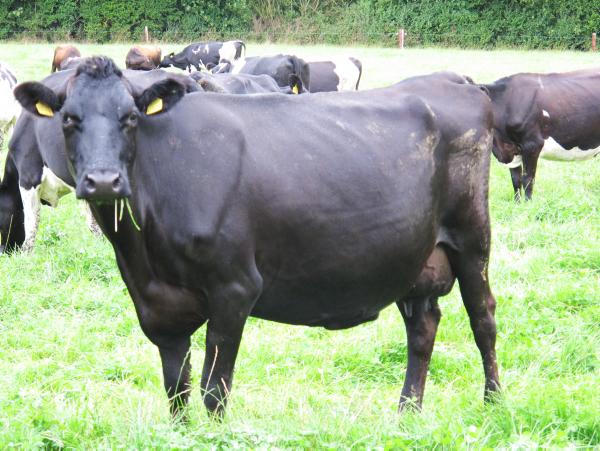
Both herds had sold close to 400kg of milk solids per cow on about 250kg of meal fed and grazed grass. Interestingly, both herds looked in very good body condition score. The yield for the herds was similar at 14 litres, 5% fat and 4% protein (1.38kg MS) on 3kg of meal and 2kg of silage.
Both herds had less than 10% of the grazing platform left to graze and were switching to grazing by day only this week.
The Cork farm was dry but rainfall that day was very heavy, making grazing difficult. The Limerick farm was heavier and cows were beginning to damage swards, so if the rain continued the farmer was going to have to house milking cows full-time and start feeding round-bale silage.
Stocking rate and soil
The milking platform on the Cork farm we visited was described by the discussion group members as difficult to farm, and it was. There were plenty of roads to cross and the main block of land was on a slope, so no matter where the cows went grazing they were going up and down hills.
In 2015, the farmer had grown 13 tonnes of grass per hectare and 30% to 40% of his farm is in index 3 and 4 for phosphorus (P) and potassium (K). He was planning to increase stocking rate to 2.8 cows/hectare next year and some farmers felt it was heading towards the upper limit for that farm given the limitations of the farm.
The Limerick farm was relatively flat and had only 10% of the farm with P index one and two. The rest was three. There was a lot of land away from the farm, so the farmer was planning to stock the farm next year at 3.2 cows/ha on the milking platform as he had measured 14.5t of total grass grown in 2015.
In this case, the group members felt that was possible with good management, depending on the year, without having to feed a large amount of feed.
Availability of labour came up for discussion on both farms this week. Both had a different set-up.
One farm was lucky to have the availability of a trainee farm manager from the professional farm managers course coming next spring.
These trainee managers have to complete two years of practical training on good commercial farms that carry out the best research and technical advice.
For the farmer, he must be able to let the trainee manager go for training at least 40 to 45 days per year. At a cost of €25,000 gross to the dairy farmer (the trainee manager effectively gets paid €400 per week), this will work for some farmers.
For others, they prefer the security of a full-time paid labour unit.
These farmers also need to be aware that full-time labour units need holidays and time off, the same as other professions.
Service
One of the farmers we visited this week was drying off cows in early December because he felt his full-time worker had given him great service during the year.
He wanted him fresh for the middle of January so the arrangement was that he was only going to work minimal hours from mid-December to mid-January.
One of the farms had a retired dairy farmer who was willing to complete machinery work – fertiliser, silage feeding, etc, on an out-farm at contracting wages.
In that case, the discussion group advised him to enquire if it was possible for that person to do all the machinery work on the home farm as well and use this as a hired labour element.
The retired farmer had his own tractor and machinery from when he was farming full-time and was willing to do this type of work, but not anything involving stock.
Keep a close eye on your budget –
you don’t want to be working harder for no extra profit. Be real on the costs of conversion. The modern grass-based dairy system is based on smaller cows walking longer distances, so if transitioning between farms or systems, be mindful that some cows won’t fit well and the culling rate may be higher. Current performance is good for the time of the year but expect milk supply from farms to reduce significantly over the coming weeks as cows are dried off to match the spring-calving period. Dry cows primarily on condition score and calving date, but holidays for labour must be factored in also. Labour: some farmers like working with students, while others prefer the security of full-time employed labour. Stocking rate: be careful not to overstock your farm based on a strong grass growing year in 2015.
I was with two discussion groups this week; one in Cork, the second in Limerick and this article reviews some of the issues that arose.
Setting up a second unit
Some farmers who had a sizable out-farm are considering producing milk on that second farm and finding other land for winter feed or for rearing heifers. Listening to the discussion, for some farmers it made great sense.
In one case, a second block of land with 50ha was available with wintering facilities, slurry storage and old milking facilities. The dairy farmer taking on the land lease was willing to put in a new milking machine and if the lease didn’t work out, he could take it away with him.
Also, he had a secondhand bulk tank that could be used on the farm. The landowner was happy with this arrangement and was willing to spend money on concrete if required for new plant installation.
For the dairy farmer considering this investment, the important message from group members was to complete a clear budget for the development to show what the business will return in the short-, medium- and long-term. For projecting the budgets, they advised the farmer to allow for financing a loan to the value of the new milking equipment required and for the value of the stock that would be milking on the farm. Even if not buying the stock, there is an opportunity value on the stock involved.
In the second case discussed, there were no wintering or milking facilities on the farm to be long-term leased and the landowner was unwilling or didn’t have the money to spend setting up the farm. That farmer was advised to get full developmental costs for setting up the farm and then go back to the landowner to negotiate the term of the lease, which they advised needed to be at least 15 years. If investing, they suggested that it was important to build into the lease that if the agreement broke down, then the landowner would have to pay the balance of the investment value. Or that the depreciation of the asset is over 25 years and the land owner is willing to take on the balance at the end of the lease whenever that is.
Walking distances
As dairy farms develop, land positioned around the external border of the farms come up as available for lease. Also, as the herd size grows, the amount of walking that cows are doing increases significantly. Without a good farm roadway, access to the best land becomes difficult.
Factor in the cost of this new roadway (and any other infrastructure costs) into the potential return for your business, but also be aware that you need a certain type of cow to walk five to six kilometres per day. The EBI index is gradually breeding smaller cows for an Irish grass-based system but some farmers still have a cow weighing 700kg and that type of a cow will suffer more than smaller cows on long walks up and down hills.
The message from the groups was to be realistic on the layout and type of farm you will have, especially if taking on new land. If you are crossing roads, walking up and down hills, walking distances of 3km to 4km per day, then you really need to adapt your management and cow to suit that scenario. You also need to factor in reduced output.
Current performance
The two herds I visited were both spring-calving units, calving compactly from the end of January. Both had already started to dry off the thin cows. The plan was to dry off most of the first calvers this week and then dry off the balance of the herd, depending on condition score and calving date over the last two weeks of November and the first two weeks of December.
Both herds had sold close to 400kg of milk solids per cow on about 250kg of meal fed and grazed grass. Interestingly, both herds looked in very good body condition score. The yield for the herds was similar at 14 litres, 5% fat and 4% protein (1.38kg MS) on 3kg of meal and 2kg of silage.
Both herds had less than 10% of the grazing platform left to graze and were switching to grazing by day only this week.
The Cork farm was dry but rainfall that day was very heavy, making grazing difficult. The Limerick farm was heavier and cows were beginning to damage swards, so if the rain continued the farmer was going to have to house milking cows full-time and start feeding round-bale silage.
Stocking rate and soil
The milking platform on the Cork farm we visited was described by the discussion group members as difficult to farm, and it was. There were plenty of roads to cross and the main block of land was on a slope, so no matter where the cows went grazing they were going up and down hills.
In 2015, the farmer had grown 13 tonnes of grass per hectare and 30% to 40% of his farm is in index 3 and 4 for phosphorus (P) and potassium (K). He was planning to increase stocking rate to 2.8 cows/hectare next year and some farmers felt it was heading towards the upper limit for that farm given the limitations of the farm.
The Limerick farm was relatively flat and had only 10% of the farm with P index one and two. The rest was three. There was a lot of land away from the farm, so the farmer was planning to stock the farm next year at 3.2 cows/ha on the milking platform as he had measured 14.5t of total grass grown in 2015.
In this case, the group members felt that was possible with good management, depending on the year, without having to feed a large amount of feed.
Availability of labour came up for discussion on both farms this week. Both had a different set-up.
One farm was lucky to have the availability of a trainee farm manager from the professional farm managers course coming next spring.
These trainee managers have to complete two years of practical training on good commercial farms that carry out the best research and technical advice.
For the farmer, he must be able to let the trainee manager go for training at least 40 to 45 days per year. At a cost of €25,000 gross to the dairy farmer (the trainee manager effectively gets paid €400 per week), this will work for some farmers.
For others, they prefer the security of a full-time paid labour unit.
These farmers also need to be aware that full-time labour units need holidays and time off, the same as other professions.
Service
One of the farmers we visited this week was drying off cows in early December because he felt his full-time worker had given him great service during the year.
He wanted him fresh for the middle of January so the arrangement was that he was only going to work minimal hours from mid-December to mid-January.
One of the farms had a retired dairy farmer who was willing to complete machinery work – fertiliser, silage feeding, etc, on an out-farm at contracting wages.
In that case, the discussion group advised him to enquire if it was possible for that person to do all the machinery work on the home farm as well and use this as a hired labour element.
The retired farmer had his own tractor and machinery from when he was farming full-time and was willing to do this type of work, but not anything involving stock.
Keep a close eye on your budget –
you don’t want to be working harder for no extra profit. Be real on the costs of conversion. The modern grass-based dairy system is based on smaller cows walking longer distances, so if transitioning between farms or systems, be mindful that some cows won’t fit well and the culling rate may be higher. Current performance is good for the time of the year but expect milk supply from farms to reduce significantly over the coming weeks as cows are dried off to match the spring-calving period. Dry cows primarily on condition score and calving date, but holidays for labour must be factored in also. Labour: some farmers like working with students, while others prefer the security of full-time employed labour. Stocking rate: be careful not to overstock your farm based on a strong grass growing year in 2015. 




SHARING OPTIONS