



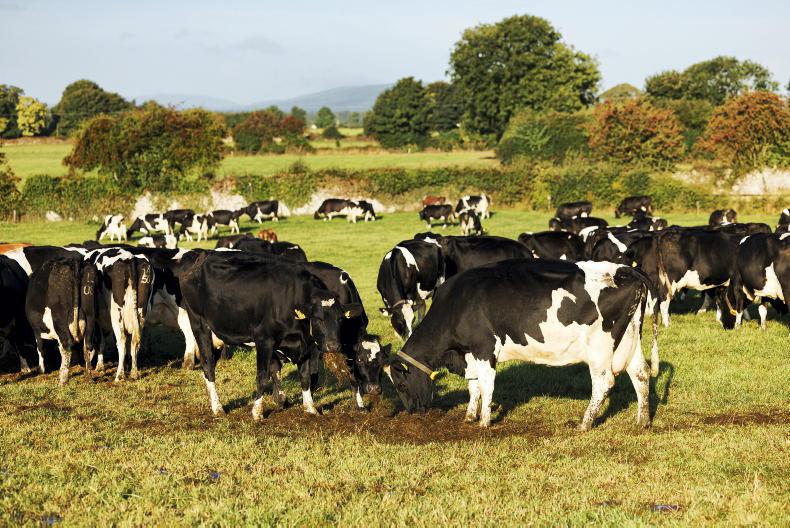
Grass growth rates across the soil moisture deficit areas are slowly creeping up. As is usually the case, the worst affected areas will be the last to recover.
The only potential benefit for those in the badly affected areas is that the bounce in growth may continue to for longer into the autumn and winter. At least that was the experience of many in 2018.
What about those that are growing enough to meet herd demand now? For example, growth rates in the mid-50’s are common areas that were only growing 30kg/day a few weeks ago.
Can these farmers now start to reduce the amount of supplement being fed and increase the amount of grass the herd is eating?
For me, the answer to that question all depends on what the average farm cover (AFC) is relative to the target for the time of year.
It’s all well and good to say growth equals demand, but if the amount of grass on the farm is well below target then the farm is still in trouble.
This is because of the fact that by the end of September, grass growth rates will start to decline sharply and if a wedge of grass is not built up by then, then the herd will be housed early.
Worse again, if the herd stays out grazing later than it should, there won’t be grass on the farm next spring.
At this stage the target AFC for most farmers is between 1,000kg and 1,100kg DM/ha but many are still less than 700kg DM/ha.
This is a huge mountain to climb and getting back to target will likely involve higher growth rates and continuing supplementation for the next few weeks.
It makes more sense to put in more supplement now, when growth is good than to delay it until growth is bad due to the bigger difference between growth and demand at this stage.
Where average farm cover is on target and growth rates are in line with normal, then of course supplement can be reduced.



SHARING OPTIONS