From 1 January next year, all farmers, regardless of stocking rate and whether they are in a derogation or not, will be required to ensure that runoff from farm roadways does not enter watercourses.
Importantly, the definition of a watercourse is anything that carries water, such as rivers, streams, drains and even drains that are dry for considerable times of the year.
Other measures come into force in January also. These include fencing animals off from watercourses and moving water troughs at least 20m away from watercourses. These measures are only mandatory for farmers in a nitrates derogation and to those stocked at greater than 170kg organic nitrogen, such as farmers who export slurry to avoid being in a derogation.
Roadways
The new rules around roadways are likely to affect the majority of dairy farmers in the country to some degree. The issue is not necessarily the proximity of roadways to watercourses. It is more so about where runoff from the roadway goes.
The problem with roadway runoff is that it contains nutrients, sediment and pathogens, all of which are bad for water quality if they enter watercourses.
Teagasc research has shown that the contents of roadway runoff within 100m of the farmyard or in areas where cow flow is poor and where cows defecate more is similar to dilute slurry or dairy soiled water.
Diverting runoff away from watercourses and towards the grass field will allow the grass to utilise these nutrients and prevent the waterways from becoming enriched. Effectively, soil and plants will filter the dirty water and cleanse it.
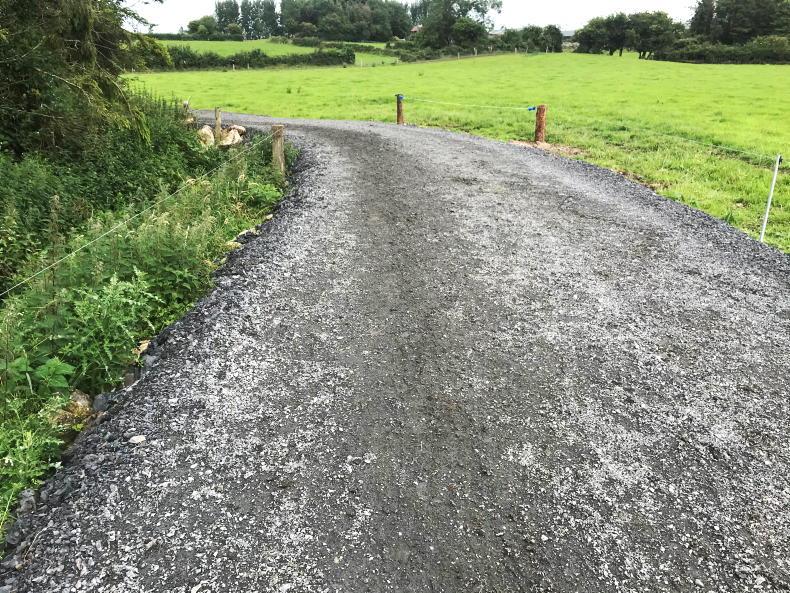
If a roadway is running parallel to and sloping towards a watercourse, the camber on the road will need to be changed so that the roadway will slope towards the field.
The advice from the Department in this case is to add a new layer of blinding to the roadway and use this to alter the camber away from the watercourse, as shown in Figure 1. In practical terms, this will involve cleaning the road surface and removing any grass margins before applying the new blinding material.
Less straightforward is where a roadway is not parallel to a watercourse but is running at an angle and sloping towards it. An example of this could be where a farm roadway crosses a watercourse located in a hollow, where most watercourses tend to be located.
Gradient
In such circumstances, the gradient of the roadway cannot be altered due to the topography of the land.
The advice here is to use a crossfall to divert the runoff to the sides of the roadway and to install angled ramps at regular intervals (25m to 50m) to prevent runoff running down the length of the roadway and entering the watercourse at the base.
This is best practice not just to prevent runoff entering watercourses, but also to prevent the road material from being eroded due to channels forming after heavy rainfall.
An example of a ramp is in Figure 2.
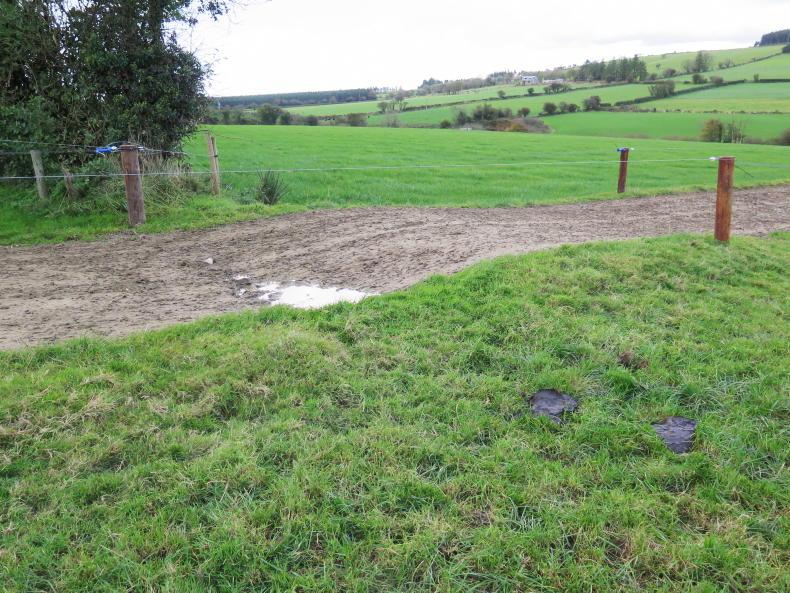
Figure 2. A ramp to divert water of a roadway on a slope. By right, this ramp should be angled to prevent water from lodging at the ramp.
In some situations, it may be necessary to pipe the runoff from the ramps to a percolation area or a sediment pond. This may be necessary on very heavy soils where surface percolation is not possible.
Standalone percolation areas involve the construction of a 1.5m x 1.5m x 1.5m stone pit at the edge of the ramp, with a stone-covered drainage pipe coming out of the pit 500m below the surface of the field.
A sediment pond is where the runoff from the ramp is piped to a pond with three chambers and a percolation area from the third chamber.
The size of these ponds will be determined by the topography of the land and how much runoff is expected to be collected. A dry closed drain running alongside the roadway can also be considered, provided that this is not connected to any other watercourse.
The specifications also suggest that where the camber of the road cannot be altered, that an earth bank or berm can be constructed alongside an existing roadway where it is adjacent to a watercourse, to prevent runoff from entering it.
Where this arises, the runoff should be diverted to a settlement pond or to an area of ground where it can soak away.
For the majority of farmers who have roadways adjacent to watercourses, altering the crossfall and installing ramps should be sufficient to prevent runoff from getting into watercourses.
New farm roadways should be piped away from watercourses, but where this is not feasible, a minimum grass margin of 1.5m should be maintained between the roadway and the watercourse.
Fencing
The new rules on fencing of watercourses stipulate that the fence should be 1.5m from the top of the bank. These rules concern farmers that are either in a derogation or who are stocked greater than 170kg organic N/ha. The purpose of this new measure is to prevent soil erosion on the banks of streams and watercourses, leading to sediments and nutrients entering the water, and also to prevent animals from defecating in watercourses.
Currently, the definition of a watercourse in this measure includes anything that can carry water, including dry drains. However, the Irish Farmers Journal understands that an amendment to this measure is being sought by the Department of Agriculture which would alter the definition of a watercourse to only include watercourses and drains as marked on a 1:5,000 map. This would bring the requirement into line with previous schemes such as REPS and GLAS.
Where an existing roadway is located within 1.5m of a watercourse, the roadway must be fenced at both the drain and the field side of the roadway. Where animals cross a watercourse to access lands, temporary fencing should be used to minimise the area used in the crossing.
Where animals drink out of watercourses, a piped water system with troughs will have to be installed. Manual cattle pumps are unlikely to be effective where the demand for water is high and also because water troughs must be located 20m away from watercourses. The options in such circumstances are to install mains water or pump water from the watercourse using a solar or mains electricity powered pump.
Water troughs
The third measure being introduced concerns water troughs. From 1 January, these must now be located at least 20m away from watercourses. This measure applies to farmers who are either in a derogation or who are stocked more than 170kg organic N/ha. This measure applies to all watercourses, regardless of whether they are identified on a map.
Penalties: failure to comply
The measures outlined here will be included in all cross-compliance inspections from 1 January. Failure to comply with the measures may mean a penalty is applied to the Basic Payment Scheme. A spokesperson from the Department of Agriculture said that common sense will prevail in the implementation of these measures.
New measures to improve water quality come into force on 1 January 2020.These include the prevention of runoff from roadways entering watercourses, fencing of watercourses and having water troughs more than 20m from watercourses. More information on the specifications for roadways can be found on the Department of Agriculture website.
From 1 January next year, all farmers, regardless of stocking rate and whether they are in a derogation or not, will be required to ensure that runoff from farm roadways does not enter watercourses.
Importantly, the definition of a watercourse is anything that carries water, such as rivers, streams, drains and even drains that are dry for considerable times of the year.
Other measures come into force in January also. These include fencing animals off from watercourses and moving water troughs at least 20m away from watercourses. These measures are only mandatory for farmers in a nitrates derogation and to those stocked at greater than 170kg organic nitrogen, such as farmers who export slurry to avoid being in a derogation.
Roadways
The new rules around roadways are likely to affect the majority of dairy farmers in the country to some degree. The issue is not necessarily the proximity of roadways to watercourses. It is more so about where runoff from the roadway goes.
The problem with roadway runoff is that it contains nutrients, sediment and pathogens, all of which are bad for water quality if they enter watercourses.
Teagasc research has shown that the contents of roadway runoff within 100m of the farmyard or in areas where cow flow is poor and where cows defecate more is similar to dilute slurry or dairy soiled water.
Diverting runoff away from watercourses and towards the grass field will allow the grass to utilise these nutrients and prevent the waterways from becoming enriched. Effectively, soil and plants will filter the dirty water and cleanse it.
If a roadway is running parallel to and sloping towards a watercourse, the camber on the road will need to be changed so that the roadway will slope towards the field.
The advice from the Department in this case is to add a new layer of blinding to the roadway and use this to alter the camber away from the watercourse, as shown in Figure 1. In practical terms, this will involve cleaning the road surface and removing any grass margins before applying the new blinding material.
Less straightforward is where a roadway is not parallel to a watercourse but is running at an angle and sloping towards it. An example of this could be where a farm roadway crosses a watercourse located in a hollow, where most watercourses tend to be located.
Gradient
In such circumstances, the gradient of the roadway cannot be altered due to the topography of the land.
The advice here is to use a crossfall to divert the runoff to the sides of the roadway and to install angled ramps at regular intervals (25m to 50m) to prevent runoff running down the length of the roadway and entering the watercourse at the base.
This is best practice not just to prevent runoff entering watercourses, but also to prevent the road material from being eroded due to channels forming after heavy rainfall.
An example of a ramp is in Figure 2.
Figure 2. A ramp to divert water of a roadway on a slope. By right, this ramp should be angled to prevent water from lodging at the ramp.
In some situations, it may be necessary to pipe the runoff from the ramps to a percolation area or a sediment pond. This may be necessary on very heavy soils where surface percolation is not possible.
Standalone percolation areas involve the construction of a 1.5m x 1.5m x 1.5m stone pit at the edge of the ramp, with a stone-covered drainage pipe coming out of the pit 500m below the surface of the field.
A sediment pond is where the runoff from the ramp is piped to a pond with three chambers and a percolation area from the third chamber.
The size of these ponds will be determined by the topography of the land and how much runoff is expected to be collected. A dry closed drain running alongside the roadway can also be considered, provided that this is not connected to any other watercourse.
The specifications also suggest that where the camber of the road cannot be altered, that an earth bank or berm can be constructed alongside an existing roadway where it is adjacent to a watercourse, to prevent runoff from entering it.
Where this arises, the runoff should be diverted to a settlement pond or to an area of ground where it can soak away.
For the majority of farmers who have roadways adjacent to watercourses, altering the crossfall and installing ramps should be sufficient to prevent runoff from getting into watercourses.
New farm roadways should be piped away from watercourses, but where this is not feasible, a minimum grass margin of 1.5m should be maintained between the roadway and the watercourse.
Fencing
The new rules on fencing of watercourses stipulate that the fence should be 1.5m from the top of the bank. These rules concern farmers that are either in a derogation or who are stocked greater than 170kg organic N/ha. The purpose of this new measure is to prevent soil erosion on the banks of streams and watercourses, leading to sediments and nutrients entering the water, and also to prevent animals from defecating in watercourses.
Currently, the definition of a watercourse in this measure includes anything that can carry water, including dry drains. However, the Irish Farmers Journal understands that an amendment to this measure is being sought by the Department of Agriculture which would alter the definition of a watercourse to only include watercourses and drains as marked on a 1:5,000 map. This would bring the requirement into line with previous schemes such as REPS and GLAS.
Where an existing roadway is located within 1.5m of a watercourse, the roadway must be fenced at both the drain and the field side of the roadway. Where animals cross a watercourse to access lands, temporary fencing should be used to minimise the area used in the crossing.
Where animals drink out of watercourses, a piped water system with troughs will have to be installed. Manual cattle pumps are unlikely to be effective where the demand for water is high and also because water troughs must be located 20m away from watercourses. The options in such circumstances are to install mains water or pump water from the watercourse using a solar or mains electricity powered pump.
Water troughs
The third measure being introduced concerns water troughs. From 1 January, these must now be located at least 20m away from watercourses. This measure applies to farmers who are either in a derogation or who are stocked more than 170kg organic N/ha. This measure applies to all watercourses, regardless of whether they are identified on a map.
Penalties: failure to comply
The measures outlined here will be included in all cross-compliance inspections from 1 January. Failure to comply with the measures may mean a penalty is applied to the Basic Payment Scheme. A spokesperson from the Department of Agriculture said that common sense will prevail in the implementation of these measures.
New measures to improve water quality come into force on 1 January 2020.These include the prevention of runoff from roadways entering watercourses, fencing of watercourses and having water troughs more than 20m from watercourses. More information on the specifications for roadways can be found on the Department of Agriculture website. 






SHARING OPTIONS