For the last 16 years, farmers in Timoleague in west Cork have come together under the Teagasc Agricultural Catchments Programme (ACP) to improve water quality in their catchment.
Described by some of the farmers as one of the most intensively farmed parts of Europe, it’s hard to disagree.
Driving to the testing station on Kevin Collins’ farm, you drive past a new poultry unit, an anaerobic digestion (AD) plant, the pig factory, Barryroe feed mill, fields and fields of maize silage and of course, countless intensive dairy farms.
The purpose of the Irish Farmers Journal visit to the testing station was to see first hand how the catchment programme works, what tests are being carried out and what way the results are going.
First things first, nitrate levels for last year are at their lowest since testing began in 2010.
At 4.68mg/l of nitrate-N, the 2024 figures are well below the peak of 2019 when nitrate levels went to 7.15mg/l.
While the 2024 results show a remarkable improvement in water quality, the results are still ahead of the target water quality of 2.6mg/l under the Water Framework Directive.
Eddie Burgess, ACP programme leader is keen to point out that year-to-year fluctuations have a big impact on nitrate levels, across all catchments. So while the improvement observed in 2024 is very welcome, there’s no guarantee that nitrate levels won’t increase again depending on weather and other conditions.
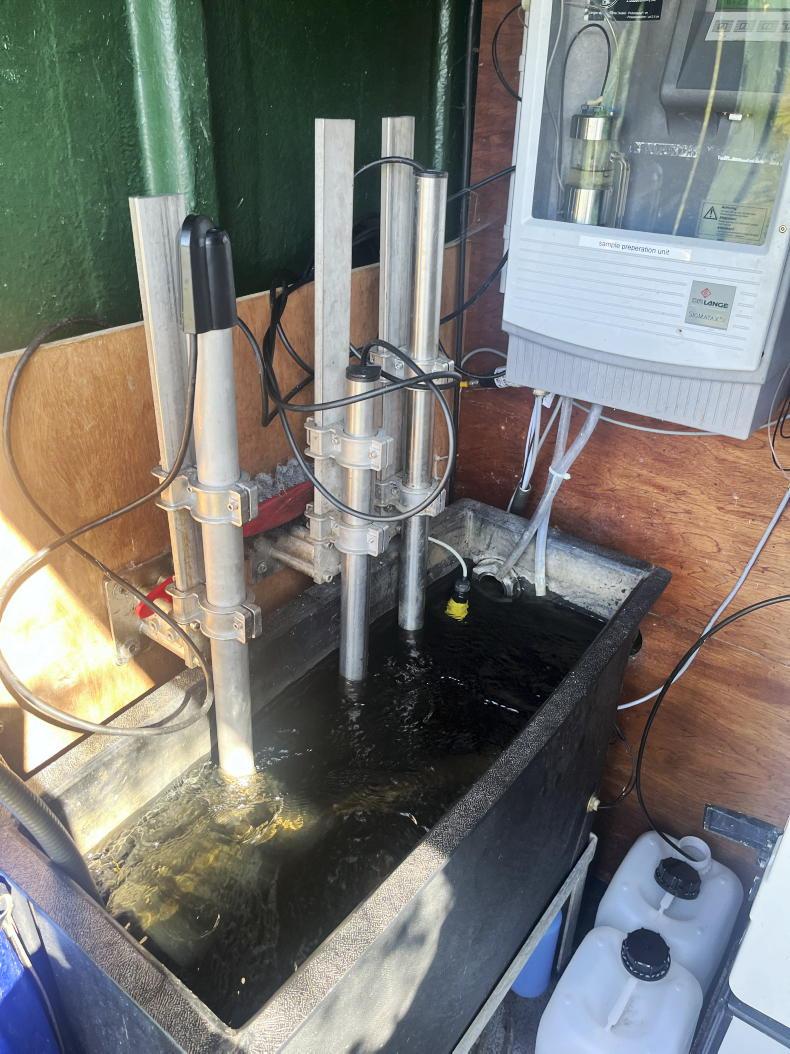
Water quality instrumentation at the Timoleague water quality testing station
One thing that can we can be certain of though is stocking rate. From 2010 to 2018 the organic nitrogen stocking rate in the catchment increased by 26% as a result of extra livestock within the catchment.
Critically, there is no clear link between the stocking rate and the nitrate levels in the stream.
This is the key point, according to local dairy farmers Kevin Collins, Sean Deasy and Johnny O’Brien.
The Timoleague catchment is one of the few catchments in the country that is still operating at a maximum stocking rate of 250kg nitrogen per hectare (N/ha).
All that is set to change come 1 December this year, when most of the catchment goes back to 220kg N/ha, like most of the rest of the country.
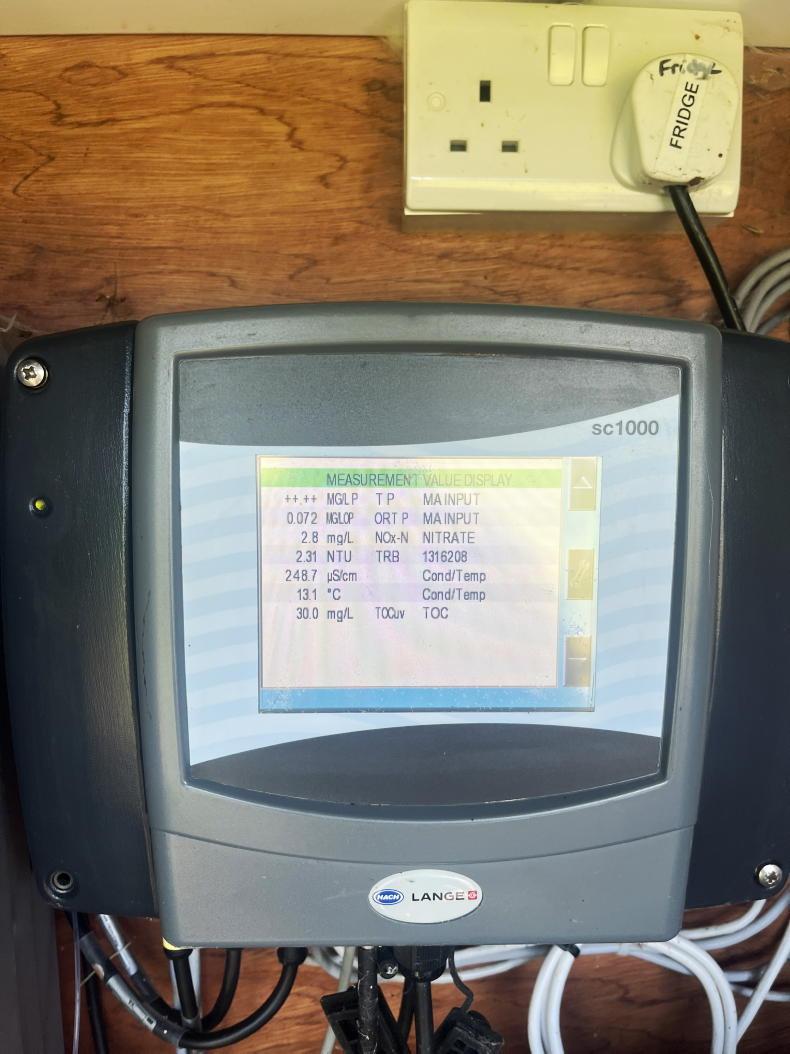
Tests are conducted every 10 minutes and the results displayed on the monitor.
The farmers are calling on the Government to maintain the 250kg N/ha ceiling in the Timoleague catchment to prove that good water quality can be achieved even at high stocking rates.
“If we go back to 220kg here and if water quality continues to improve, which we expect it will, then the credit for the improvement will be given to the reduction in the derogation,” Sean Deasy said.
“Whereas, we feel that if we got a few more years at the high stocking rate then we can say, ‘look at Timoleague, it continues to operate at 250kg and water quality continues to improve’.”
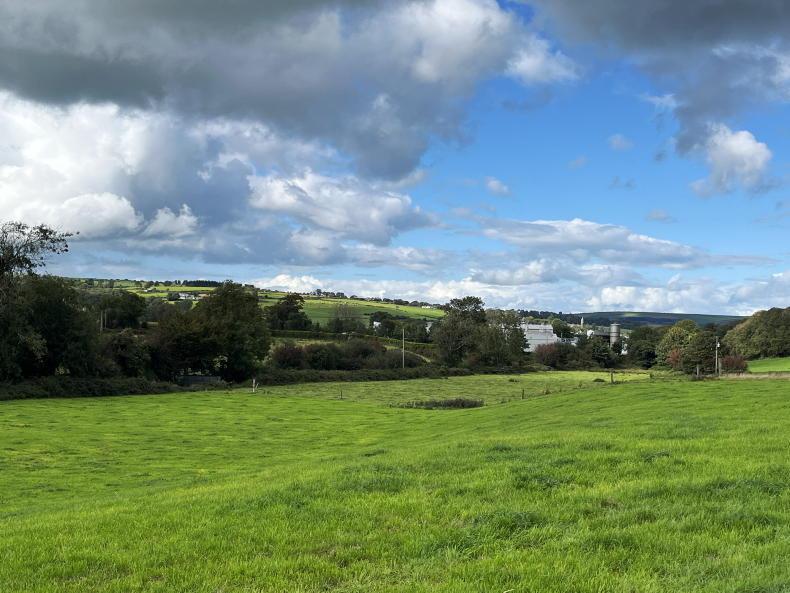
The Timoleague catchment is one of the most intensively farmed parts of Europe with a variety of farm enterprises
Fine Gael councillor and Timoleague farmer John Michael Foley supports the move to retain 250kg in Timoleague.
He says that the catchment is “representative of derogation farming” as 85% of the land is farmed under derogation and if farmers had to do extra management to protect water quality, then nobody would shy away from that, he says.
What’s really striking is the sense of ownership being taken by the farmers in Timoleague for water quality. Yes, there are other pressures in the catchment such as raw sewage being discharged, but none of the farmers were disputing their role and their responsibility for water quality.
While not unique, it is unusual. T
he difference between Timoleague and every other catchment is that the information on water quality is always available to these farmers.
The testing station on the Collins’ farm tests water in the stream for N, P and K every 10 minutes. Other parts of the catchment are sampled once a month in streams and borehole wells.
The farmers are working closely with their Teagasc water quality adviser Eddie Shiely, they know the trends in water quality and they are informed as to what they need to do to protect and improve water quality.
What’s most powerful here is the information aspect. With the exception of farmers in the other Teagasc catchments, most farmers don’t know the status of the water quality in their area.
Programmes such as ASSAP and the new EIP programme have failed to turn the dial on that, but to be fair, the up-to-date information just isn’t available.
The EPA monitoring programme is sufficient for picking up long-term trends, but it’s not quick, it’s not specific enough and it’s not easy to find the information that farmers want.
Farmers are good at measuring and benchmarking data. They know their herd EBI, they know their milk solids production, they know their soil fertility.
I’m not saying that each sub-catchment needs to be monitored like Timoleague, but there are new technologies that can test nitrate levels in water and report results quickly.
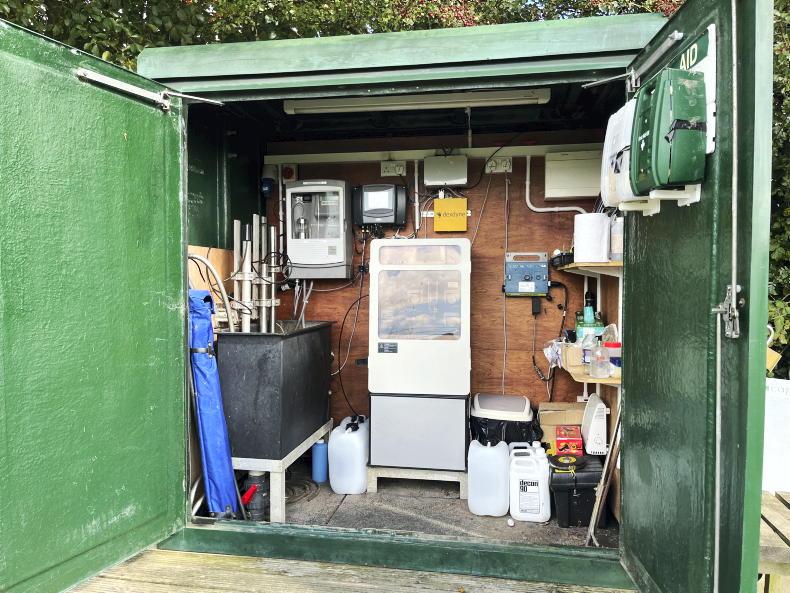
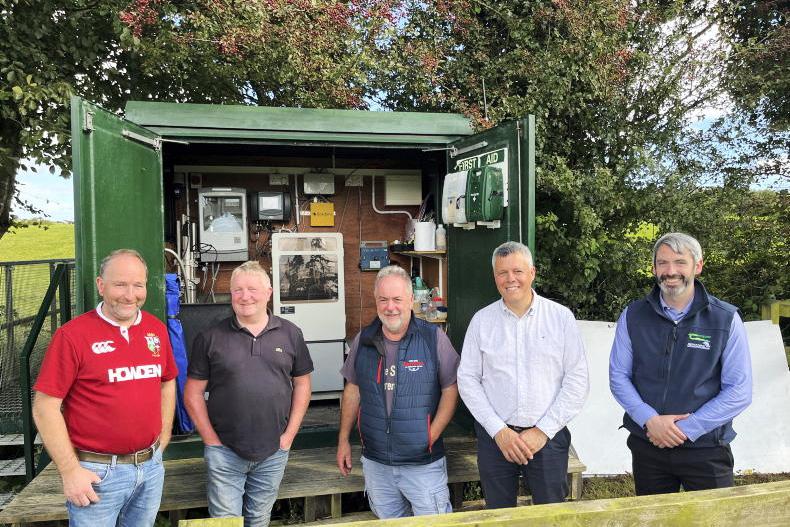
The testing station for the Timoleague catchment
The key thing is trends and understanding that both weather conditions and on-farm actions have consequences. If such information was available, then the level of buy-in from the farmers in Timoleague would no longer be unusual.
For the last 16 years, farmers in Timoleague in west Cork have come together under the Teagasc Agricultural Catchments Programme (ACP) to improve water quality in their catchment.
Described by some of the farmers as one of the most intensively farmed parts of Europe, it’s hard to disagree.
Driving to the testing station on Kevin Collins’ farm, you drive past a new poultry unit, an anaerobic digestion (AD) plant, the pig factory, Barryroe feed mill, fields and fields of maize silage and of course, countless intensive dairy farms.
The purpose of the Irish Farmers Journal visit to the testing station was to see first hand how the catchment programme works, what tests are being carried out and what way the results are going.
First things first, nitrate levels for last year are at their lowest since testing began in 2010.
At 4.68mg/l of nitrate-N, the 2024 figures are well below the peak of 2019 when nitrate levels went to 7.15mg/l.
While the 2024 results show a remarkable improvement in water quality, the results are still ahead of the target water quality of 2.6mg/l under the Water Framework Directive.
Eddie Burgess, ACP programme leader is keen to point out that year-to-year fluctuations have a big impact on nitrate levels, across all catchments. So while the improvement observed in 2024 is very welcome, there’s no guarantee that nitrate levels won’t increase again depending on weather and other conditions.

Water quality instrumentation at the Timoleague water quality testing station
One thing that can we can be certain of though is stocking rate. From 2010 to 2018 the organic nitrogen stocking rate in the catchment increased by 26% as a result of extra livestock within the catchment.
Critically, there is no clear link between the stocking rate and the nitrate levels in the stream.
This is the key point, according to local dairy farmers Kevin Collins, Sean Deasy and Johnny O’Brien.
The Timoleague catchment is one of the few catchments in the country that is still operating at a maximum stocking rate of 250kg nitrogen per hectare (N/ha).
All that is set to change come 1 December this year, when most of the catchment goes back to 220kg N/ha, like most of the rest of the country.

Tests are conducted every 10 minutes and the results displayed on the monitor.
The farmers are calling on the Government to maintain the 250kg N/ha ceiling in the Timoleague catchment to prove that good water quality can be achieved even at high stocking rates.
“If we go back to 220kg here and if water quality continues to improve, which we expect it will, then the credit for the improvement will be given to the reduction in the derogation,” Sean Deasy said.
“Whereas, we feel that if we got a few more years at the high stocking rate then we can say, ‘look at Timoleague, it continues to operate at 250kg and water quality continues to improve’.”

The Timoleague catchment is one of the most intensively farmed parts of Europe with a variety of farm enterprises
Fine Gael councillor and Timoleague farmer John Michael Foley supports the move to retain 250kg in Timoleague.
He says that the catchment is “representative of derogation farming” as 85% of the land is farmed under derogation and if farmers had to do extra management to protect water quality, then nobody would shy away from that, he says.
What’s really striking is the sense of ownership being taken by the farmers in Timoleague for water quality. Yes, there are other pressures in the catchment such as raw sewage being discharged, but none of the farmers were disputing their role and their responsibility for water quality.
While not unique, it is unusual. T
he difference between Timoleague and every other catchment is that the information on water quality is always available to these farmers.
The testing station on the Collins’ farm tests water in the stream for N, P and K every 10 minutes. Other parts of the catchment are sampled once a month in streams and borehole wells.
The farmers are working closely with their Teagasc water quality adviser Eddie Shiely, they know the trends in water quality and they are informed as to what they need to do to protect and improve water quality.
What’s most powerful here is the information aspect. With the exception of farmers in the other Teagasc catchments, most farmers don’t know the status of the water quality in their area.
Programmes such as ASSAP and the new EIP programme have failed to turn the dial on that, but to be fair, the up-to-date information just isn’t available.
The EPA monitoring programme is sufficient for picking up long-term trends, but it’s not quick, it’s not specific enough and it’s not easy to find the information that farmers want.
Farmers are good at measuring and benchmarking data. They know their herd EBI, they know their milk solids production, they know their soil fertility.
I’m not saying that each sub-catchment needs to be monitored like Timoleague, but there are new technologies that can test nitrate levels in water and report results quickly.

The testing station for the Timoleague catchment
The key thing is trends and understanding that both weather conditions and on-farm actions have consequences. If such information was available, then the level of buy-in from the farmers in Timoleague would no longer be unusual.

SHARING OPTIONS