


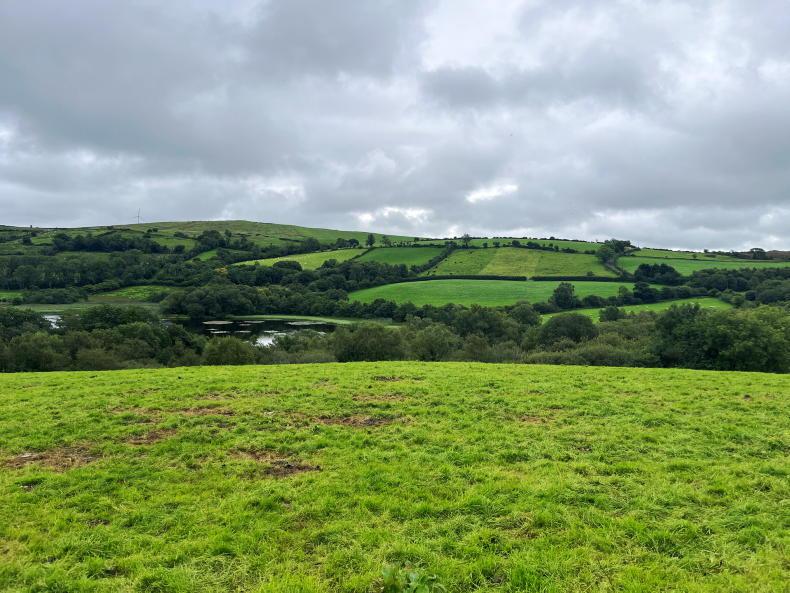
FSS3 and FSS4: Protection of landscapes and soils
Stricter rules around management of hedgerows, soil cover and the impact of livestock are included in new DAERA standards which have applied since the start of the year.
Farm Sustainability Standard 3 (FSS3) sets out mandatory rules for protecting landscape, archaeological and heritage features on farms in NI.
Farmers must not remove hedgerows, dry-stone walls, ditches or earth banks, nor install pipes to infill open ditches, without written permission from DAERA. Removal includes any action that destroys or uproots these features.
Trees with a trunk circumference greater than 1.5 metres (measured up to one metre above ground or at the stump) must not be cut down or removed without written permission from DAERA, except where genuine health and safety risks exist.
Where DAERA grants permission for the removal of a landscape feature—or where a feature has been removed without approval—farmers must carry out mitigation. This involves recreating or enhancing environmental features equivalent to 110% of what was removed.
Examples include planting new hedges, planting areas of trees, constructing stone walls or creating ponds or riparian buffers. These works must be completed to DAERA’s specification by a required deadline.
Features
Farmers must also positively manage all archaeological and heritage features and avoid any activity that could damage them. Prohibited actions (unless approved) include ploughing, harvesting, drainage works, excavation, hedge or tree planting, vegetation removal, overgrazing etc.
Work on designated sites requires Scheduled Monument Consent or Listed Building Consent.
Metal detecting on heritage features is prohibited unless it is undertaken by someone who holds a Detection Device Consent from the Historic Environment Division.
Protection of Soils
The fourth new farm standard (FSS4) is in place to protect soils. The new rules put clear obligations onto farmers to manage erosion risks, winter ground cover and the potential impact of livestock on vulnerable land.
The rules require growers to retain minimum soil cover on all arable ground from harvest until 15 January, either through stubble, a subsequent crop, or erosion-limiting measures where sowing isn’t possible.
While allowances exist for extreme weather or waterlogged soils, DAERA expect operators to get a new crop into the ground “as soon as practicable”.
To help reduce sediment and carbon-rich soil entering rivers etc. cultivation is now prohibited within 1 metre of any watercourse (except a sheugh). Farmers should also avoid fertiliser or spray drift into these buffer strips.
Fields must not become excessively trampled, poached or rutted, and feeding or watering points are to be rotated to prevent bare, compacted patches that can generate runoff.
Sacrifice areas remain permitted but must be located away from waterways and restored to at least 90% vegetation cover by late spring.
Farmers are required to limit erosion along riverbanks caused by livestock. Fencing remains the most reliable control, although reducing stock numbers during prolonged rainfall is considered an acceptable mitigation.
Supplementary feeding and livestock drinking points should be at least 20m from waterways, 50m from boreholes or wells, and 250m from public supply boreholes.



SHARING OPTIONS