How many hectares around the milking parlour do you need to make a good living? This is a question that is almost impossible to answer as it depends on so many variables – debt levels, the amount of drawings required, labour requirements, whether the land is owned or leased and, most importantly, the ability of the farmer.
With 33ha on the milking platform, Michael Gowen’s farm at Kilworth, Co Cork, is by no means a large block. Yet, it is consistently returning a decent income to the Gowen family. The profit monitor for last year showed that the farm made a net profit of 18.33c/l or €956 per cow. With 121 cows milking, this is a substantial sum of money in what was an average milk price year.
Even this year, with 5c/l or 6c/l gone off the milk price, the profit monitor results for 2016 will probably show a profit of around 12c/l, which is still excellent. Out of this profit, Michael must pay his own salary (drawings) and tax, pay for any capital expenditure and repay any loans.
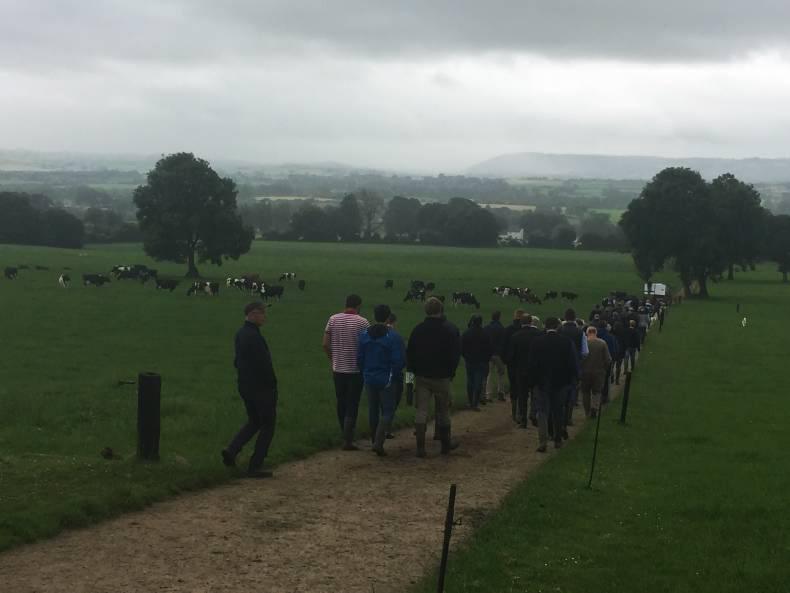
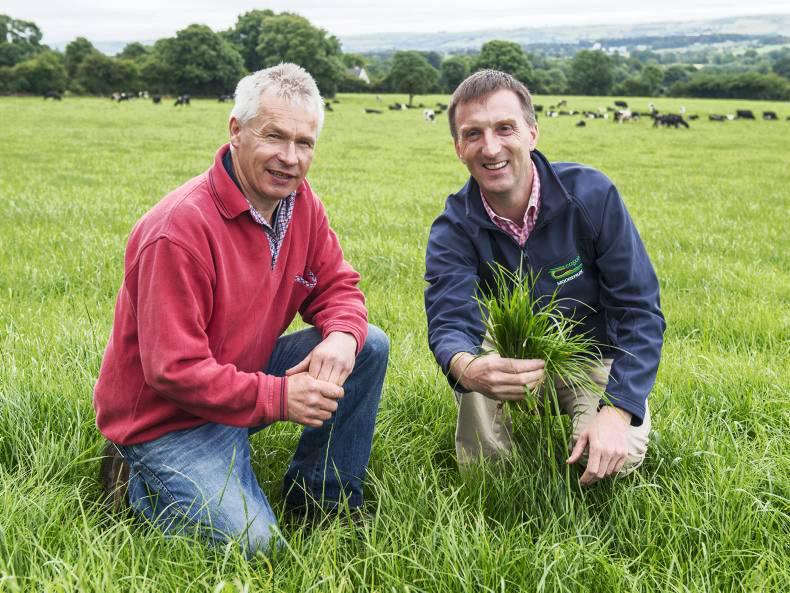
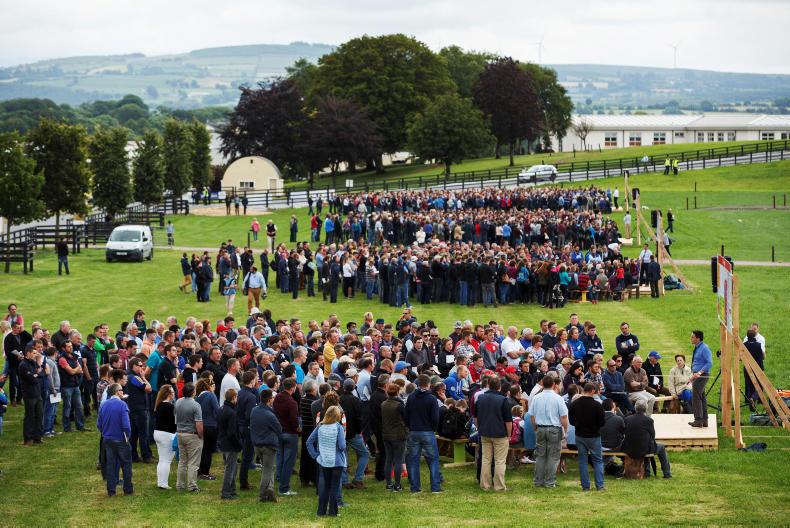
Michael hosted a Teagasc farm walk last week. .
The system
As Michael says, there is nothing unique about what he does. The farm is on a south-facing slope overlooking Moorepark research centre, so it is excellent quality land. While the farm is close to Moorepark, the farming philosophy is even closer. The farm layout, cow breed and grazing management is textbook stuff.
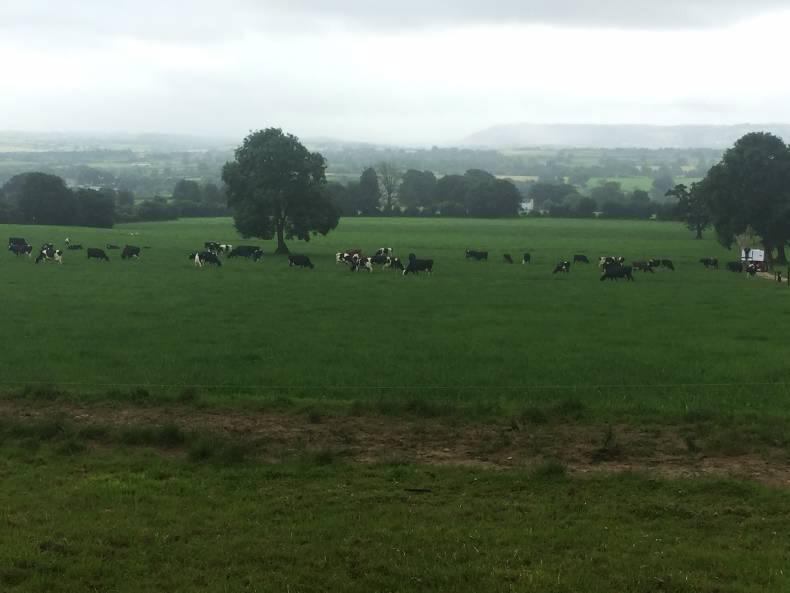
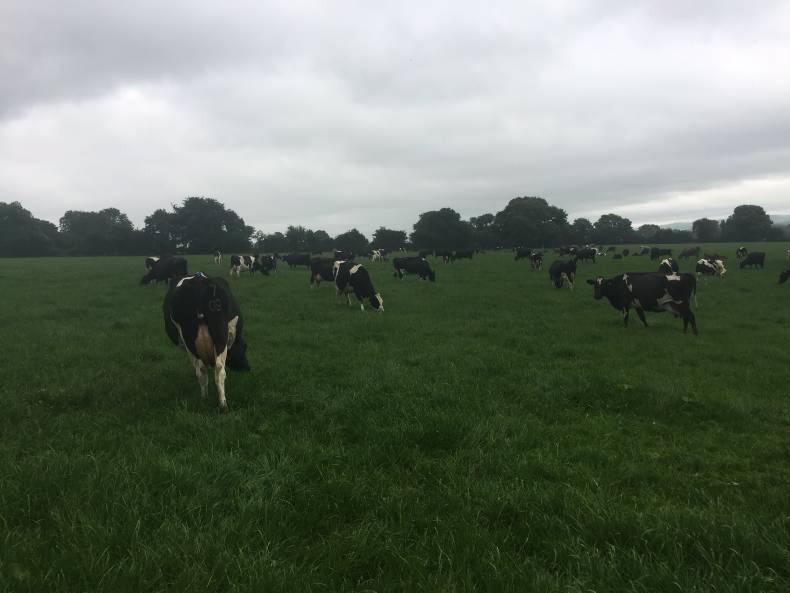
The stocking rate on the milking platform is high at 3.7 cows/ha, but 42ha of support blocks – mostly owned, in three separate divisions about three miles from the farm – provide silage and youngstock grazing, so the overall stocking rate is 2.32 cows/ha.
Michael grew 15t/ha of grass on the milking block last year. There were pigs on the farm up to the mid 2000s, so soil fertility is excellent, with most of the farm at index 3 and 4 for phosphorus. Lime needs more work, so Michael is keeping a regular focus on this through soil sampling.
He measures grass every four or five days during the peak growth season and skips over paddocks if they are too strong. So far this year, 170 round bales of silage have been made. No heavy first cut is made on the home block. The current rotation length is 18 days and Michael is spreading 20 units/acre of urea after grazing. The pre-grazing yield is approximately 1,200kg.
Michael will start building covers around 10 August by gradually extending the rotation length and letting pre-grazing covers creep up.
“With my stocking rate, I need to start building up covers early and my target covers are a bit higher than someone on a lower stocking rate. The key for me is to get the farm well grazed in July. Cows must hit the correct residual or they’ll go back into the paddock until they do. While it makes it a bit harder to build up covers, it means I have better quality grass which is clean to the base and better able to carry a higher cover later. It might cost a bit in lost milk production in July, but I think I get it back again, and more later in the year,” Michael says.
Another thing that Michael does to help build covers is to sell the empty cows early. The breeding season lasted from 6 May to 2 July, so Michael will scan the cows in August and be early to the market selling empty cows in milk, for which there has been a good demand in previous years.
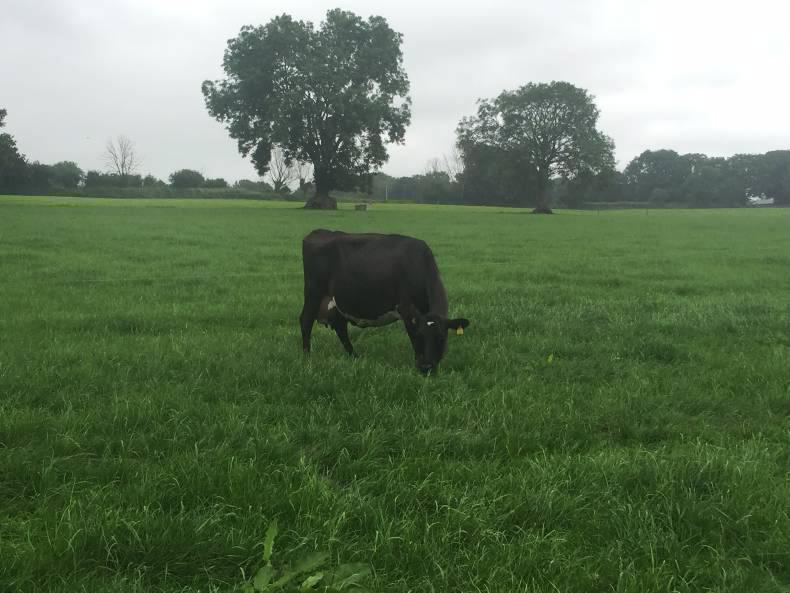
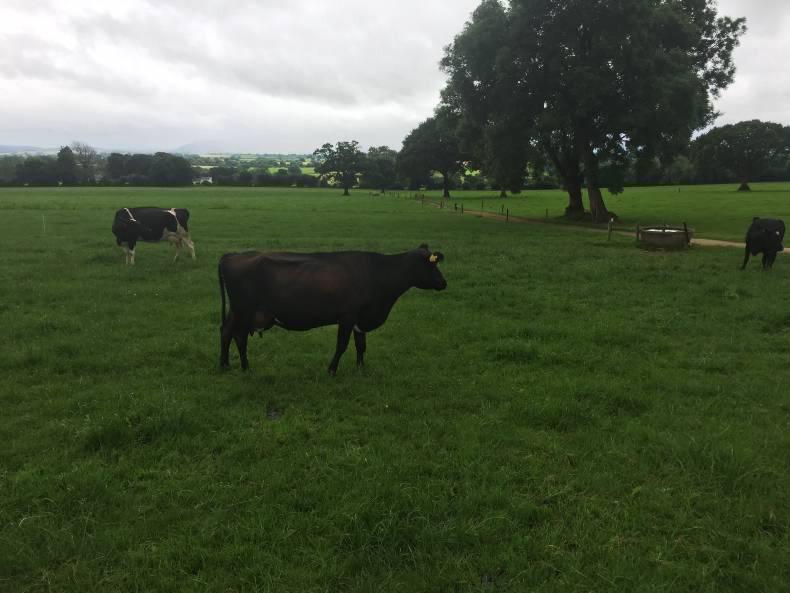
At this stage, the herd is a combination of New Zealand Friesian and Jersey crossbred. Michael started crossbreeding five or six years ago, initially by using Jersey bulls on the heifers but now he is using Jersey across the herd.
“It’s hard to quantify the benefits of crossbreeding, but milk price is probably around 2c/l higher today as a result of the higher fat and protein percentage. Fertility performance has vastly improved, which has reduced the replacement rate and allowed me to sell more surplus stock.”
The herd EBI is €183 and, last year, the herd produced 448kg of milk solids per cow or 1,658kg of milk solids per hectare on the milking block or 732kg on every hectare of land.
Just 380kg of meal per cow was fed last year. So far this year, he has 180kg of meal fed and Michael has no plans to feed any more. He grows 6ha of maize on one of the out-blocks and feeds this back at the shoulders of the year.
Why maize?
“I grow it on a 15ac out-block a few miles away. It’s a perfect site for maize and the soil fertility is excellent, so I get a great crop every year. I own the land. I don’t have the stock to graze it, so the alternative is to lease it out or put it in barley, which I have considered. If I didn’t have that land, I definitely wouldn’t be growing it as it’s not much better of a feed than high-quality bale silage.”
Michael feeds the maize out along the feed passage after milking when grass is tight in spring or when building up covers in autumn. Excluding the land charge, the maize is costing him 13c/kg which is cheaper than bale silage.
Other than a student for a few weeks in spring, Michael does most of the work himself with the help of relief milkers.
This is a top-class owner-operator farm. Michael has not reinvented the wheel and visitors to the farm did not see anything that they had not seen before. The fact is, good farming is about using the assets you have to the best of your ability.
The land and soil fertility is good, growing lots of grass which is grazed by efficient cows. There is a rational approach to decision-making. Things don’t just happen; they are thought-out and planned and lessons are learned from any mistakes made.
Michael is able to make a good income from a reasonable-sized milking block. Excellent technical performance drives the system but low debt levels, a small amount of leased land and low labour costs are also key factors in achieving this. Would a farmer in Michael’s position be any better off milking an extra 100 cows on leased land with full-time hired labour? I suppose the answer depends on personal goals.
Low-cost farm milking 121 cows on good land in Cork.High stocking rate on milking block of 3.7 cows/ha growing 15t/ha of grass.Only 130kg of meal fed this year.Maize is grown on an out-block and fed back at the shoulders.
How many hectares around the milking parlour do you need to make a good living? This is a question that is almost impossible to answer as it depends on so many variables – debt levels, the amount of drawings required, labour requirements, whether the land is owned or leased and, most importantly, the ability of the farmer.
With 33ha on the milking platform, Michael Gowen’s farm at Kilworth, Co Cork, is by no means a large block. Yet, it is consistently returning a decent income to the Gowen family. The profit monitor for last year showed that the farm made a net profit of 18.33c/l or €956 per cow. With 121 cows milking, this is a substantial sum of money in what was an average milk price year.
Even this year, with 5c/l or 6c/l gone off the milk price, the profit monitor results for 2016 will probably show a profit of around 12c/l, which is still excellent. Out of this profit, Michael must pay his own salary (drawings) and tax, pay for any capital expenditure and repay any loans.
Michael hosted a Teagasc farm walk last week. .
The system
As Michael says, there is nothing unique about what he does. The farm is on a south-facing slope overlooking Moorepark research centre, so it is excellent quality land. While the farm is close to Moorepark, the farming philosophy is even closer. The farm layout, cow breed and grazing management is textbook stuff.
The stocking rate on the milking platform is high at 3.7 cows/ha, but 42ha of support blocks – mostly owned, in three separate divisions about three miles from the farm – provide silage and youngstock grazing, so the overall stocking rate is 2.32 cows/ha.
Michael grew 15t/ha of grass on the milking block last year. There were pigs on the farm up to the mid 2000s, so soil fertility is excellent, with most of the farm at index 3 and 4 for phosphorus. Lime needs more work, so Michael is keeping a regular focus on this through soil sampling.
He measures grass every four or five days during the peak growth season and skips over paddocks if they are too strong. So far this year, 170 round bales of silage have been made. No heavy first cut is made on the home block. The current rotation length is 18 days and Michael is spreading 20 units/acre of urea after grazing. The pre-grazing yield is approximately 1,200kg.
Michael will start building covers around 10 August by gradually extending the rotation length and letting pre-grazing covers creep up.
“With my stocking rate, I need to start building up covers early and my target covers are a bit higher than someone on a lower stocking rate. The key for me is to get the farm well grazed in July. Cows must hit the correct residual or they’ll go back into the paddock until they do. While it makes it a bit harder to build up covers, it means I have better quality grass which is clean to the base and better able to carry a higher cover later. It might cost a bit in lost milk production in July, but I think I get it back again, and more later in the year,” Michael says.
Another thing that Michael does to help build covers is to sell the empty cows early. The breeding season lasted from 6 May to 2 July, so Michael will scan the cows in August and be early to the market selling empty cows in milk, for which there has been a good demand in previous years.
At this stage, the herd is a combination of New Zealand Friesian and Jersey crossbred. Michael started crossbreeding five or six years ago, initially by using Jersey bulls on the heifers but now he is using Jersey across the herd.
“It’s hard to quantify the benefits of crossbreeding, but milk price is probably around 2c/l higher today as a result of the higher fat and protein percentage. Fertility performance has vastly improved, which has reduced the replacement rate and allowed me to sell more surplus stock.”
The herd EBI is €183 and, last year, the herd produced 448kg of milk solids per cow or 1,658kg of milk solids per hectare on the milking block or 732kg on every hectare of land.
Just 380kg of meal per cow was fed last year. So far this year, he has 180kg of meal fed and Michael has no plans to feed any more. He grows 6ha of maize on one of the out-blocks and feeds this back at the shoulders of the year.
Why maize?
“I grow it on a 15ac out-block a few miles away. It’s a perfect site for maize and the soil fertility is excellent, so I get a great crop every year. I own the land. I don’t have the stock to graze it, so the alternative is to lease it out or put it in barley, which I have considered. If I didn’t have that land, I definitely wouldn’t be growing it as it’s not much better of a feed than high-quality bale silage.”
Michael feeds the maize out along the feed passage after milking when grass is tight in spring or when building up covers in autumn. Excluding the land charge, the maize is costing him 13c/kg which is cheaper than bale silage.
Other than a student for a few weeks in spring, Michael does most of the work himself with the help of relief milkers.
This is a top-class owner-operator farm. Michael has not reinvented the wheel and visitors to the farm did not see anything that they had not seen before. The fact is, good farming is about using the assets you have to the best of your ability.
The land and soil fertility is good, growing lots of grass which is grazed by efficient cows. There is a rational approach to decision-making. Things don’t just happen; they are thought-out and planned and lessons are learned from any mistakes made.
Michael is able to make a good income from a reasonable-sized milking block. Excellent technical performance drives the system but low debt levels, a small amount of leased land and low labour costs are also key factors in achieving this. Would a farmer in Michael’s position be any better off milking an extra 100 cows on leased land with full-time hired labour? I suppose the answer depends on personal goals.
Low-cost farm milking 121 cows on good land in Cork.High stocking rate on milking block of 3.7 cows/ha growing 15t/ha of grass.Only 130kg of meal fed this year.Maize is grown on an out-block and fed back at the shoulders. 





SHARING OPTIONS