


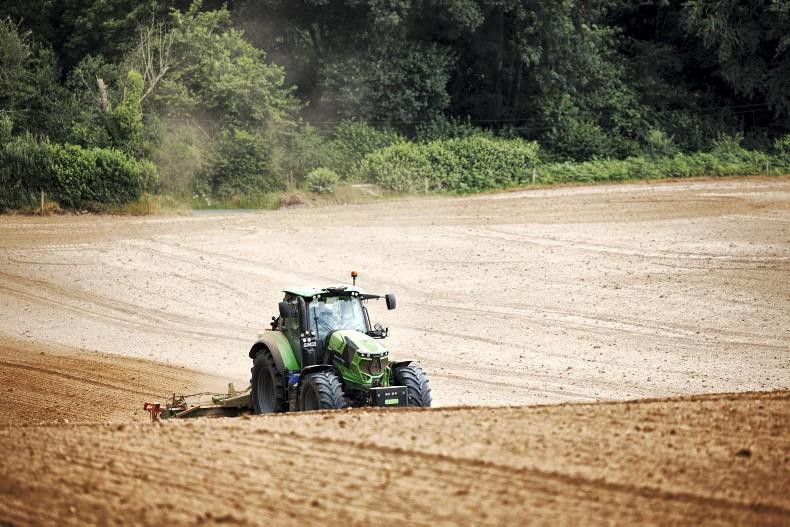
A spring reseed has a greater chance of success than one carried out in the autumn for a number of reasons.
The management of that sward post-sowing is easier as ground conditions are more trafficable, there is greater opportunity to get grazing right and even more importantly, the area of ground is coming out at a time when growth is exceeding grass demand on the farm and grass surpluses are more of an issue than the deficits faced in autumn.
Every farm should be looking to reseed at least 10% of the farm area each year, with somewhere between 10% and 15%, being the sweet spot.
A reseeded sward pays for itself in two to three years, as dry matter production will be significantly better and nitrogen use efficiency will be far greater than in non-reseeded swards.
For farms on free-draining lighter soils, the quicker paddocks that have been earmarked for reseeding are burnt off, the better.
The longer it’s left, the greater the risk of running into a dry spell, like was experienced in 2025. Many reseeds failed to germinate and were left idle for six weeks until rain came again.
Ideally, paddocks will be burned off this week. Ground conditions for the most part are still somewhat challenging and therefore paddocks can be hard to graze tightly
Farms in areas with heavier soil types who experience higher annual rainfalls are not under the same time pressure, but should also be looking to start burning off within the next couple of weeks when ground conditions are better.
Burning off
Ideally, paddocks will be burned off this week. Ground conditions for the most part are still somewhat challenging and therefore paddocks can be hard to graze tightly.
In that scenario grazing the sward, followed by spraying and then another grazing five to seven days later might be the best option to remove as much of the dead material off the paddock as possible before rotavating the soil.
To achieve a fine, firm seedbed – the gold standard and necessary requirement for a successful reseed, as much ‘trash’ or dead material as possible should be cleaned off through grazing.
Once the second grazing is finished, the rotavating process can start.
Seed varieties
If the seed mix hasn’t already been chosen, use the pasture profit index (PPI) to do so. Select the seed best suited to what the paddock is intended for.
The PPI will show the grass and clover seeds best suited to either grazing or silage and compare the traits of each.
For milking platform ground, choose grass varieties high up on the list as these will have a high utilisation value, good all year-round growth and produce a more profitable sward overall.
If the seed mix hasn’t already been chosen, use the pasture profit index (PPI) to do so
In terms of clover as a rule of thumb, medium leaf clovers are more suited to grazing, while large-leaf varieties are more suited to silage swards.
Post-Sowing management
The old rule of three bags/ acre of 10-10-20 is still the best recommendation for spreading at reseeding time.
Despite some advice to the contrary, reseeds incorporating clover still need nitrogen to help develop and establish the clover plant. In the month after sowing, another 25 to 30 units/acre of nitrogen will be required.
Post emergence spraying is still a bit away but it’s important to monitor the new reseed closely. If the weather comes right, reseeds will be quick to germinate and start growing.
When the grass plant is between the second and third-leaf stage around five weeks after sowing, it needs to be spayed with a clover-safe spray to prevent weeds from taking over.
Grazing of a new reseed needs to happen early when the cover is low at 700-900kg DM/ha. This encourages the tillering of the plant and gives clover a chance to get going. The second grazing should take place at a cover around 1,000kg to 1,200 DM/ha, between two and two and a half weeks after the first grazing.
Missing these targets will mean shading out and killing off the clover and will limit the amount of light that gets into the base of the grass plant.




SHARING OPTIONS