Recent cuts to milk price from all of the dairy co-ops has put the spotlight firmly back on the importance of managing the day-to-day costs in the business.
There’s no doubt keeping expenditure and costs down is always a focus for the majority of farmers, but it can be easy to let a strong milk price paper over the cracks and lose sight of some of the finer details.
With uncertainty around where milk price will be next spring, farmers will need to start thinking now of how they can start to tighten the belt as we head into the winter period.
Cull cows
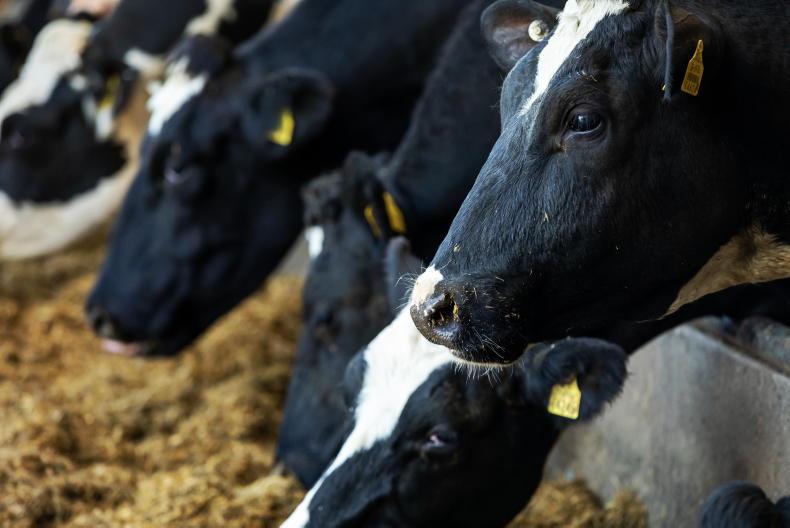
Anecdotally, a lot of farms still have cull cows milking with the main herd of cows. This was probably the right option up to now when milk price was higher, grass was growing and there was plenty of silage reserves.
This is not the case anymore on most farms. Milk price has dropped and the cull cows are putting pressure on grass supplies.
Milk price received over the next three months is likely to be around the mid-40s on a c/l basis. Therefore, feeding cows a diet of silage and a high-protein meal is going to leave a very small margin when it comes to profitability.
It makes much more sense to cull these cows now, while they’re receiving in the region of €3/kg liveweight.
The result of taking out these cows now will mean extra grass available for the rest of the herd. In turn, the farm will benefit from an extended grazing season and maximise the benefit of the cheapest feed available on the farm – grass.
Investments
Another area that will need some scrutiny in the coming months is on-farm investments. Over recent months there was a lot of talk about where the best place to spend money will be. However, recent price cuts have slowed this enthusiasm.
Some of these investments may now need to be reconsidered or even put on the back burner until there’s more clarity around where the dairy markets are headed.
Before even considering any investment, there should be a cash reserve in place to get the farm through a minimum of the next six months.
This reserve should be able to carry the farm to next May, by which time the full herd will be back in milk and the milk cheques can help cashflow expenditure.
A cash reserve of €600/cow is advised and should be able to see the farm through the winter period.
The next port of call is investing in the productive assets such as grazing infrastructure, slurry storage and genetics. These are always a non-negotiable and should still be the first investments on the priority lists.
It’s the bigger investments with lower returns that will need some harder analysis. Investments such tractors, collars or robotic scrapers are less attractive now with the drop in revenue.
A proper sit-down to analyse cashflow for 2026 would certainly be beneficial for all farmers before jumping the gun and splashing the cash.
Dairy Day
With the dropping milk price, the importance of keeping costs down will be to the fore over the coming months.
One of the most exciting discussions we have at Dairy Day 2025 is without doubt our panel looking at managing costs.
This panel will feature insights from both home and abroad with real experience on how they go about keeping costs down in order to drive profitability.
The panellists for this particular discussion, which will be chaired by our own dairy editor Aidan Brennan, are as follows:
Simon Lynskey - a New Zealand dairy farmer milking 1,600 cows in Taranaki. Peter Cagney - a top performing spring-calving dairy farmer from Limerick.Ashley Primrose - a New Zealand farm consultant, currently working with Irish consultancy firm TeamAg.
Recent cuts to milk price from all of the dairy co-ops has put the spotlight firmly back on the importance of managing the day-to-day costs in the business.
There’s no doubt keeping expenditure and costs down is always a focus for the majority of farmers, but it can be easy to let a strong milk price paper over the cracks and lose sight of some of the finer details.
With uncertainty around where milk price will be next spring, farmers will need to start thinking now of how they can start to tighten the belt as we head into the winter period.
Cull cows
Anecdotally, a lot of farms still have cull cows milking with the main herd of cows. This was probably the right option up to now when milk price was higher, grass was growing and there was plenty of silage reserves.
This is not the case anymore on most farms. Milk price has dropped and the cull cows are putting pressure on grass supplies.
Milk price received over the next three months is likely to be around the mid-40s on a c/l basis. Therefore, feeding cows a diet of silage and a high-protein meal is going to leave a very small margin when it comes to profitability.
It makes much more sense to cull these cows now, while they’re receiving in the region of €3/kg liveweight.
The result of taking out these cows now will mean extra grass available for the rest of the herd. In turn, the farm will benefit from an extended grazing season and maximise the benefit of the cheapest feed available on the farm – grass.
Investments
Another area that will need some scrutiny in the coming months is on-farm investments. Over recent months there was a lot of talk about where the best place to spend money will be. However, recent price cuts have slowed this enthusiasm.
Some of these investments may now need to be reconsidered or even put on the back burner until there’s more clarity around where the dairy markets are headed.
Before even considering any investment, there should be a cash reserve in place to get the farm through a minimum of the next six months.
This reserve should be able to carry the farm to next May, by which time the full herd will be back in milk and the milk cheques can help cashflow expenditure.
A cash reserve of €600/cow is advised and should be able to see the farm through the winter period.
The next port of call is investing in the productive assets such as grazing infrastructure, slurry storage and genetics. These are always a non-negotiable and should still be the first investments on the priority lists.
It’s the bigger investments with lower returns that will need some harder analysis. Investments such tractors, collars or robotic scrapers are less attractive now with the drop in revenue.
A proper sit-down to analyse cashflow for 2026 would certainly be beneficial for all farmers before jumping the gun and splashing the cash.
Dairy Day
With the dropping milk price, the importance of keeping costs down will be to the fore over the coming months.
One of the most exciting discussions we have at Dairy Day 2025 is without doubt our panel looking at managing costs.
This panel will feature insights from both home and abroad with real experience on how they go about keeping costs down in order to drive profitability.
The panellists for this particular discussion, which will be chaired by our own dairy editor Aidan Brennan, are as follows:
Simon Lynskey - a New Zealand dairy farmer milking 1,600 cows in Taranaki. Peter Cagney - a top performing spring-calving dairy farmer from Limerick.Ashley Primrose - a New Zealand farm consultant, currently working with Irish consultancy firm TeamAg. 




SHARING OPTIONS