



April has been a magic month for us on our farm. Wonderful weather, coupled with the conclusion of calving, has resulted in a significant reduction in workload. Grass growth has really kicked-off and utilization is outstanding.
As a result, cow condition has surpassed my expectations. All of these factors have facilitated an optimum lead up to the breeding season. Although today is our first day of AI, breeding preparation started a long time ago. A few weeks after calving any cows experiencing rapid body condition loss were put on once-a-day (OAD) milking. These four cows have improved substantially and will continue on OAD until we are satisfied that they are back in-calf.
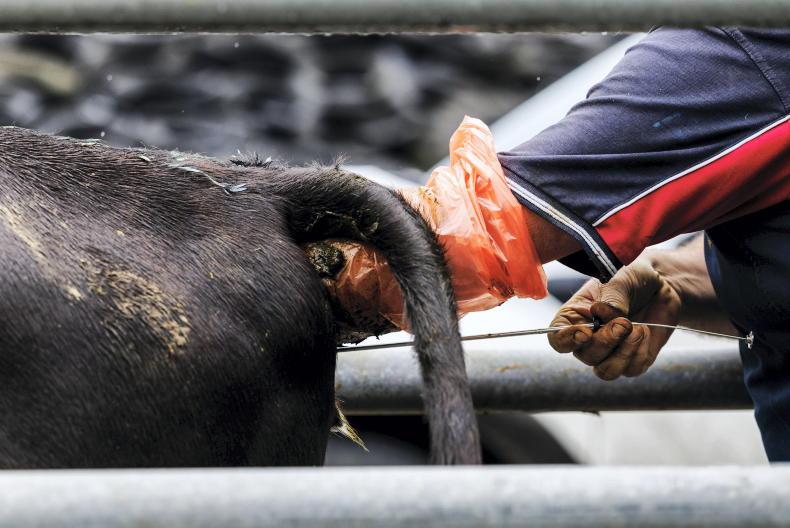
At the beginning of April, a mate of mine (Stephen Murray) scanned all of the heifers to determine the reproductive status of the herd. All were clean apart from one cow. He recommended estrumate for the cow in question and three days later she was seen in heat. Wash-out was not required.
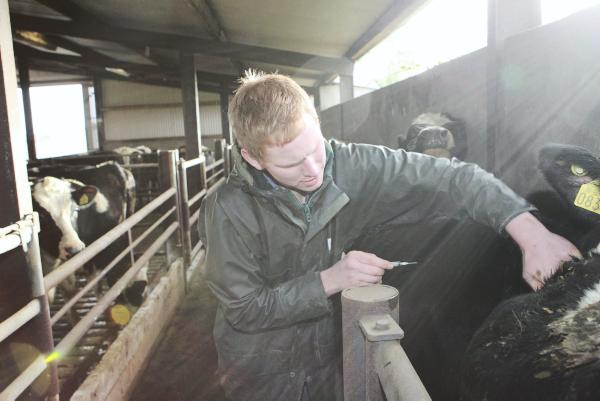
The cows were tail painted four weeks ago as a pre-mating heat detection aid. Three cows have not been seen in heat. Two were calved only two weeks, but the other cow should have cycled by now and may require some reproductive stimulant. I will ask our vet for advice. We also vaccinated the cows for BVD and Lepto on April 1.
Next on the agenda was bull selection. Over the past few months, I have attended as many meetings on this subject as possible. There is a lot of information available, but separating out sales talk from reputable advice is a difficult task. After a lot of consideration, we decided the best way to start the selection process was to identify our ideal cow in terms of EBI. The traits we focused on were fertility and milk. Our ideal cow has a minimum fertility sub-index of €120.
The key milk traits we focused on were protein and milk kg. We want a cow that is efficient at converting grazed grass to milk with minimum supplementation. Our target milk kg is between 50 and 150 with as high a protein percentage as possible. Other traits taken into consideration were calving, fat kg and health. Once we settled on these criteria, we analysed the EBI and milk recording data of our cows to determine what areas required improvement. Using this information, we ran the ICBF Sire Advice computer programme to find high reliability bulls that meet our selection criteria.
The five bulls that best suited our farm from the active bull list were PSZ, CVX, CUW, GXY and MSF. This team of bulls has an average EBI of €280, with milk and fertility sub-indexes of €92 and €149 respectively (reliability of 61%).
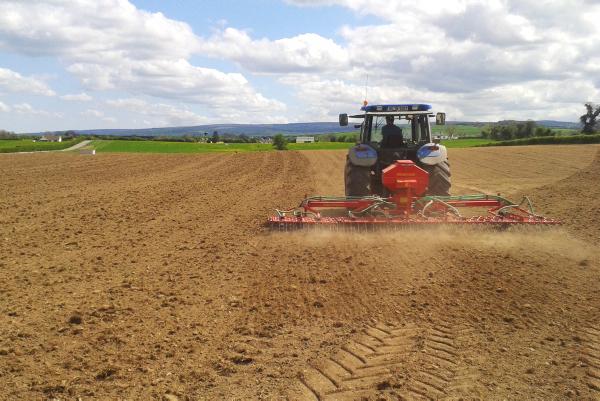
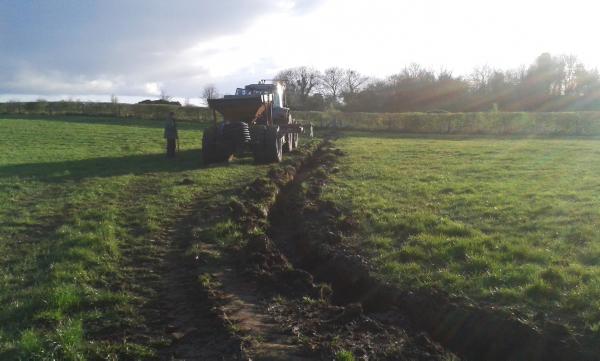
The interim period between calving and mating has allowed us to complete a lot of necessary work around the farm. High up on the agenda was reseeding. At the beginning of the year we earmarked an 8-acre underperforming field. With good weather forecast, we decided to ‘burn-off’ the field on April 8. Seven days later the cows grazed-off the grass, allowing my cousin, Pádraig Horan to undertake drainage work on a wet section of the field. Thereafter our contractor Alan Bulfin and his son Darragh began seed-bed preparation. The field was disced twice, rolled, disced again and power-harrowed. We then spread 2-bags/acre of granular lime and 2.5 bags/acre of 10:10:20. The field was rolled again prior to seeding. Using the Department of Agriculture Recommended List, we selected three varieties; Abergain, Aberchoice and Drumbo. The seed was sown at a rate of 30kg/ha by Philip Corboy using an Einböck grass seed sowing machine.
A nice shower of rain fell that evening and thankfully the weather has been mild ever since. We’ve been lucky so far, in contrast to 2012. On that occasion, we had to wait a few months after spraying an adjoining field before an opportunity came to reseed. Hopefully the weather will continue to oblige us this year.
This week, we recorded grass growth of 70kg DM/ha and our average farm cover is 660kg DM/ha. With demand at 47kg DM/ha, we closed off 7.5ha for first cut silage at the beginning of the month. This ground was grazed in the first rotation and received 2,500 gallons of slurry, 1 bag of Urea and 3 bags of 18:6:12. We started the second rotation on April 10. The cows are going into paddocks with a pre-grazing cover of 1,500kg DM/ha. One kilogram of a 14% high mineral nut, sourced from Grennans of Rath, is offered per day in the parlour, as well as magnesium in drinking water to prevent grass tetany. They are producing 21 litres of milk at 3.36% protein, 3.88% fat and 5.01% lactose (1.6kgMS/cow/day). The bulk tank somatic cell count (SCC) and total bacteria count (TBC) for the last collection were 58,000 and 4,000, respectively. In March, we delivered 24,000 litres of milk to the creamery, receiving 39.42c/litre.
This week, we received documentation from Glanbia on the new fixed milk price scheme. It is something I will need to strongly consider because of my loan repayment obligations. All of the forecasters are predicting increased milk price volatility. This could be a tool we can use to reduce our exposure in a non quota environment. The more I think about it, the question is no longer whether we should fix the price of some of our milk, but how much of our annual milk supply we should allocate to the scheme. When we put together our business plan for the new entrant scheme we used a milk price of 28c/litre. The GIIL Index-linked Fixed Milk Price Scheme has a base price of 33.6c/l.
The next few weeks will be spent digesting this information and observing cows. In both cases, it sometimes feels as if you are searching for something that is invisible. To be honest, I’d rather be looking at a herd of cows than the black and white of an A4 page. My experiences over the past few months have taught me that the modern farmer has to embrace both.


SHARING OPTIONS