



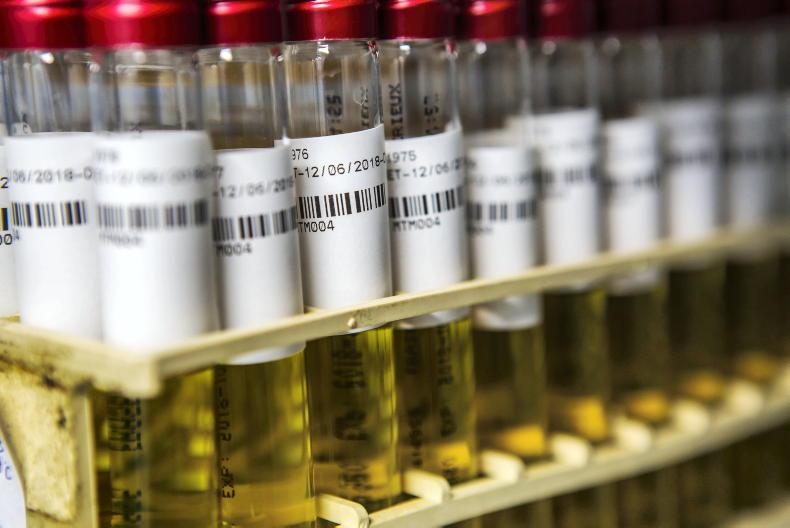
Some 11,000 animals have been sampled and tested for bluetongue virus (BTV) antibodies and almost 4,000 animals have been sampled and PCR tested in laboratories, the Department of Agriculture has said.
It added that it has designated four private laboratories to carry out bluetongue testing and that it is satisfied there is sufficient testing capacity.
PCR testing of official samples is carried out at the Central Veterinary Research Laboratory (CVRL) in Backweston, the national reference laboratory for bluetongue.
The Department said that results are usually returned within a week, “although issues encountered during testing may increase the turnaround time”.
Antibody testing
Antibody testing (ELISA) is carried out at the Cork blood testing laboratory.
However, this cannot distinguish between antibodies produced following vaccination and those resulting from natural infection, meaning that results need to be interpreted in the context of vaccination status and alongside PCR testing and other relevant information.
Notifiable disease
Bluetongue is a notifiable disease in Ireland, which means that if a veterinary practitioner suspects a case of BTV, the regional veterinary office should be contacted so that the case may be investigated.
If the disease cannot be ruled out on clinical examination, Departmental veterinary inspectors will take samples for laboratory testing.
The four private laboratories which have been designated are:
First case in 2026
The first case of bluetongue this year was confirmed by the Department on Friday in Wexford.
The animal was a 16-month-old heifer, which was not vaccinated and showed no clinical symptoms prior to death.
The Department is urging farmers to vaccinate their animals, as it remains the most effective measure against the disease.




SHARING OPTIONS