Previously in the Irish Farmers Journal we highlighted issues in relation to beef breeding. In recent weeks, we have requested data from the Irish Cattle Breeding Federation (ICBF) in order to inform the debate with facts. Providing this type of information free from commercial influence was one of the reasons the ICBF was established.
Kieran Mailey details some of the key findings to come from the data provided by the ICBF. His article shines a light on the extent to which commercial farmers are left to carry the costs of issues that many will acknowledge in private but few will discuss in public.
By far the starkest figure is that 10% of bulls sold by pedigree breeders on to commercial farms never produce a calf. Our figures indicate that this is somewhere in the region of 1,500 bulls per annum. A further 6% of bulls were shown to have less than five calves registered in their lifetime – indicative of bulls suffering from either mobility or sub fertility issues. These bulls are slaughtered at an average of two to three years, indicating that they were slaughtered off-farm midway through the breeding season.
As Kieran highlights, the financial impact for commercial suckler farmers is not only the drop in value of the bull, but also the knock-on effect on calving spread and subsequent herd output. The ICBF data shows just 60% of bulls sold on to commercial farms sire more than 50 calves during their lifetime.
The financial risk associated with purchasing a new stock bull is further elevated by the opportunity to manipulate data within some pedigree herds. Our analysis shows over 500 pedigree beef herds (16% of the sample) with bull calves registered in 2015 had one to five dairy-bred cows in the herd. This sample has been adjusted to take account of embryo transfers. It raises a simple question: why are these cows in the herd? Does it reflect the level of cross-fostering in order to drive weight gain and subsequently boost genetic evaluation for maternal traits within the bloodline? Perhaps a question for pedigree breeders to answer. It’s no wonder we are seeing such significant shifts in the maternal star ratings as more accurate information on the performance of progeny on commercial farms comes on stream.
We see evidence of data manipulation when looking at calving figures. ICBF data shows that inspections carried out by linear scores identified 136 cows with evidence of C-sections. Data recorded on 24% of these cows showed them to have always calved unassisted.
We should not lose sight of the fact that the financial loss from such activities is carried by the commercial farmer who invests in:
Maternal bloodlines only to be left with poor quality heifers coming into the herd with no milk.An easy-calving bull only to suffer losses due to calving difficulties. How much longer will we turn a blind eye to the extent to which deficiencies in our beef breeding programme are costing commercial farmers? What are the ICBF and the herd books doing about this?
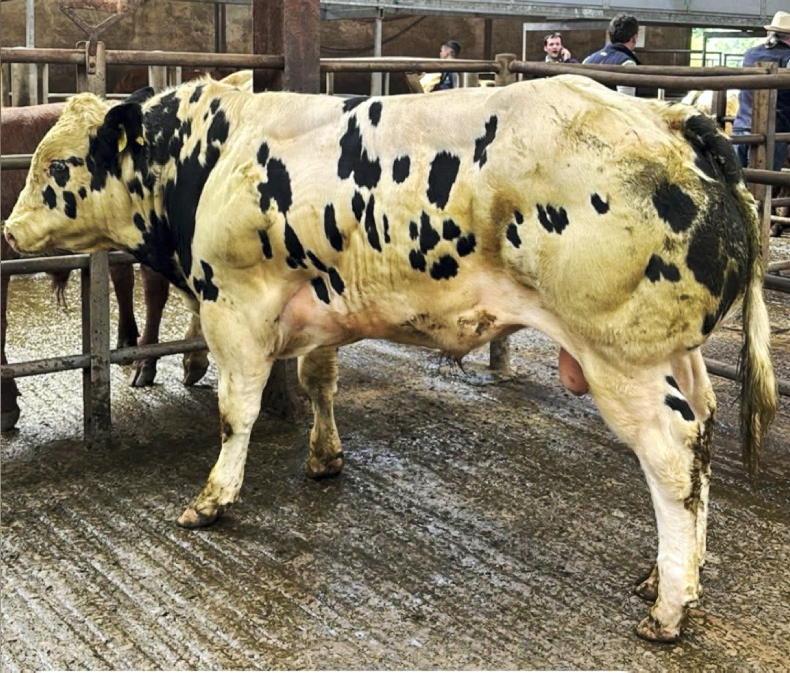
For many years, the Irish Farmers Journal has highlighted the negative impact of grossly overfeeding young pedigree bulls prior to sale. A change will need to be driven by both pedigree breeders and commercial farmers who need to look beyond the lure of buying fat.
The move away from visual assessment and the reward for overfeeding bulls will only happen if farmers have confidence in genetic evaluations. This confidence is being eroded by the practices outlined.
Previously we have highlighted the need to introduce a licensing system for those selling pedigree bulls, not only to protect commercial farmers but also the vast bulk of pedigree breeders that are trying to provide accurate information. Such a system should be based around a whole herd performance recording programme that ensures all data is captured. Whether it be mandatory or voluntary is not the issue, clearly if a pedigree breeder is not participating, the farmer buying the bull should ask why. It will be interesting to see if there is a willingness among breed societies to engage in light of the serious failings identified.
Read more
10% of beef bulls fail to produce any progeny
Previously in the Irish Farmers Journal we highlighted issues in relation to beef breeding. In recent weeks, we have requested data from the Irish Cattle Breeding Federation (ICBF) in order to inform the debate with facts. Providing this type of information free from commercial influence was one of the reasons the ICBF was established.
Kieran Mailey details some of the key findings to come from the data provided by the ICBF. His article shines a light on the extent to which commercial farmers are left to carry the costs of issues that many will acknowledge in private but few will discuss in public.
By far the starkest figure is that 10% of bulls sold by pedigree breeders on to commercial farms never produce a calf. Our figures indicate that this is somewhere in the region of 1,500 bulls per annum. A further 6% of bulls were shown to have less than five calves registered in their lifetime – indicative of bulls suffering from either mobility or sub fertility issues. These bulls are slaughtered at an average of two to three years, indicating that they were slaughtered off-farm midway through the breeding season.
As Kieran highlights, the financial impact for commercial suckler farmers is not only the drop in value of the bull, but also the knock-on effect on calving spread and subsequent herd output. The ICBF data shows just 60% of bulls sold on to commercial farms sire more than 50 calves during their lifetime.
The financial risk associated with purchasing a new stock bull is further elevated by the opportunity to manipulate data within some pedigree herds. Our analysis shows over 500 pedigree beef herds (16% of the sample) with bull calves registered in 2015 had one to five dairy-bred cows in the herd. This sample has been adjusted to take account of embryo transfers. It raises a simple question: why are these cows in the herd? Does it reflect the level of cross-fostering in order to drive weight gain and subsequently boost genetic evaluation for maternal traits within the bloodline? Perhaps a question for pedigree breeders to answer. It’s no wonder we are seeing such significant shifts in the maternal star ratings as more accurate information on the performance of progeny on commercial farms comes on stream.
We see evidence of data manipulation when looking at calving figures. ICBF data shows that inspections carried out by linear scores identified 136 cows with evidence of C-sections. Data recorded on 24% of these cows showed them to have always calved unassisted.
We should not lose sight of the fact that the financial loss from such activities is carried by the commercial farmer who invests in:
Maternal bloodlines only to be left with poor quality heifers coming into the herd with no milk.An easy-calving bull only to suffer losses due to calving difficulties. How much longer will we turn a blind eye to the extent to which deficiencies in our beef breeding programme are costing commercial farmers? What are the ICBF and the herd books doing about this?
For many years, the Irish Farmers Journal has highlighted the negative impact of grossly overfeeding young pedigree bulls prior to sale. A change will need to be driven by both pedigree breeders and commercial farmers who need to look beyond the lure of buying fat.
The move away from visual assessment and the reward for overfeeding bulls will only happen if farmers have confidence in genetic evaluations. This confidence is being eroded by the practices outlined.
Previously we have highlighted the need to introduce a licensing system for those selling pedigree bulls, not only to protect commercial farmers but also the vast bulk of pedigree breeders that are trying to provide accurate information. Such a system should be based around a whole herd performance recording programme that ensures all data is captured. Whether it be mandatory or voluntary is not the issue, clearly if a pedigree breeder is not participating, the farmer buying the bull should ask why. It will be interesting to see if there is a willingness among breed societies to engage in light of the serious failings identified.
Read more
10% of beef bulls fail to produce any progeny







SHARING OPTIONS