This week’s column comes to you from The Croke Park Hotel. A good deal on a two-night getaway before the return to school was spotted by someone I live with, who is well versed in this area.
It’s easy to take for granted the majesty of the structure across the road and perhaps it’s only on a quiet Wednesday, when you round the corner after returning from the shop with extra teabags and proper milk – a hotel ritual your correspondent insists upon – that you can appreciate it as it rises above St Patrick’s Terrace.
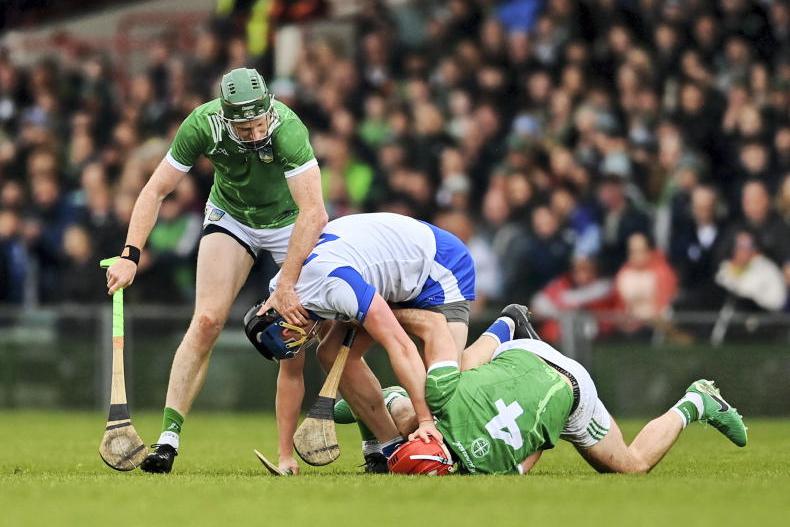
Of course, this is now a quiet time of year for the cathedral of Gaelic games; the eerieness of Gill’s pub contrasts with the bustle that can be found there on a summer Sunday. On the wall outside the hostelry, and on the bridge over the Royal Canal, are posters for the Hurling For Cancer fundraiser that took place in Carlow last Monday night – the only place to find inter-county stars involved in anything other than club action.
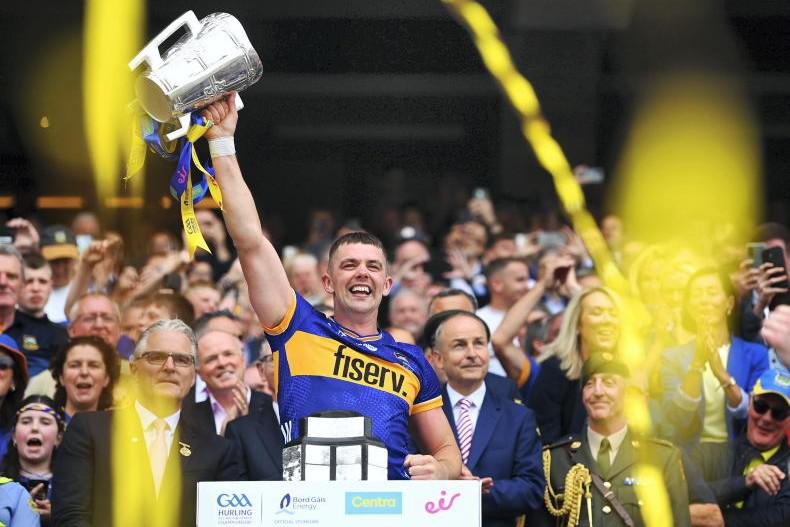
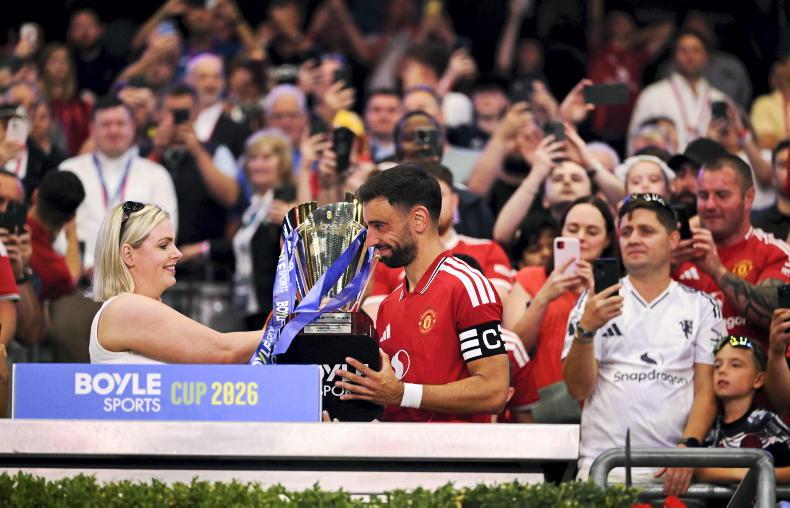
The All-Ireland camogie and ladies’ football finals were the only Gaelic games action in Croker in August. Until the Leinster club finals are played, the most recent captain to lift a trophy in the Hogan Stand is Bruno Fernandes of Manchester United.
However, it’s unlikely that the Boyle Sports Cup will be given much prominence in the Old Trafford trophy room.
And, in one sense, there’s nothing wrong with that: the GAA earned revenue from the best-attended soccer match in the country’s history and fans of the two Uniteds got to see their heroes in action. Pre-season fixtures only take place in July and August, by definition, but the timing of that match brought underlying concerns about the GAA’s calendar into sharp focus. Again.
Alternative championship format proposals abound: they range from allowing the fourth-placed sides in Munster and Leinster to go forward to the All-Ireland to the suggestion that, as in football, the provincial championships should operate in a vacuum before a standalone national competition featuring all of the major sides
For a change, it appears that there are more question marks about hurling’s state of affairs than football’s – the best championship in the big-ball code in recent times ended with the most universally popular winners in living memory. The changes to the playing rules and the championship format have, in tandem, worked wonders.
While there is a review of hurling rules taking place, led by a committee chaired by John Meyler, there is little that is fundamentally wrong with the sport itself – it’s really the format and the calendar that there are question marks over. Once the current rules are applied fairly and consistently, few ‘enhancements’ are required.
Sparking a debate
In the interests of openness, I will admit that, when responding to the committee’s questionnaire, I suggested that a free scored from the ground should be worth two points. While such a reward is often mooted for a ‘normal’ sideline cut, it feels like an unfair punishment for what may be good defending – allowing the facility for a free to be doubled would make a player think twice before committing a foul in a scoreable area.
That’s tangential, though: another side-effect of the good football year was to show that, seemingly, when one code flourishes, the other takes a dip. Without diminishing Limerick’s imperiousness, it was not a great hurling championship – that can happen, there are good years and bad, but the bad years tend to spark more of a debate around structures. Barring a late intervention, the 2027 championship will again run from mid-April to mid-July and if that is the case, then we can expect that the end of May will bring lamentations that two Munster counties have had their seasons prematurely ended.
You’ll hear a line about how it’s a shame that the two teams who finish outside the top three in the province are not still hurling in June, and that the youth of those counties will be ripe for temptation by other sports.
Over-egging
It’s an over-egging of the pudding, especially as those counties will have played four games, but it does serve to demonstrate how the hurling campaign is too front-loaded, with 12 Munster and 15 Leinster group games played in April and May, and just seven knockout matches taking place across June and July.
Alternative championship format proposals abound: they range from allowing the fourth-placed sides in Munster and Leinster to go forward to the All-Ireland to the suggestion that, as in football, the provincial championships should operate in a vacuum before a standalone national competition featuring all of the major sides.
In his annual report in January, Munster Council CEO Kieran Leddy strongly cautioned against allowing more than three to advance from the province – his exact words were: “We must stop thinking that our senior championships are there to develop teams. They are there to pit the best teams against each other and to decide who the best team in the country is.”
Leddy of course also knows that any decrease in jeopardy would affect the record crowds Munster have been enjoying for the past few years. However, the province is believed to be in favour of shifting the schedule so that hurling could reclaim more of the summer.
Moving everything back two weeks would keep the major counties hurling into June and give hurling back more of a July and August footprint. But of course such a move would have an effect on the split-season and the clubs which form the vast majority of GAA activity. And that’s the push-pull nature of making changes: a solution to one problem will almost certainly always cause another.
If hurling gets more of the summer, something else will have to get less.