



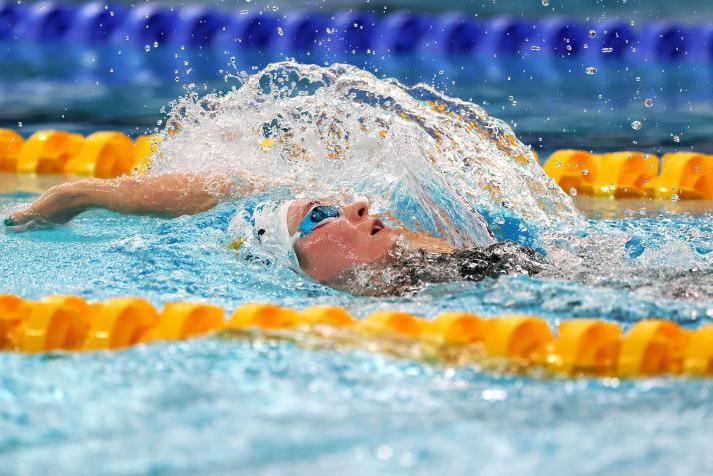
Róisín Ní Riain’s mantelpiece might be starting to creak from all the medals, but the Limerick swimmer is well aware that success is measured on more than just what happens in the pool.
At last month’s World Para Swimming European Championships in Türkiye, Ní Riain – competing in the S13 classification – claimed gold in the 100m backstroke in a personal-best time of 1:06.21, while she took silver in both the 100m freestyle and 200m individual medley events.
That followed on from a silver and bronze at the 2024 Paralympic Games in Paris as well as a raft of other European and world triumphs. However, as a pharmaceutical chemistry student at the University of Limerick, sporting success doesn’t allow for taking things easy.
“I came home and I think I was straight into college the day later,” says the Spar/Eurospar Community Fund ambassador.
“It definitely keeps you grounded, definitely brings you back down pretty quickly after a major championship like that.
“I’m really lucky in UL, I’m a sports scholarship athlete – a dual scholarship is the way they look at it, so they support both your academics and your sport as well as they can. It really helps us to get the best out of both.
“I’m part of a big training group of swimmers in Limerick, and nearly all of us are in college as well, just balancing both to the best of our abilities.”
Visibility and success
Róisín has a condition called coloboma which affects her vision, and she is increasingly aware of the visibility her success can bring to others.
“I really like the idea that I can show those younger kids what is possible,” she says, “especially because I didn’t have that when I was younger.
“I think that’s something that’s really, really important to me, to be able to give the visibility to disabilities in sports.
“And even more than that, I suppose, those of us with visual impairments would say we have an invisible disability – you might look at us and not necessarily know anything just by seeing me walk down the street or something like that, so it’s creating awareness for those invisible disabilities, something that’s really, really important to me too.”
It’s giving those kids the opportunity to see that this is what you can do, she believes.
“Just because you have a disability doesn’t mean you should ever want to achieve anything less. You should absolutely want to achieve the absolute most you can in terms of sport and also in terms of life, just to show that everything is possible.
“We’ve definitely come quite a long way from when I was younger, but I also think, as always, there’s probably still plenty more that we would hope to grow, to give the awareness to people with disability in sports.
“It’s really good what we’ve gotten over the last couple of years, but I would hope to see that grow again even further in the future.”
Paris was Róisín’s second games, having competed in Tokyo as a 15-year-old. Was bringing home medals while still a teenager in Paris life-changing?
I really like the idea that I can show those younger kids what is possible, especially because I didn’t have that when I was younger.
I think that’s something that’s really, really important to me, to be able to give the visibility to disabilities in sports
“I would say that I definitely agree with that in one sense and then maybe not at all in another sense,” she says. “I came away from it with two Paralympic medals at the age of 19, so of course that is going to change a lot of things in my life, in terms of the success and everything that comes with that. But on the other side of things, I went back into college pretty soon afterwards. I always say that will bring you back down pretty quickly.
“From that point of view, I went back into my same training environment with my same friends, same teammates, so from that side of things, everything stayed the exact same.
“But then, of course, being able to come home from a games, from as close to a home games as we’ll probably ever get, I think that was something that definitely made a difference too.”
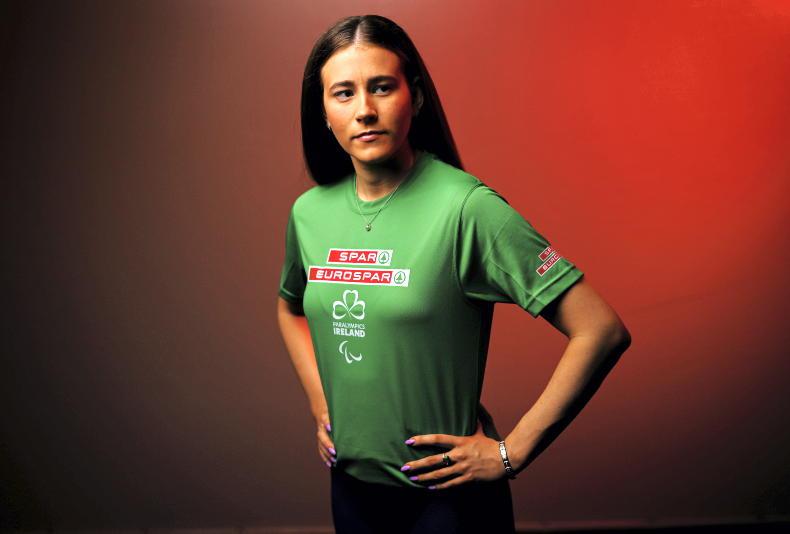
Everything is of course geared with an eye on Los Angeles in 2028, along with the pursuit of a degree and planning for what path her post-college life will take. Róisín admits that it’s a mix she is still perfecting.
“I suppose that can be tough,” she says, “and that’s something I learned quite a lot about myself this year. I had an injury most of this season and it definitely taught me that I probably need to put that bit extra into my life outside swimming. While it wasn’t quite taken away – that’s maybe too dramatic a way to look at it – through those periods of time where I couldn’t swim properly, I really did struggle.
“It’s something that I’ve definitely been developing and learning so much more about over the last year and I think, coming out the other side of that now, I definitely have a different perspective on that.
“It’s just important to be able to detach. I have a couple of weeks off now and, typically in my off-season, I would still get in the pool and swim but I’m trying to just give myself every bit of rest that I need, that time away from the pool that I probably haven’t ever given myself before, in my years as a high-performance swimmer anyway.
“I’m definitely still learning in that department and I think I will continue to, but it’s just about leaning on those people around you, my friends and my family.
“Now, it’s only for three weeks, but for us [athletes] that is a really long time.”



SHARING OPTIONS