



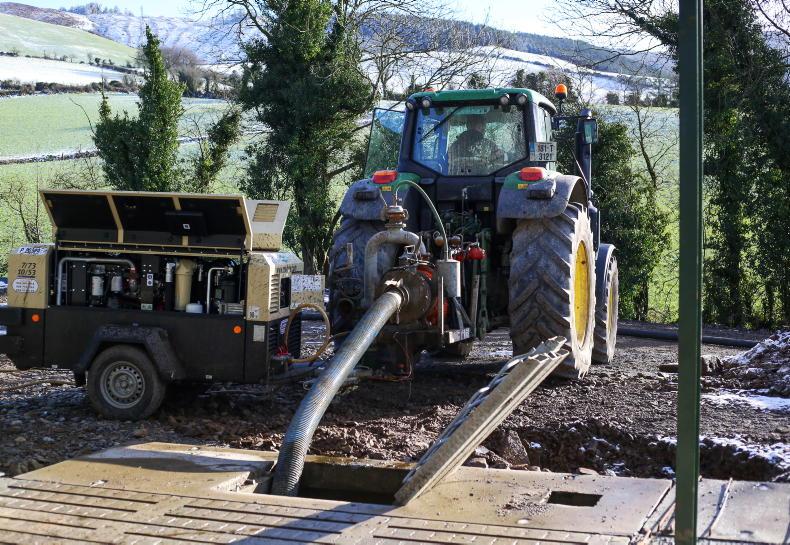
Key changes have been made to the way slurry is being accounted for when it is moved between farms.
Previously, the farmer moving slurry out (exporting) and the farmer accepting slurry in (importing) used to sign a form and it was then posted back to the Department before the end of the year with the amount of slurry moved put in on the form.
Now that is all changed and paper is no longer being used in the accounting process. The farmer exporting slurry must record the amount being exported on Agfood, the Department of Agriculture online portal.
The farmer importing the slurry then gets a text message from the Department and they must then log on to Agfood and accept the movement or else the movement isn’t recorded.
Watch back: Irish Farmers Journal nitrates meeting.
Hundreds of farmers attended information meetings hosted by the Irish Farmers Journal which featured speakers from the Department of Agriculture, the Local Authority Waters Programme (LAWPRO) and the IFA.
Here’s a chance to catch up with what was heard and seen at the meetings.
Deadline
The deadline for this was initially proposed as 31 October, but this was since extended to 31 December 2022, but is likely to go back to the earlier deadline in the future.
Another big change is that the nitrogen content of slurry has decreased from 5kg/t to 2.4kg/t, meaning that more than twice as much slurry needs to be exported in order to reduce the same amount of organic nitrogen in a holding as before.
No changes were made to phosphorus content of slurry, so if exporting more slurry off farm to comply with lower nitrogen rates in the slurry, more farmers will hit their phosphorus limit quicker.
Big change
Another big change is that up to now, all farms in a nitrates derogation or stocked above 170kg nitrogen/ha had to carry out soil sampling, otherwise fields without a sample result were deemed to be at index four and therefore had no allowance for chemical phosphorus.
The new rules state that all farmers stocked greater than 130kg organic nitrogen per hectare need to have soil samples results, otherwise they will be classed as being in index four.
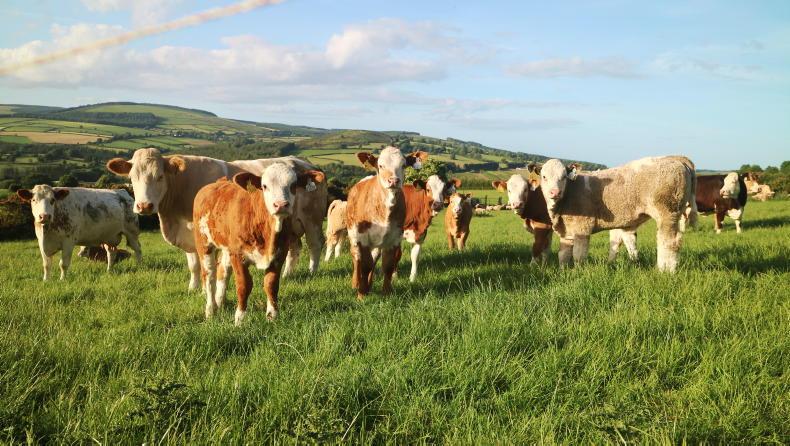
These are farms that are carrying the equivalent of more than two suckler cows per hectare or 0.8 suckler cows per acre, so they are not intensively stocked farms, but are still below the threshold for derogation.
Nutrient management plan
Farmers will have to carry out a nutrient management plan after receiving their soil sample results in order to know what their allowance is. Only soils in index one and two will be able to apply chemical phosphorus.
Without having soil samples showing a need for additional nutrients, they will not be able to import slurry or purchase chemical phosphorus.
These changes will have serious implications for farmers that have been relying on both slurry exports and imports to manage their nutrients.



SHARING OPTIONS