Farmer writes: A mindblowing experience at the 2015 Nuffield Conference
Although he is only halfway through his time at the 2015 Nuffield Contemporary Scholars Conference in France, Brian Rushe is astounded at what he has learnt and experienced so far.
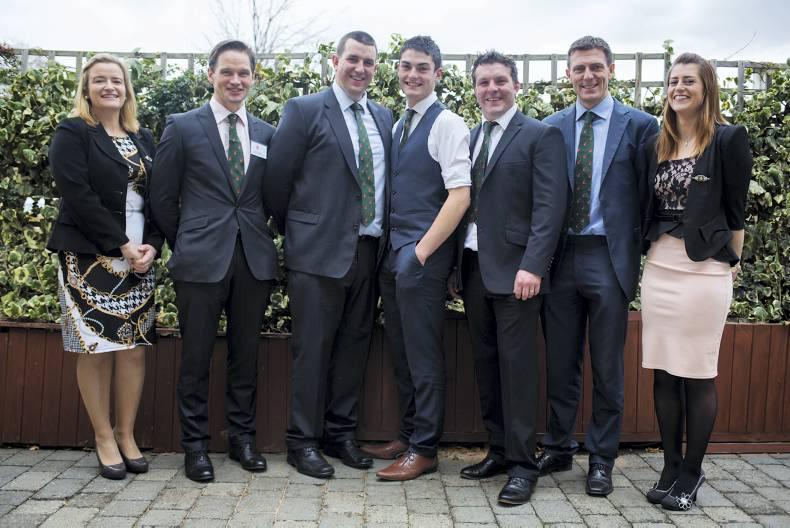
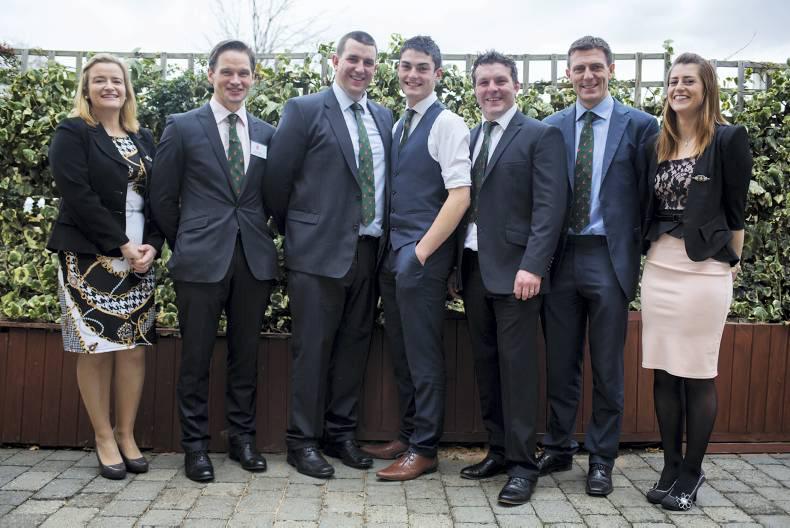
Nuffield Farming Scholarships Trust electionees. Brian Rushe is pictured third from right hand-side.
ADVERTISEMENT
I've been attending the 2015 Nuffield Contemporary Scholars Conference in Reims France since last Saturday. Although we are only halfway through it I think it's safe to say that so far it has been mind-blowing.
It's given me the opportunity to have fascinating conversations with farmers and people at all levels within the industry from Australia, the UK, New Zealand, France, Brazil and the Netherlands. The group is very diverse with farmers involved in every sector including hydroponic rose growing, cotton and wine making. The whole idea of the conference is to give the new scholars a world view of agriculture, challenge their thinking and allow them to begin building their network of contacts. These contracts will be so important when the time comes for them to embark on their travels.
The presentations and the speakers have all been very engaging and depending on who you talk to afterwards everyone has been able to take something different from each speaker. We visited a bio-ethanol plant yesterday that is run as a cooperative and seems to be adding huge value to its members and the local area. This plant is turning 2m tonnes of sugar beet and 1m tonnes of wheat into ethanol, and as a result of this process they also produce beet-pulp and wheat-distillers which is then used as livestock feed. Despite all this I found myself slightly uncomfortable with the idea that produce and land that could be used to feed people was being turned into energy just to satisfy government green policy.
ADVERTISEMENT
There is one issue that is common to all the sectors and that is the public’s perception of agriculture. It's a bigger issue in other countries when compared to Ireland but how long will that be the case? With the removal of quotas and the further intensification of Irish farming it is absolutely vital that we the farmers educate our most important stakeholder about the job we do and how we do it. If farmers and those directly involved in the industry don't speak up and educate the public someone else will and who knows what sort of an agenda they might have.
Register for free to read this story and our free stories.
This content is available to digital subscribers and loyalty code users only. Sign in to your account, use the code or subscribe to get unlimited access.
However, if you would like to share the information in this article, you may use the headline, summary and link below:
Title: Farmer writes: A mindblowing experience at the 2015 Nuffield Conference
Although he is only halfway through his time at the 2015 Nuffield Contemporary Scholars Conference in France, Brian Rushe is astounded at what he has learnt and experienced so far.
The reader loyalty code gives you full access to the site from when you enter it until the following Wednesday at 9pm. Find your unique code on the back page of Irish Country Living every week.
CODE ACCEPTED
You have full access to the site until next Wednesday at 9pm.
CODE NOT VALID
Please try again or contact support.
I've been attending the 2015 Nuffield Contemporary Scholars Conference in Reims France since last Saturday. Although we are only halfway through it I think it's safe to say that so far it has been mind-blowing.
It's given me the opportunity to have fascinating conversations with farmers and people at all levels within the industry from Australia, the UK, New Zealand, France, Brazil and the Netherlands. The group is very diverse with farmers involved in every sector including hydroponic rose growing, cotton and wine making. The whole idea of the conference is to give the new scholars a world view of agriculture, challenge their thinking and allow them to begin building their network of contacts. These contracts will be so important when the time comes for them to embark on their travels.
The presentations and the speakers have all been very engaging and depending on who you talk to afterwards everyone has been able to take something different from each speaker. We visited a bio-ethanol plant yesterday that is run as a cooperative and seems to be adding huge value to its members and the local area. This plant is turning 2m tonnes of sugar beet and 1m tonnes of wheat into ethanol, and as a result of this process they also produce beet-pulp and wheat-distillers which is then used as livestock feed. Despite all this I found myself slightly uncomfortable with the idea that produce and land that could be used to feed people was being turned into energy just to satisfy government green policy.
There is one issue that is common to all the sectors and that is the public’s perception of agriculture. It's a bigger issue in other countries when compared to Ireland but how long will that be the case? With the removal of quotas and the further intensification of Irish farming it is absolutely vital that we the farmers educate our most important stakeholder about the job we do and how we do it. If farmers and those directly involved in the industry don't speak up and educate the public someone else will and who knows what sort of an agenda they might have.
If you would like to speak to a member of our team, please call us on 01-4199525.
Link sent to your email address
We have sent an email to your address. Please click on the link in this email to reset your password. If you can't find it in your inbox, please check your spam folder. If you can't find the email, please call us on 01-4199525.
ENTER YOUR LOYALTY CODE:
The reader loyalty code gives you full access to the site from when you enter it until the following Wednesday at 9pm. Find your unique code on the back page of Irish Country Living every week.








SHARING OPTIONS